

The Budget-Friendly Type Of Flooring You Should Consider For Your Laundry Room
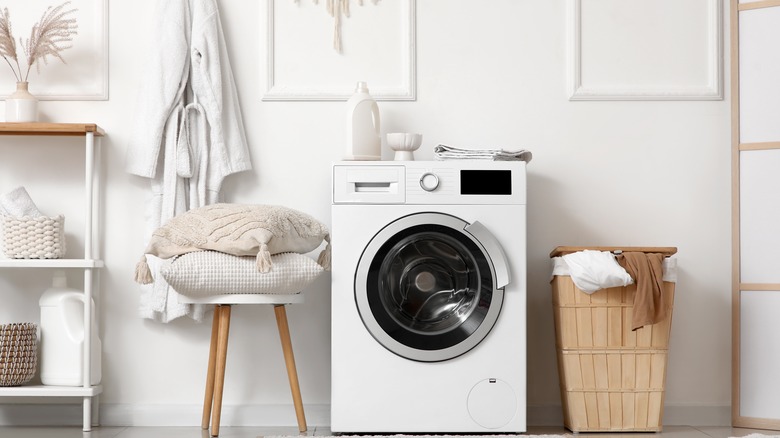
You probably spend more time doing laundry than you'd like, so the laundry room needs to be a space you don't mind being in. It's common to deal with moisture issues, spilled detergent, and the shaking of the washer during a spin cycle. If your existing flooring makes you worry about water damage or tiles cracking when something falls on the floor, it might be time to look at a material that offers protection without the hefty price tag. There is an option that is often overlooked for home use: rubber flooring.
It's worth considering the pros and cons of rubber flooring, especially if you want to avoid materials that swell up from humidity, or hard surfaces that have no give underfoot. The best part is that rubber flooring doesn't require a large budget and you can find the material for $3 to $8 per square foot, making it budget-friendly and one of the most durable options for laundry room flooring.
Often made from recycled materials, this material is incredibly tough . It instantly cushions against accidents and noise, helping to make the laundry room more comfortable. Rubber holds up against everything from liquid detergent to water leaks, keeping its appearance long after other floor options would have failed. Choosing rubber for your laundry room floor means picking a material that will hold up years of appliance use, water spills, and continuous foot traffic. It provides performance and comfort at a cost that's friendly to your home renovation budget.
Rubber flooring offers safety and protection for your laundry room
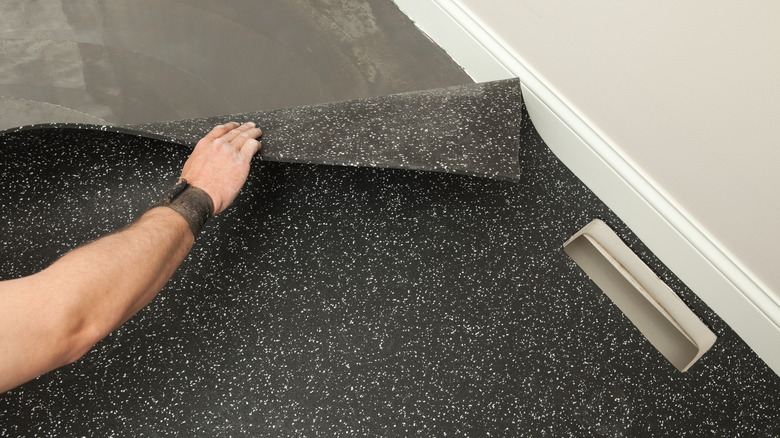
When considering the best flooring for your laundry room, the features found in high-density rubber work well in this space. Unlike porcelain or ceramic tile, which are hard and cold underfoot, rubber has a noticeable amount of cushion. This anti-fatigue characteristic cuts down on stress on your feet and joints if you spend a lot of time sorting, washing, or folding laundry. The elastic quality of rubber absorbs the force of dropped items and vibrations from appliances, which is helpful to cut down on noise and prevent washers and dryers from moving around the floor.
Rubber is also known for its grip, which is an advantage that improves when the material gets wet. Because the laundry room is always at risk for water damage, whether from a broken hose, an overflowing drain, or condensation, having a floor that stays secure underfoot is a big plus. Rubber acts as a layer of defense for a concrete or wood subfloor, protecting it from water damage, mildew, and mold that can form when moisture settles into cracks and seams of interlocking pieces of flooring.
Installing rubber tiles can be a weekend DIY project
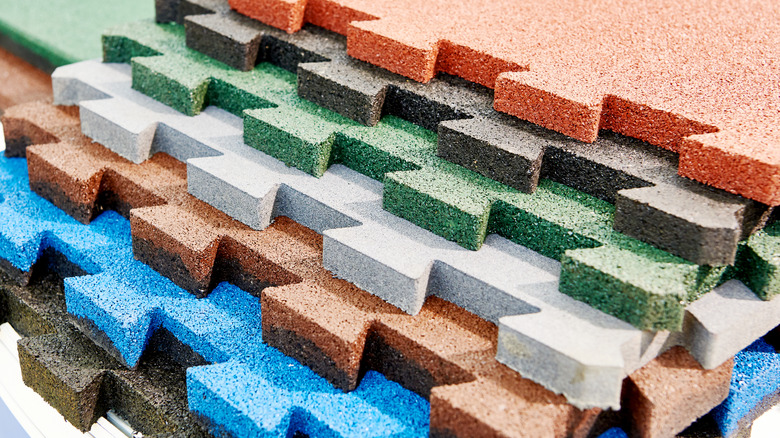
One of the best advantages of rubber flooring is the installation process, which is easy for homeowners to install over just one weekend. Rubber materials typically come two ways: large rolls or individual interlocking tiles. For smaller laundry rooms, the interlocking tiles are usually the easier option, snapping together like pieces of a puzzle without needing messy glue. The thickness and weight of the tiles usually keep them secure against the subfloor, although some people might want to use double-sided tape or a light adhesive for extra peace of mind. It's important to remember that water can seep into the seams of the tiles, which makes them water-resistant and not waterproof.
If you have a larger space, rolled rubber flooring provides a waterproof surface, which looks cleaner and prevents dirt from getting into seams, though it can be more difficult to handle and might require industrial adhesive for a seamless fit. For this reason, some homeowners prefer to hire a professional for the installation process. If you have the skills to tackle the job, remember that before starting your installation, it's important to clean and thoroughly dry the subfloor and allow the new rubber material to adjust to the room's temperature. Understanding how to clean rubber floor tiles and roll flooring is simple. Regular upkeep involves sweeping or vacuuming to pick up loose dirt and lint. For deeper cleaning, mopping with warm water and a neutral pH cleaner is all you need. You should avoid harsh cleaning agents, abrasive products, or solvents, since these can wear down the natural wax in the rubber, which can reduce its lifespan. Wiping up spills quickly is always a good idea, although the material resists stains quite well, especially compared to other softer materials.