

Why You Should Reconsider Using Fruit Juice As Fertilizer In Your Garden
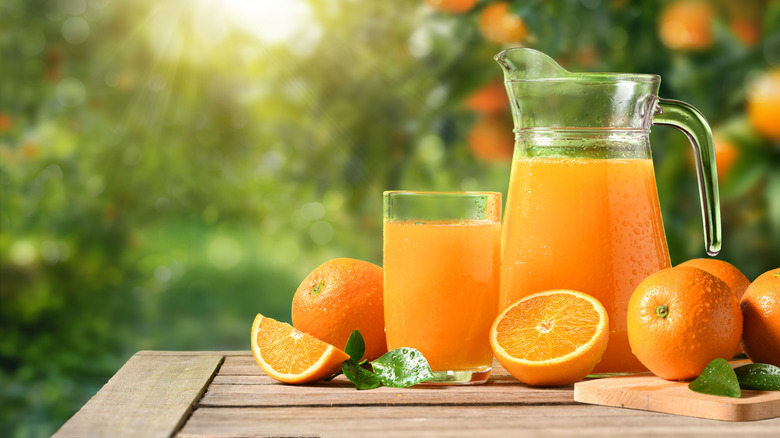
Gardeners around the globe are often coming up with new and interesting ways to upgrade their gardening skills. While many of these trends end up sticking because of how functional they are, others are honestly a waste of time. For instance, you might have seen some gardeners feed orange juice to their plants as a fertilizer. Since fruit juices, like apple juice or citrus juice, are so good for the human body, it can be tempting to assume that some of the benefits transfer over to the soil as well.
As it turns out, any kind of advantage your plant buddies might gain from a drink of your favorite juice is largely overshadowed by the downsides. The acidic nature and high sugar content of fruit juices can destroy the immune system of plants, damage their roots, and attract a whole army of pests to feast on them. Granted, there are multiple uses of citrus around the house you'll wish you knew sooner, and citrus peels are often used for composting as well. However, orange juice, or any other fruit juice, on your plants is not a great move. It's best to stick with more traditional fertilization methods, like making your own DIY compost to feed your plants.
Effect of excess sugar from fruit juice on the soil
You might think that the sugar present in fruit juices would come in handy as a fertilizer for plants. After all, sugar can provide a source of food for soil microbes, which in turn can release beneficial nutrients for the plant to absorb. In fact, a number of sugar-based products are already used in agriculture, with an emphasis on increasing crop yield. However, sugar does not provide essential nutrients like nitrogen, potassium, or phosphorus to the plants, which means you would have to use an additional fertilizer anyway.
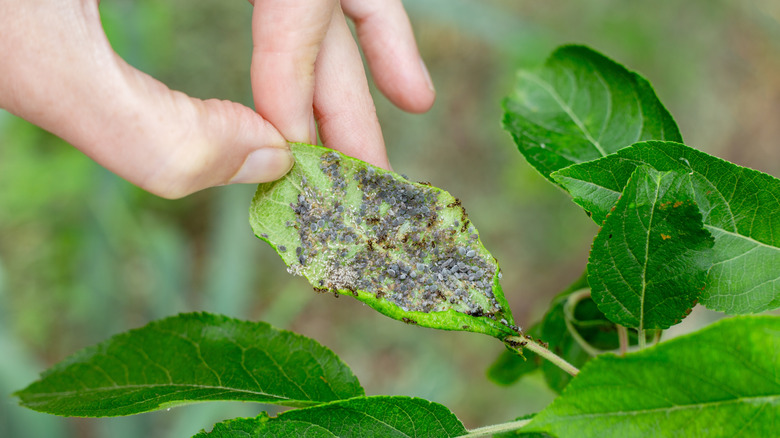
The major problem with most fruit juices is the enormous quantity of sugar they contain. Just one 6-ounce serving of fruit juice can contain as much as 30 grams of sugar. Just like you don't want too much salt in the soil since it can damage roots, you don't want too much sugar, either. An overdose of sugar in the soil can absorb water from the surrounding regions and make it difficult for your plants' roots to absorb the water and nutrients necessary for survival. Moreover, excess sugar from fruit juice can also attract pests like ants, mealybugs, flies, and aphids to your plants. And the longer the sugar is left out on the ground or foliage, the easier it will be for pests to locate the source of the smell and keep coming back for more.
Effects of fruit juice's acidity on soil (and what to use instead)

The acidic nature of fruit juices, particularly citrus juices, can drastically decrease the pH levels of the soil. This can lead to deficiency of some crucial elements in the soil, such as magnesium, phosphorus, and potassium. Apart from this, an altered pH can also affect the soil's ability to flush out heavy metals and pesticides. If the soil gets exposed to fruit juices for long, all these factors can culminate over time and eventually be detrimental for your garden's health.
If you're set on using fruit juice to give your plants a quick boost of energy, make sure you heavily dilute it first — you're looking at around 2 tablespoons of juice per 1 quart of water. While it's best to skip using regular fruit juice, an alternative you can consider instead is fermented fruit juice. Fermented fruit juice is manufactured by fermenting over-ripe fruits with brown sugar for several days. A 2023 study published in the International Journal of Innovation and Industrial Revolution found that, unlike regular fruit juices, the fermented kind can have a positive effect on flowering and fruit yield when combined with more traditional fertilizers. Fermented fruit juice can also be used as a foliar spray for plants.