

The Color Concept You Should Know To Choose The Perfect Paint For Any Room

Have you ever painted a room, stood back, and thought, "This is not the way it was supposed to turn out"? If you have, you're not alone — and despite your best efforts, you realize that you've chosen the wrong paint color. Before you pick up your paintbrush again, though, consider using color theory to make your next choice. Let's take it all the way back to middle school art class: We're talking about the law of simultaneous contrast, or the theory that explains why one object may seem to be of a different color depending on the color of what it's placed on or next to. As Dr. Cheryl Olman of the University of Minnesota says, "our sense of lightness, brightness, and color is easily swayed by context."
How does this solve your painting problem? Well, when you swatch paint colors in the middle of a wall, the "context" for the new color is overwhelmingly the old color of the wall, which you won't see at all when it's painted over. That's why it's best to swatch new paint colors close to design elements that will remain the same after you're done painting, like trim and baseboards. One way to do this is to paint swatches of your new color choices onto a piece of white foam board, which allows you to move the swatches around the room and compare them to elements like furniture and rugs.
How to choose a paint color
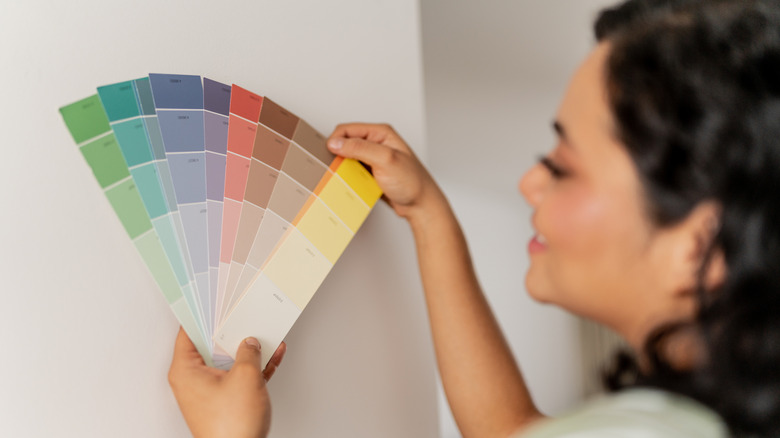
Before you head to the hardware store, think about the design elements that will stay the same in the room you're painting, like the furniture, artwork, and rugs or flooring. You'll want to choose a color that complements these elements. Feeling stuck? Here's how designers pick the perfect shade of paint. Once you've got an idea of the color you'd like to use, take advantage of those free paint chips offered by many paint retailers at the store. Hang them side-by-side on the wall — near your trim, of course — or on a piece of foam board to compare color temperature, hue, and shade.
When you've narrowed it down to a couple of different shades or hues, purchase small samples from the hardware store. Pop off the lids of the paint cans, give them a stir, and paint a large swatch onto your wall or foam board. Make sure you allow it to dry and then give it a second coat in order to see the true color. If you're painting directly onto the wall, try painting a swatch of each color in different areas of the room to get a good sense of how the paint will look in different lighting conditions; if you're using a foam board, be sure to move it around the room at various times. Once you're happy with your color, grab your tools and paint away. Finally, you might like to check out these five tips for painting your house like a professional.