

What To Know About The 1/3 Rule Before Installing New Tile
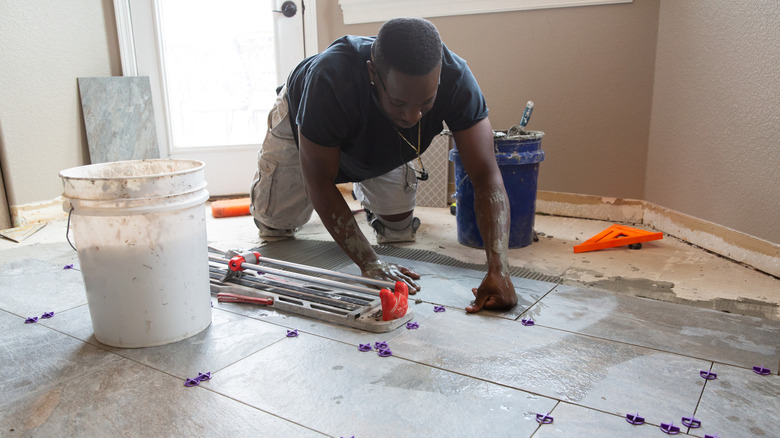
There is no shortage of must-know tips for a perfect tile installation, but carefully considering your tile layout is probably the most important. Some folks may opt for a traditional side-by-side layout, especially for square tiles, while others prefer to offset their tiles. Many experts adhere to a one-third rule, especially when working with long, rectangular, and large format tiles. The one-third rule refers to a staggering technique; instead of off-setting each row of tile by one half, you should set them off by one third of the tile beside it.
Overlooking the small variations between tiles is one of the mistakes many people make when laying tile flooring, especially with large format tiles, which tend to be less forgiving. "[Tile naturally] curls as it cures," explains remodeling expert John Painter (via YouTube), "It's like they have a hump in the middle. And because of that, when you put two tiles side by side, you get lippage. In other words, one tile doesn't lay flat with the one next to it."
Each tile may have varying degrees of warping, even if they look perfect from afar. The main benefit of following this one-third rule is that you can reduce noticeable edges between tiles, or "lippage." When you offset your tiles by one third, it creates a smoother feeling surface overall. Aside from making your floors more comfortable, this trick can also make the surface more visually appealing. A side-by-side or one-half offset can look rigid or busy, especially if you have noticeable grout lines, while a one-third offset has a more natural flow that allows the eye to glide over the whole floor.
Offset each tile by 1/3 to create a seamless feel and flow
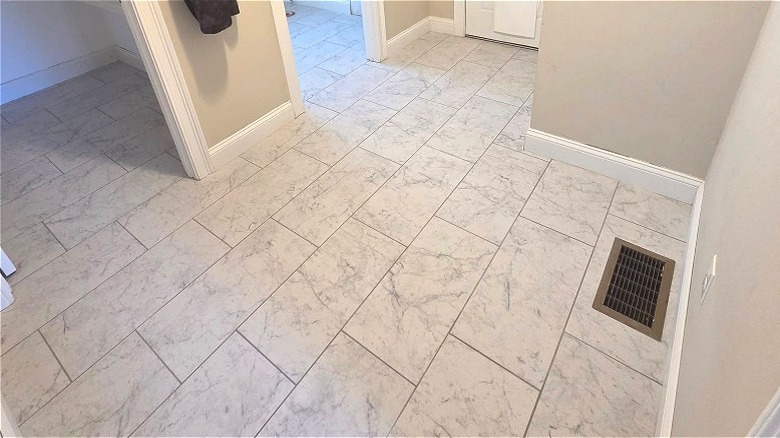
While this tile laying pattern is relatively easy to implement once you get started, it can be tricky to get your measurements right. Every space is unique, but if it makes sense for your floor plan, start with a full tile in the back corner of the room, then follow along the wall. When you get to your next row, start in the back corner again with a tile cut to two-thirds its length. Resume using full tiles. Start the third row with a tile cut to one-third its length, then resume with full tiles, and repeat this pattern until you've finished the room.
You can also consider the measurement of the tile itself to make cutting and placement easy. For example, a 12-by-24-inch tile should have the adjacent tile offset about 8 inches from its edge — remembering to account for grout width. The same one-third rule can be applied to other types of flooring, such as vinyl or hardwood planks.
While it's less important to avoid lippage on walls, you can also use the one-third rule when installing backsplashes and showers as an aesthetic choice. However, there's another design rule to keep in mind for shower and bathroom tile. "If you're using the same tile on the walls and the floor, then the tile installation patterns should match," says Designer Becca Rugerio of Normandy Remodeling, "But, if you're mixing and matching different types of tiles and sizes, it's okay to mix different types of tile setting arrangements, as well."