

It May Be Hard But You Can (And Should) Paint Melamine Cabinets
We may receive a commission on purchases made from links.
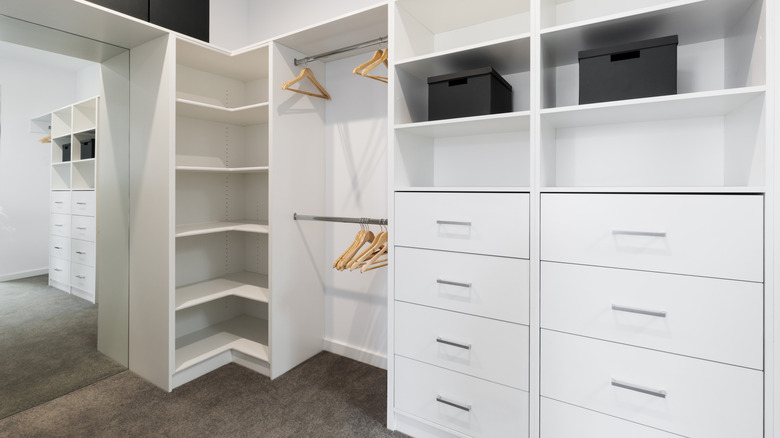
Whether you love it or hate it, you have to see melamine board as something of a marvel. Made of an inexpensive wood product like MDF and covered in multiple layers of resin-soaked paper, melamine is a staple material of affordable cabinetry because of its smooth finish, scratch- and wear-resistance, and low price. It's reasonably durable, though it chips easily at the edges. And while you're probably picturing a white cabinet or closet shelving, melamine can come in many colors and wood grain patterns. But what happens when fashions change, or you grow tired of the white you once thought of as so crisp and clean?
One option is to paint the melamine. You can't throw a paintbrush without hitting someone who thinks it's impossible to paint melamine, but it is doable. Or, perhaps, it's do-everything-rightable, because you really have to nail the preparation and product selection parts of painting melamine if you want the paint to stick for longer than a morning. But it's worthwhile for a few reasons.
First, painting is a cost-effective option compared with the startling expense of new cabinets. Painting cabinets is also quicker than choosing, buying, and installing new cabinets, custom or otherwise, and is far less disruptive. Done properly, painting cabinets can involve disassembly and is probably less time-efficient than you might expect, but you can often paint kitchen cabinets in just one day. And using up-to-date colors and the prep work you put into painting can increase your home's value. Painting rather than replacing cabinets is also a sustainable choice. It's always alarming to see perfectly good cabinets trashed, and that's often what happens.
Making paint stick to melamine
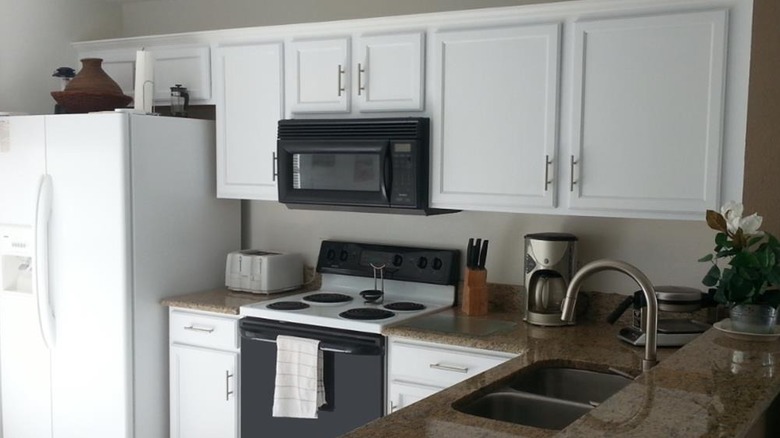
The challenge with melamine is making paint stick to the slick surface. The painting process must account for the smoothness and lack of porosity of the melamine coating, because paint must rely entirely on a strong surface bond to stick to it. To make that bond as strong as possible, you'll need to prepare the melamine carefully.
The first step in painting it is to inspect and replace any damaged edge banding ... the strip of melamine that's stuck to the boards' edges. Next, thoroughly clean any surface you plan to paint with a strong detergent or melamine-safe degreaser. Some have reported success using liquid deglossers on melamine, but if you decide to try this as an alternative or a complement to sanding, read the label instructions thoroughly, since most deglossers are designed for use on paint. Sand thoroughly with 80-120 grit sandpaper. If your melamine cabinets have a grain (typically part of the finish, not a characteristic of the boards' substrate), sand with it in long, light strokes. Allow extra drying time due to melamine's non-porous nature.
Apply a high-adhesion bonding primer for a matte, easily painted surface. Insl-X, Zinsser Bulls Eye 1-2-3, and Kilz Adhesion Primer are often recommended for use on melamine. If the primer leaves any unwanted texture, smooth it out with 180-grit sandpaper and clean up with a tack cloth. Use a satin or semi-gloss paint recommended for melamine; hybrid enamel paints bond best. Pros recommend Benjamin Moore Advance, Sherwin-Williams ProClassic, and Behr Alkyd Enamel paints. Paint with the grain, if any, using as little paint as possible.
Protecting melamine board from water
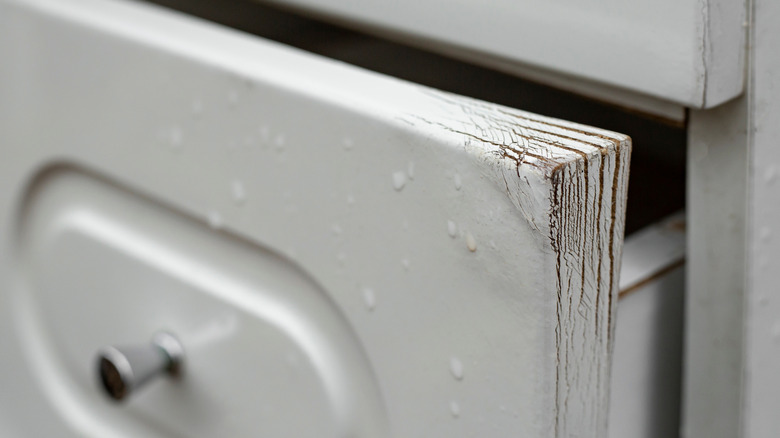
Installing melamine cabinets has been common since the mid-20th century for kitchen and bathroom cabinets, office desks, shelving, and even countertops. But that certainly isn't to say that any of those half-century-old cabinets are still around, because melamine is typically applied to substrates like MDF and chipboard that are easily damaged by even a small amount of moisture. And a melamine board that has been exposed to water won't return to its pre-soaking size and shape, and so must be replaced.
Start with edge banding before you paint. Edge banding isn't just a barrier; it also helps to prevent the chipping to which melamine is particularly susceptible. Holes cut for water supply and waste pipes are not usually edge-banded, even though they are more likely to be exposed to water than most other areas. In the melamine board's defense, plywood has the same problem, and those are among the most popular cabinet materials.
Any area not covered by plastic melamine resin, including the corners of boards between the finish and the edge banding, must be sealed against water intrusion. Sealing the corners of edge-banded melamine is important because the process of trimming the banding can leave the MDF underneath the coating vulnerable to moisture. Use at least two coats of a liquid sealant, such as epoxy, shellac, polyurethane, or varnish, or seal with clear silicone. You can also use a dedicated commercial product, such as Kampel SeamFil. Be sure to apply your sealant to inside and outside corners, plumbing cuts, and anywhere else the board's substrate might be exposed. Caulk all seams and consider using an under-sink liner for additional protection.