

Should You DIY Your Own Roof Repair? Here's What You Should Know
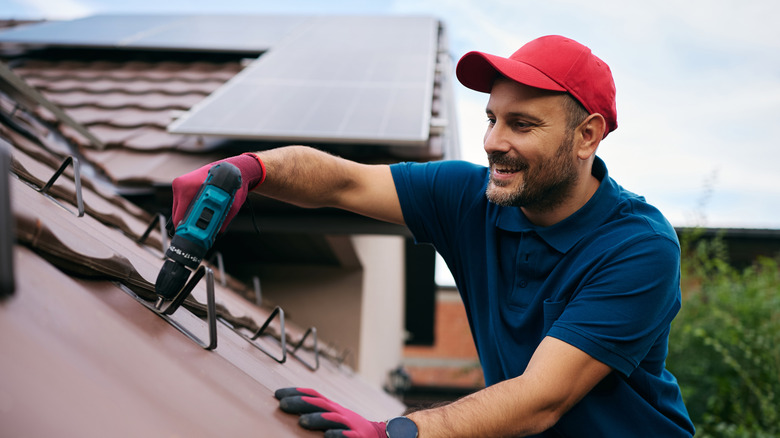
It's perfectly natural, and maybe universal, for professionals to get a bit territorial when people start talking about DIYing what they do for a living. Even professional dog walkers have reasons you shouldn't walk dogs unless you're qualified. When it comes to construction, we expect this from the licensed trades that involve grave safety issues — electricians, plumbers, septic installers, and even HVAC pros. But what about roof repairs?
Basic repairs to a roof don't require permits in many jurisdictions, and in some places even full roof replacements can be done without a permit. Isn't this a signal that roofing is simple enough to do yourself, and save a lot of cash along the way? Perhaps, but there are serious reasons to reconsider DIYing some roof repair jobs. It often has to do with your level of comfort with the work involved high atop a house; falls are, after all, the most likely way to die in construction. There is specialized equipment required, including safety equipment. You might also find yourself in violation of building codes, at odds with your insurance policy, or compromising your home's roofing system. You might not even save much money, and you probably don't offer a warranty on your work.
And it is a profession, after all. There are specialized skills and knowledge that, should you fail to call upon them, could result in disaster. It is difficult for a novice to fully understand roofing systems, and there are lots of opportunities to make mistakes when dealing with both the interactions between parts of a roofing system (say, shingles, gutters, and fascia), as well as their interplay with other home systems (like the way shingles, gutters and fascia can affect walls).
Maintenance and repairs you might be able to manage
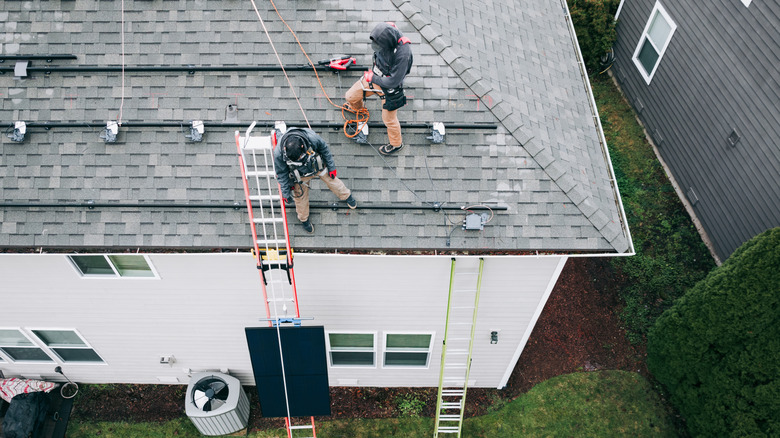
Of course, any broad statement about what you can and can't do, or should and shouldn't do, necessarily fails to take into account your particular skills. Perhaps you're a master carpenter and part-time high-wire acrobat, or maybe one of those country folk who build anything they set their minds to. But, in general, it's the smaller repairs and maintenance tasks that make the most sense as DIY projects.
The line between maintenance and repair can be blurry. But, in general, inspection and everyday maintenance is fair game for any homeowner. This includes cleaning gutters, which a homeowner should think of as a critically important responsibility. You may find it reasonable to install or replace gutters as the need arises, which takes you firmly into repair territory. For a standard asphalt-shingle roof, a competent DIYer should also feel comfortable replacing a handful (say, 10 or fewer) damaged shingles. A DIY-minded homeowner should also be able to seal leaks around roof flashing, a critical roofing component and common source of water intrusion that's easily spotted and addressed.
Keep in mind that your ability to perform a repair doesn't inherently make that repair any less dangerous. Fixing a small leak in vent stack flashing doesn't involve a shorter fall just because you have lots of experience. Safety first, in this and most things.
Roofing jobs to steer clear of DIYing
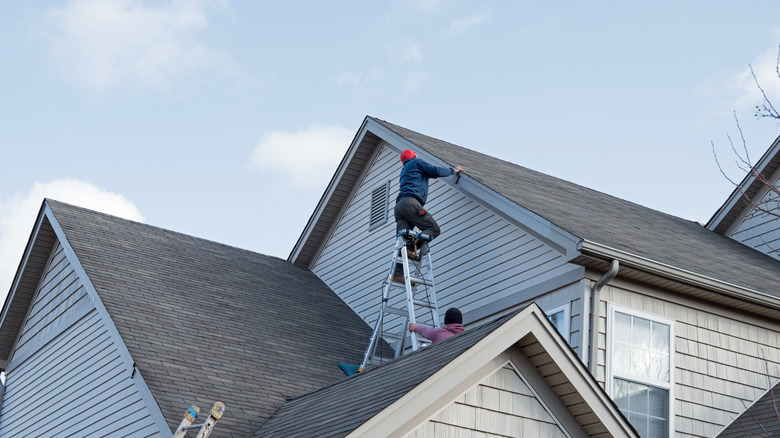
Most other roof repair tasks should inspire concern, if not outright fear, in a level-headed homeowner. Roofing tools alone present a couple of types of serious potential trouble. First is justifying the purchase of a fairly substantial number of tools that will be necessary for any large roofing repair ... nail gun and compressor, hammer tacker, roofing hammer and shovel, tin snips, tall ladders, a hoist for shingle bundles, safety harness components, a magnetic sweeper, and even specialized shoes. An even bigger concern might be how to handle all those tools working at dangerous heights while doing a job you're not practiced at. One moment's loss of balance could change your life in ways that are never welcome. Even leaving the tools out of it, the work is physically exhausting, and being tired leads to mistakes.
All those interlocking systems we mentioned earlier also come into play, of course, and the more complex your roof system, the more failure points you'll find. Any mistake, any missed detail, can easily become a costly and occasionally dangerous way for water to damage your home. So avoid the bigger undertakings, like installing or replacing flashing, fixing major leaks, and dealing with storm damage. And anything that even hints at new construction — from making structural repairs to a full roof replacement — should be off-limits for most of us. Even simply knowing whether repairing or replacing your roof is the best might require the experience and skills of a pro. And if you're a one-person DIY crew, remember that there's a reason roofing crews usually have four or five times that many people.