

12 Ways To Have A Garden - Even If You Live In A Desert
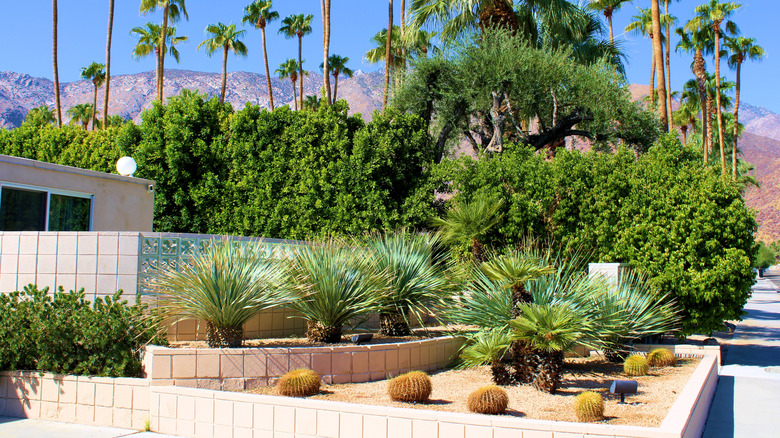
Depending on where you live, you may not have much of a choice as to whether or not a desert garden is right for your backyard. At least, not if you hope to keep your water bill to a minimum. However, that's not to say that you're limited to sparse stretches of sandy soil, tumbleweeds, and the occasional Western-worthy cactus.
In fact, there are plenty of ways to achieve a gorgeous, verdant garden in a desert climate. Starting with what you plant, there are lots of drought-resistant plants that will thrive in water-starved soil. There are also lots of ways to grow them. Container gardens, for example, allow you to dip your toes in the water of desert gardening without forking out a fortune on a full garden bed. Raised beds are another option, helping desert gardeners to counteract the salinity of desert soil. If you decide to go the whole nine yards and plant your entire yard, then there are several time-honored methods, like ollas and sunken beds, that can help to keep your soil suitably moist and your chosen plants thriving.
The key, as in any garden, is to know precisely which USDA Hardiness Zone you live in and adjust your gardening strategy accordingly. Don't worry, though. In this guide, you'll find no fewer than 12 nifty tips and tricks to help you cultivate your very own horticultural oasis, even in the unforgiving heat of the desert.
Use raised beds to combat salinity in the soil
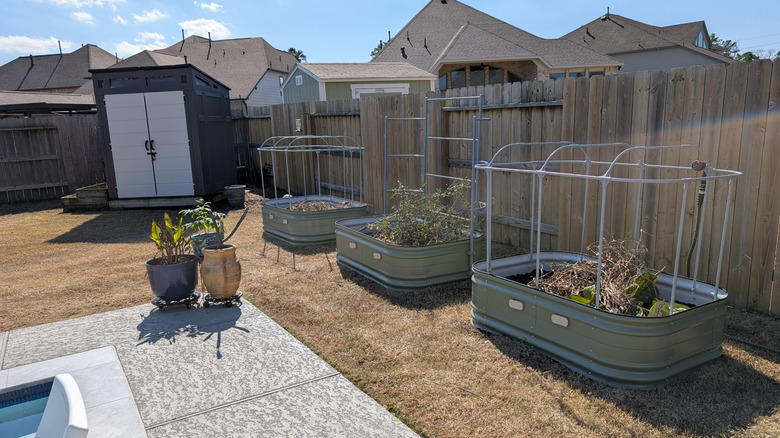
The first thing to say here is that you don't strictly need to build a raised bed to grow a garden in the desert. After all, raised beds are designed in part to promote soil warmth and exposure to sunlight, neither of which is in short supply in the desert. However, the benefits of raised beds go well beyond helping plants to get their daily dose of vitamin D.
Raised beds can improve soil conditions for your plants, particularly those not adapted to the saline environment of the desert. This is a common roadblock for desert gardeners; salts occur naturally everywhere, but in the desert, where soil evaporation and plant transpiration are both high — and rainfall is low — they tend to become more concentrated. In turn, an increased level of salt means plants have to work harder for their water, which can lead to stunted growth, a wilted appearance, and "scorched" foliage.
Since raised beds are filled with your own soil, you can mix up the perfect substrate for your plants and sidestep this problem completely. What's more, since there are plenty of creative raised bed designs to choose from, you can add visual interest to your yard while you do it. As for what you plant in them, that's up to you. Surprising as it may seem in the desert, you could even plant some vegetables. In fact, several gourmet crops, like tomatoes, melons, and squash, will grow quite happily in desert climates. They have deep roots, allowing them to access water towards the bottom of your bed even when the surface starts to dry out. They're also drought-tolerant, meaning you needn't break the bank trying to keep your vegetables well-watered.
Incorporate ollas to mitigate against moisture loss
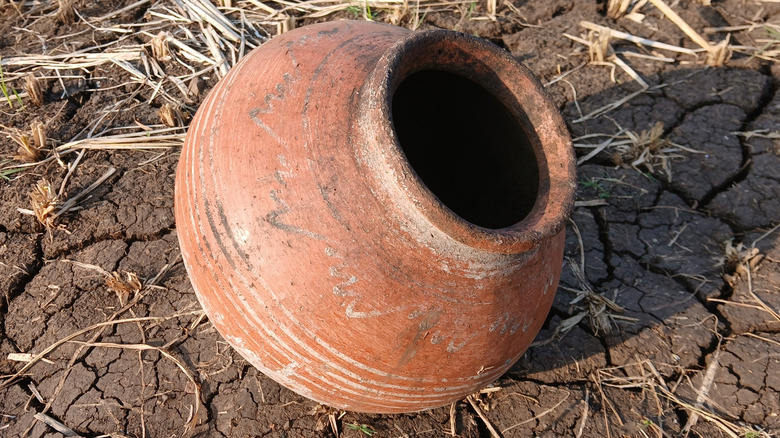
In the desert, traditional watering systems can have a hard time keeping your plants properly hydrated. Especially in the hot season, water that's applied to the surface can quickly evaporate, often before it's had a chance to soak into the soil. And while you could, theoretically, just use more water to ensure the soil is properly soaked, it's not the most efficient way to quench your plants' thirst. Instead, consider burying some unglazed clay pots beneath the surface of your soil and filling them with water. Otherwise known as an "olla," the porous pot allows water to leech slowly into the soil around it. It works via a principle known as soil moisture tension, whereby water naturally moves from areas of high to low concentration. In other words, only when the soil around it is dry does water leech out of the olla. Since the pot is buried and protected from the sunshine, and it delivers water directly to the soil, far less water is lost to evaporation than with more traditional watering methods. In fact, according to one 2017 study, this ancient type of irrigation technique uses between 59% and 70% less water than watering cans.
All you need to do is snag some unglazed clay pots, plug any drainage holes, bury them in your growing bed, and keep them topped up with water and covered with a lid. If you bury your ollas around 12 to 18 inches deep, you can help your plants to develop deeper, more resilient root systems. What's more, you may only need to top up the water once every three to seven days, which has to be better than remembering to unwind the hose every morning.
Plant succulents and cactuses for a low-maintenance garden
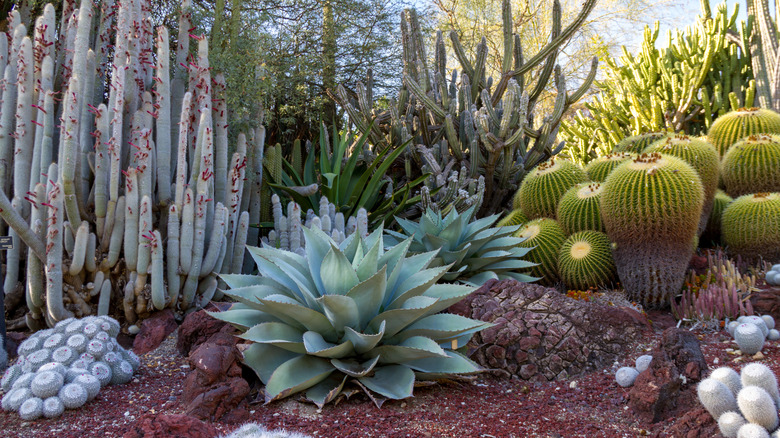
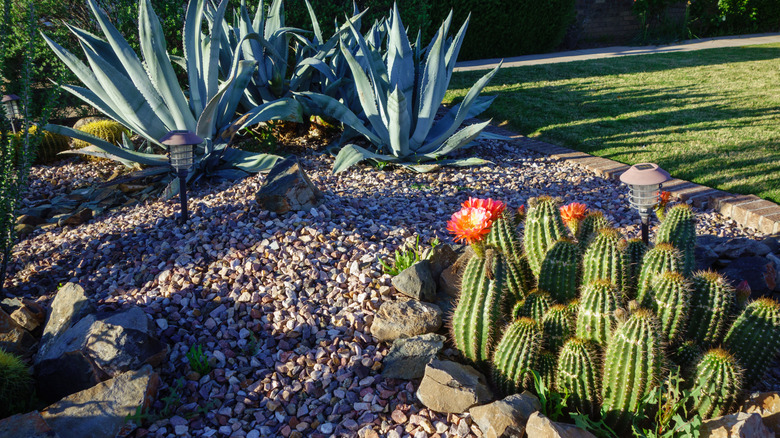
Succulents and cactuses are something of a staple in desert gardens. Evolved to thrive in dry conditions, they're able to store water in their thick stems and/or leaves, which makes them highly tolerant of drought. They come in an array of shapes and sizes, too, and while you won't benefit from the blankets of blooms that other flowers tend to provide, you can still enjoy an interesting floral display, depending on the types you choose.
Some succulents and cactuses bloom repeatedly, while others, like the frosty blue succulent (Agave ovatifolia), are revered for their mesmerizing "death bloom." This dazzling display usually signals the end of the plant's life, and is perhaps the epitome of the phrase "going out in style." And while it's always sad to see your plant reach the end of its life, it's reassuring to know that the death bloom usually only occurs once the parent plant has set seeds for new growth.
Given the variety of species, there are lots of succulent garden design ideas that you can use to add appeal to your garden. You could add texture and contrast by layering your growing beds with shrub-sized succulents and cactuses, like pollinator-friendly prickly pear cactuses (Opuntia spp.) and colorful moon cactuses (Gymnocalycium mihanovichii). Combine them with drought-tolerant ground covers to fill out sparse borders, and perhaps add some vertical depth with tree-type succulents, like tree aloes (Aloidendron barberae).
Group your plants based on their watering requirements
Plants that are adapted to cope with your area's desert climate should need little, if any, watering. Conversely, plants that are adapted to cooler, wetter climes are likely to need some extra attention with the hose. The problem, if you plant them together, is that it's hard to get your irrigation strategy right. For instance, if you give the moisture-loving plants lots of water, then their desert-loving neighbors may start to suffer. Similarly, if you hold back with the hose, your thirstier plants will start to wilt.
With this in mind, one of the best tips for watering your plants in a desert garden is to group them by their water requirements. Plan a zone for plants that are adapted to the desert climate, and reserve a separate spot for those that need more frequent watering. Keep in mind, too, that any plants you choose should have at least a small degree of drought tolerance. Not only will these demand less water, but they're far less likely to perish should you accidentally forget to water them.
Dig a waffle garden to improve water retention
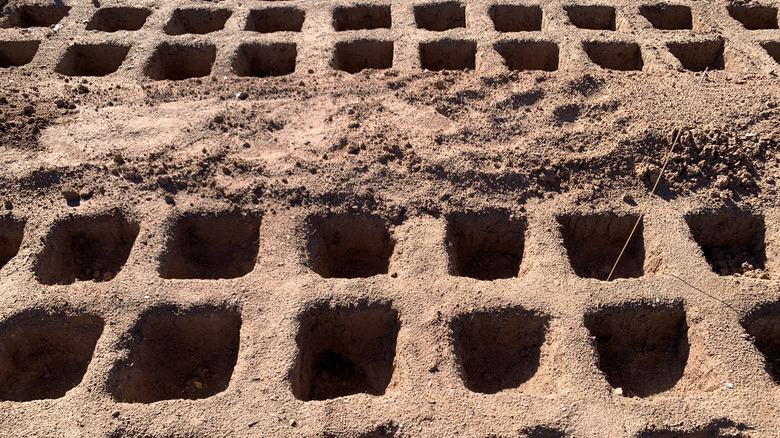
Getting water onto your garden is one thing, but in the desert, keeping it there is quite another. Much of the water simply runs off the surface, and the scorching dry air more quickly evaporates any that manages to stick around. If this sounds familiar, then consider digging a waffle garden to make gardening in the desert easier. Also known as sunken beds, they're called "waffle gardens" thanks to the appearance they give a garden when multiple beds are dug out, and they can help in a couple of ways. The first is by increasing the amount of water that your soil absorbs, since water is encouraged to sink into rather than run across it. The second is by protecting your topsoil from the wind, which can dramatically intensify the rate at which water evaporates from your soil's surface.
Aim to dig your beds at least 18 inches deep, and line the bottom with a mixture of topsoil, compost, and well-rotted manure. This amended substrate mixture will provide an ideal base for an array of plants. The depth of the trench, meanwhile, will help to protect your plants from the worst of the desert weather — especially if they're not as well adapted to your local conditions as other types like succulents and cactuses.
Add shade to your pergola with drought-tolerant, heat-loving climbers
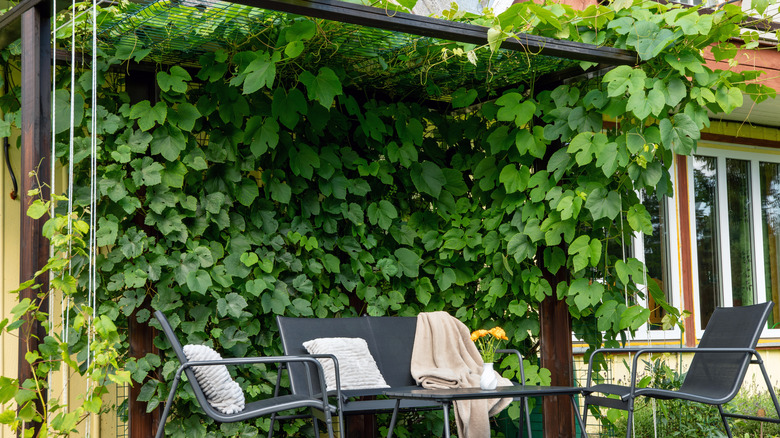
Adding a pergola to your desert garden is a fantastic way to add visual architectural interest. It also provides a beautiful space in which to relax and entertain, especially when you install a shade to protect you and your guests from the sun. There are a few ways to do this, and perhaps the easiest is to buy and install a dedicated pergola shade. However, if you're trying to achieve a desert garden, you can use your pergola as an opportunity to add effortless color to your yard with climbing plants.
Twining and climbing plants can be easily trained to grow up and over your pergola. You could even install a trellis between the beams, providing a framework for your plants to grow and providing your structure with a natural wall. However, you shouldn't just choose any random climbing plants. Instead, look first for plants that grow well in your local climate, and then whittle the list down to those that offer a combination of thick foliage and colorful flowers. Cape honeysuckle (Tecomaria capensis) is a good example, thriving in hardiness zones 9 to 11, with dense foliage and delicate, orange flowers. Bougainvillea (Bougainvillea spp.) is another solid choice — sun-loving, drought-tolerant, and glorious in bloom thanks to showy, bright-pink flowers.
Break up sparse gardens with stepping stones
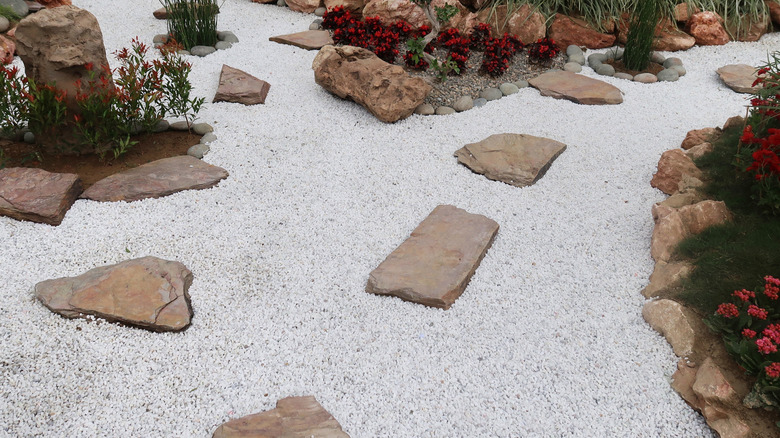
Desert gardens can quickly begin to feel sparse, and it's easy to feel like you need to spend a fortune on plants in order to fill in the blank spaces. However, with a few simple and, crucially, cost-effective tricks, you can add interest while breaking up those boring, lifeless borders. One way is to add some stepping stones. Depending on the style of stones you choose, you can add an almost-sculptural look to your borders. What's more, provided that you place them strategically, they'll also create a handy place to stand when you need to tend to your plants.
You could opt for simple paving slabs, which will certainly help to break up those blank spaces. Alternatively, if you're trying to inject a little color into your borders, why not put some old patterned dishes to good use? Whether it's from your house or from the thrift store, simply smash the crockery up (if it's not already broken), add some concrete to a mold (perhaps a foil pie tray), then embed the pieces into the surface before allowing the concrete to set. The result should look a little like a mosaic, and as long as you use crockery with a design that you like, you're sure to love looking at your creations whenever you walk past your borders.
Fill out your garden with landscape sculptures
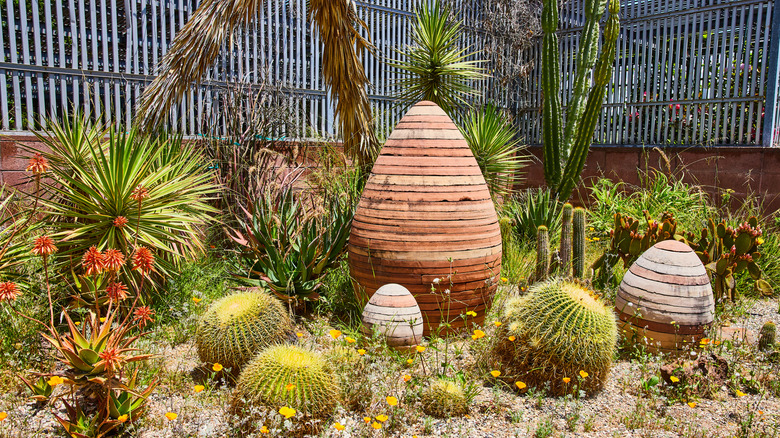
Similar to stepping stones, adding landscape sculptures is a great way to fill out your garden, break up space, and add visual interest. It's one of the savviest ways to incorporate art into your yard, and unlike plants, sculptures require precisely zero watering. Corten steel sculptures are a good choice in desert gardens, since they're resistant to heat and wind. Their rust-patina finish also contrasts beautifully against the lighter, sandier soil colors that are typical in desert gardens.
For the most impact, try to match the size of your sculptures to your garden. Larger blank areas may benefit from one or two bigger sculptures, rather than lots of smaller pieces, which could make your space feel cluttered. Similarly, if you have a smaller space, consider placing just one or two smaller sculptures strategically to break up the monotony of a sparsely-planted area. You should also consider which pieces are most likely to give you joy when you look at them, and avoid random pieces bought gratuitously from your local garden store. Keep an eye out for sculptures at the thrift shop, and be patient. Spend time waiting to find something that makes your heart sing, and when you see it, grab it! By choosing pieces that you're passionate about, or which reflect your own interests, you'll spark conversations among friends whenever they come to visit, while creating for yourself an environment in which you're quite content spending time alone.
Planters and pots allow for targeted watering and amendment
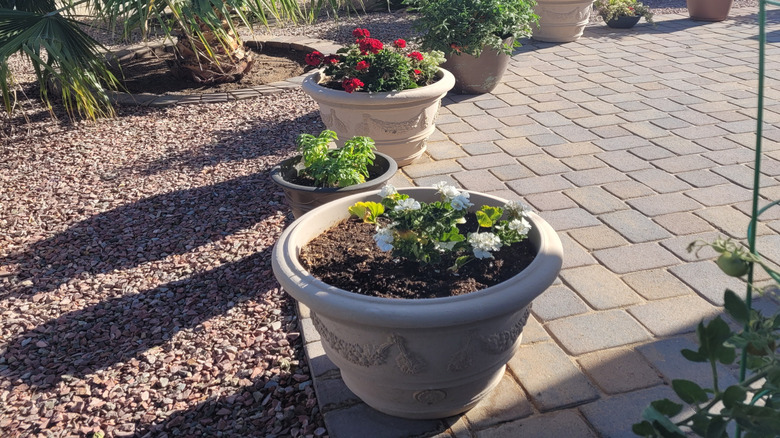
Curating a container garden with different pots and planters is another fantastic way to add sculptural interest to your desert garden. And unlike regular garden sculptures, those pots and planters also allow you to get creative with an array of different flowers. Before we go any further, we should explain that the soil in pots and planters tends to dry out much more quickly than soil in the ground. However, the benefits of growing a container garden in the desert far outweigh the drawbacks.
For example, instead of having to water or amend the soil of your entire garden, you can focus on as many or as few pots as you please. This makes container gardening a great place to start if you're a beginner and would prefer to forego the cost of planting an entire garden without knowing if your plants will even survive. Another benefit of using multiple pots and planters is that it makes diversifying your planting scheme easy. Instead of trying to manage the varying water requirements of different plants in the ground, you can simply separate them into pots and give each as much of a dousing as it needs.
Add drainage for storm rains with a dry rock riverbed
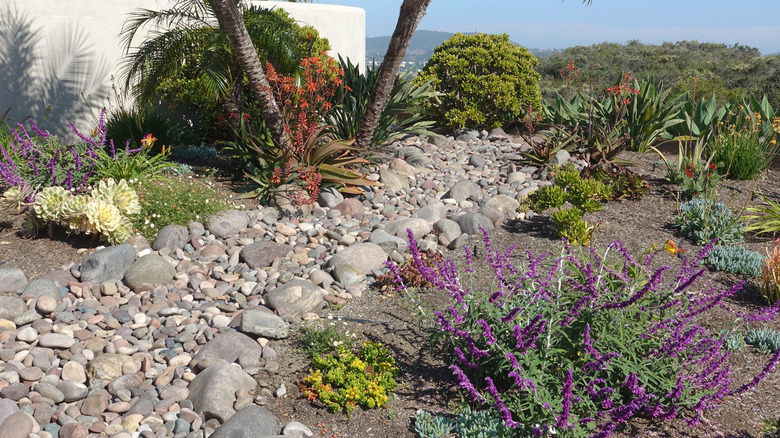
Dry, arid soils are unlikely to soak up the amount of water that comes with a sudden, violent storm. Instead, the water tends to compact the surface, causing it to start sheeting away and run off in whichever direction the landscape dictates. This can lead to varying issues, including flooding in low areas of your garden, as well as soil erosion.
One DIY solution to prevent soil erosion and manage the runoff of sudden and severe storms is to build a dry rock riverbed. This addition will help to channel and drain away excess water, providing a natural course for it to flow through — away from flood-prone areas. Since rocks require no water, you can also use this idea to replace a patch of lawn and reduce your garden's need for irrigation. Aim for a width-to-depth ratio of 2:1, and try to ensure that your riverbed follows the existing contours of your garden. This will give it a more natural look, as will lining the edges of the bed with desert-loving plants, like cactuses and succulents.
Sow your lawn with warm-season grass seed
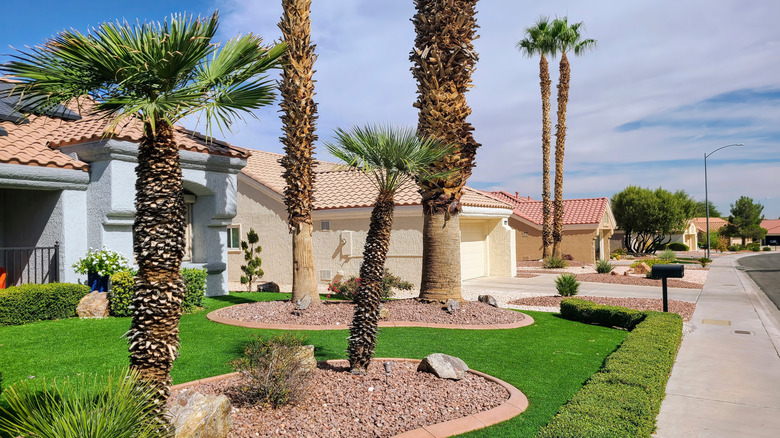
You may not think it, but it is possible to achieve a luscious lawn in a hot desert climate. The key lies in knowing how to choose the best grass seed. While there are many to choose from, the various types of grass can loosely be divided into two categories: warm and cool season. As you might expect, cool-season grasses are best suited to cooler climates. Warm-season grasses, on the other hand, are adapted to grow in warmer climates, which makes them the best choice for achieving a lawn in the desert.
Now, it's important to highlight that just because a grass is better suited to warmer regions, that doesn't mean that it doesn't require watering. Take Bermuda grass, for example. This type of grass is an excellent choice in hotter climates, including deserts. However, it still requires up to 1 1/2 inches of water between two and three times per week during the summer, so you'll need to ensure you have a plan in place to keep your lawn duly doused.
Consider heat-tolerant lawn grass alternatives
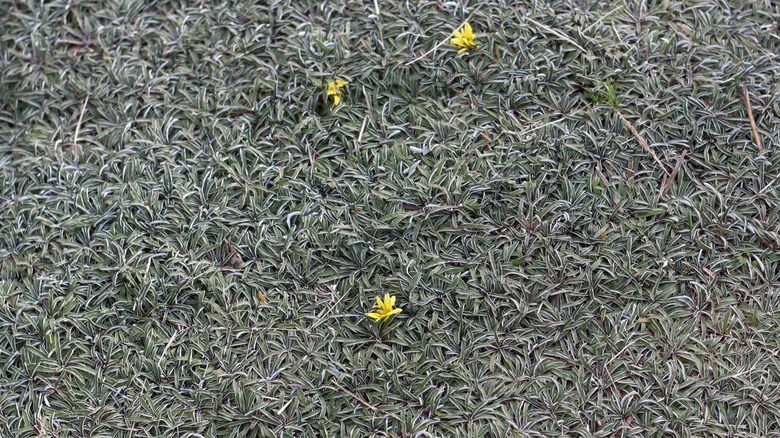
If you'd prefer to achieve the look of a lawn without the demand on your water supply that comes with traditional grass, then don't worry. There are lots of lawn alternatives that have evolved to handle the heat. For example, creeping thyme (Thymus serpyllum) is a superb drought-tolerant lawn alternative that requires little care or maintenance once established. Dymondia (Dymondia margaretae), known rather beautifully as "silver carpet," is another great choice. It can be mowed short for a lawn-like appearance, and once established, it's incredibly drought-tolerant.
The only slight drawback with cover crops like these is that they're often better suited to low-traffic gardens where regular foot traffic is unlikely to damage them. They're especially useful in ornamental landscapes. You can still use them in higher-traffic areas; however, you should consider laying a pathway (or perhaps some of those broken-crockery stepping stones) to ensure you don't damage your lawn whenever you walk across it.