

The Stunning Vintage Vase You Should Always Buy At The Thrift Store (If You Spot It)
When you are strolling through thrift stores, some items will always catch your eye. They may have a unique shape, beautiful colors or designs, or there's just something old about them that makes them intriguing. Cloisonné vases, along with other pieces in this style, have a striking look that draws the eye when spotted on a shelf. Cloisonné art dates back to the Yuan dynasty in China, which was from 1271 to 1368. The color-rich enamel designs did not gain popularity until the Ming dynasty (1368-1644), and production increased during the Qing dynasty (1644-1912). Made from copper or bronze and painted with glass paste (also known as enamel), these pieces are not just collectibles because of their age or history, but the work that went into making them, too. Some of these colorful vases are valuable, selling for hundreds or thousands of dollars, though others have gone for $10 or less. You can style these vases in your home in many ways, but their ornate design makes them stand on their own, adding a special touch to the room.
Part of what makes these vases unique is that glass paste was used to color the spots where metal wire was hammered into place, making them not only colorful but also highly textured, adding depth. While they may not be among the most valuable items to seek out at a thrift store, even if the vase you spot isn't worth $100 or more, it's worth picking up for its uniqueness, vibrant coloring, and history.
Authenticating your Chinese cloisonné vase
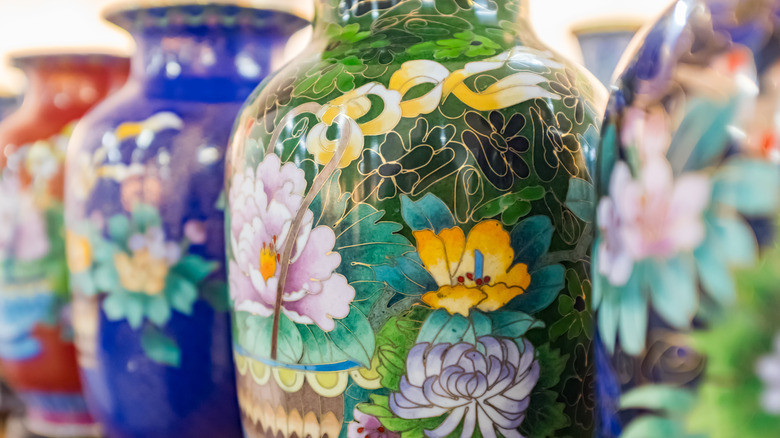
When authenticating your thrifted Cloisonné vase, you'll want to know whether it's Japanese- or Chinese-made. The Japanese vases will be glossier than the Chinese ones, which will appear more matte. The Japanese vases are ground and buffed to achieve a shiny finish. Japanese Cloisonné vases can also fetch over $100 on eBay, so either one may be worth the few dollars you find it for at the thrift store. The beauty of them will inspire creative ways to decorate your home with vases, adding richness and a sense of royalty to any room.
Vases from the Ming and Qing dynasties tend to be more valuable than those made since then, though modern pieces can still be a beautiful addition to your home decor. Authentic Ming cloisonné vases are rare and will show some age and noticeable restorations. Nonetheless, they still look sturdy and well-made, whereas reproductions are likely to appear less well-crafted. Ming dynasty pieces are typically painted in rich blues, greens, purples, and reds. They often feature dragon and lotus symbols, or unique geometric patterns. Cloisonné pieces from the Qing dynasty may feature added colors, such as yellow, and include designs of birds and flowers. Some pieces may have markings indicating the artist, which can help determine the piece's age.