

7 Signs That Bats Are Living In Your Home (And What You Can Do About It)
We may receive a commission on purchases made from links.
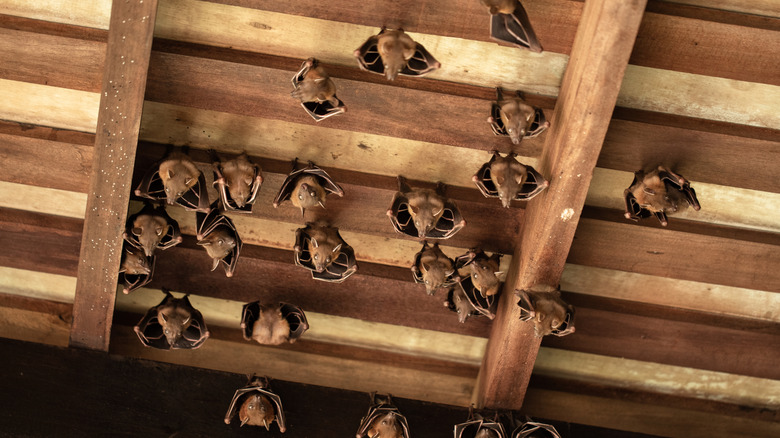
Nothing can set your pulse racing like mysterious noises coming from somewhere in your home's rafters. Nothing, that is, except coming face to face with a bat. But sometimes even noises and random sightings don't add up to an actual bat infestation. To determine if you really do have "bats in the belfry," it's important to know what the signs of an indoor colony are, as well as what to do about it.
Of course, you can call in the professionals at the first suspicious signs. But if you'd rather not spend the money up front, a little detective work can help you figure out if bats really are living in your home. If you do discover you have a colony, there are some DIY solutions to get rid of bats in your attic or crawl space that just might take care of the situation — both humanely and inexpensively.
You see a single bat somewhere in your home
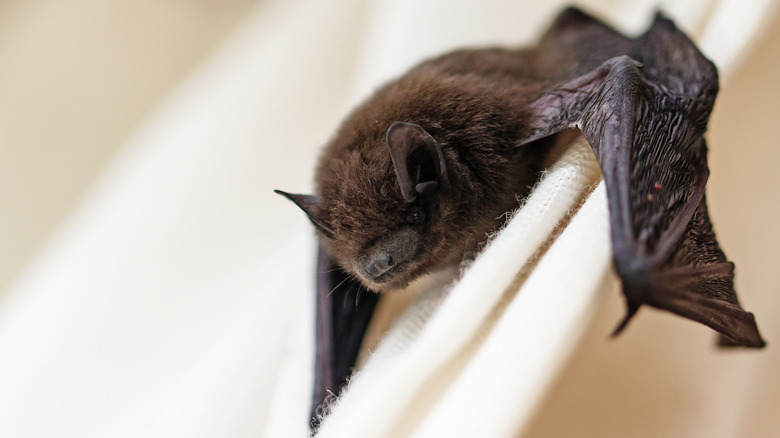
Having one bat on the loose in your house might not mean anything ominous, and it's possible that it just accidentally found its way inside. But unless you see an obvious place that it entered, like an open window, it's a good idea to do a thorough house search after dealing with the bat. Even one bat is considered a potential "threshold" for determining if a colony is in your home.
The bat sighting could be a sign that a bat colony is nesting somewhere inside the house. If you see an individual bat on the floor, hanging from a windowsill, or simply flying around, it may mean that a single member of an indoor colony temporarily left the group and got lost. While that may not be the case, it still warrants a search for other signs of a larger group in your house.
You spot flying activity outside of your home
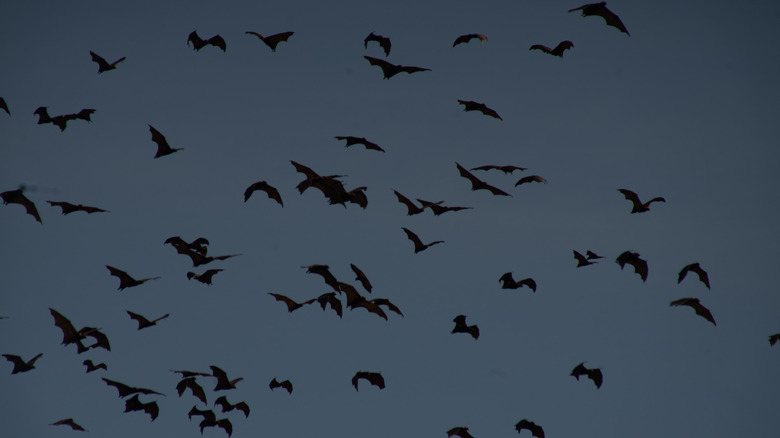
It's not uncommon to see flying creatures in the night skies. But take a closer look if you notice them near the roofline of your home. Are they soaring completely above your home? Or, on closer inspection, is it obvious that they're coming in and out of the upper interior of the building?
Sometimes it's hard to tell whether the creatures are birds or bats, let alone whether they're above or below the roofline. But if you're noticing any activity near the outside of your home, especially at night, pay close attention. If there is indeed a flurry of activity that seems to be coming and going near the roofline or under the eaves, it may well be bats. You may see one or two, or even dozens. Again, the important thing is to investigate for other signs so that you can determine whether the colony has moved in.
You hear the telltale sounds of nesting bats somewhere overhead
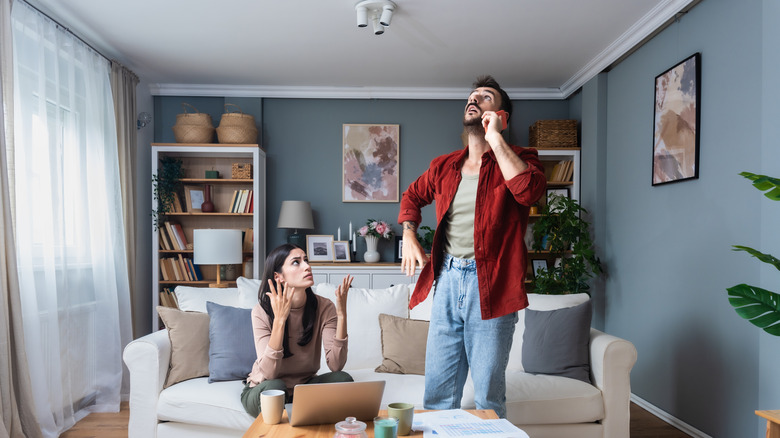
There's nothing spookier than noises in your house that aren't coming from you or a family member. If you're lucky, those sounds are just the house settling, or an appliance powering up. But unfortunately, certain sounds may suggest that bats are roosting in your home. It's one thing to occasionally hear something unidentifiable somewhere above you. But when it regularly occurs, that could be the sound of trouble.
If you have a bat colony taking up residence in your home, chances are it's in the highest areas of the house, which can make the noises sound muffled. But it's important to listen for specific kinds of noises, which may indicate whether it's bats or mice inside. Listen for rustling, thumping and scratching sounds as animals move around. You might also hear the "clicking" or chirping sounds that bats emit. Suspicious sounds may not independently diagnose an infestation, but they should alert you to look for other signs that bats are present.
Unpleasant odors permeate the whole house
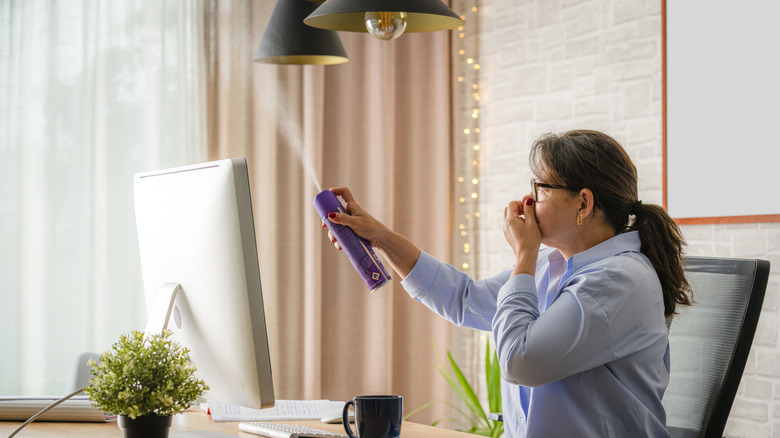
As with strange noises that could signal an infestation, persistence is the key to deciding whether a bad smell is also an ominous one. When you have pets, kids, and stacked-up household chores, the occasional unpleasant scent is nothing to panic about. But if you have a smell that doesn't go away and can't find its immediate source? That is a potential sign that bats are present.
Bat droppings and bat urine do, of course, make their presence known before very long. Not only are the odors impossible to live with, but they also have a way of drawing in more bats, potentially enlarging the colony — and the mess — you'll eventually have to deal with. If the odor is getting stronger the higher into your house you investigate, strongest in the attic or crawl space, then you may be able to predict it's bat waste before you see the physical evidence.
Stains and soft spots begin appearing on the ceiling
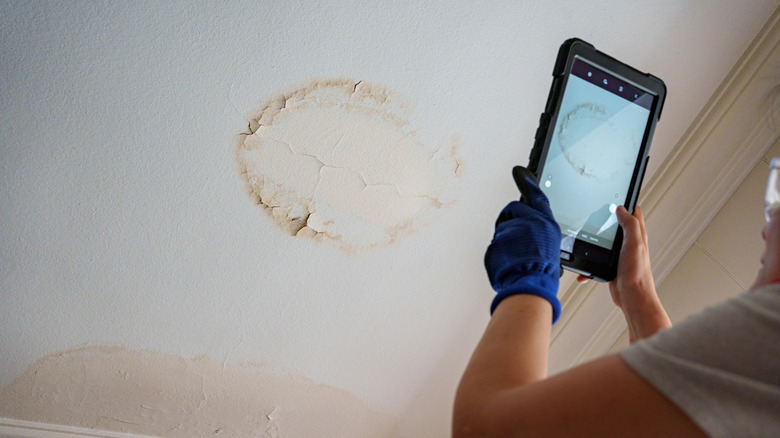
If bats have been living in your attic for long enough, urine and droppings will accumulate on the attic or crawl space floor. Unfortunately, that waste can soak through the floor, subfloors, and into the ceiling of the room below. In corners, the stains may extend into the walls. At first, you may misdiagnose the stains and softened sheetrock as the result of a burst pipe or hole in the roof. But if the stains are just beneath the attic, or you notice rancid smells emanating from their direction, bat droppings are a likely explanation.
Look for yellow or discolored splotches, as well as soft patches in the ceilings and walls. You may notice they look water damaged or have peeling paint. The stains may also get larger and develop mildew. Left untended for too long, these damaged sections can become unsanitary if pathogens in the droppings are inhaled or if they fall into food prep areas.
A visual inspection of your attic or crawl space reveals droppings
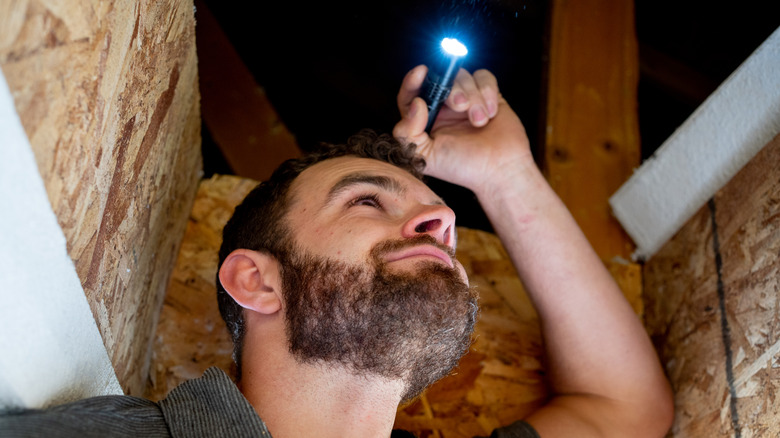
It's not a pleasant undertaking, but checking the upper areas of your home can determine if bats or other creatures have staked their claim. Their droppings can verify not only that there's some kind of colony, but exactly what kind of animal you're dealing with. If you suspect bats, the best time to look upstairs is at night when the bats themselves are likely to be outside.
You can call in a professional at this point. But if you do it yourself, take precautions before entering the area. Wear protective covering that includes a face mask, as large amounts of bat guano should not be inhaled. Experts suggest an n-100 rated respirator for the best safeguard. Eye protection, gloves, and drop cloths under the attic entrance are also helpful.
When it comes to identification, bat droppings are black and the size of rice grains. They look somewhat similar to those from a mouse, but unlike mouse waste, bat feces accumulates in big piles under roosts, rather than small scatterings throughout the area. Also, if you can stand to crush a few samples, they will tend crumble easily, as well as reveal shiny, undigested pieces of insect bodies.
There are dark stains on the outside of your house
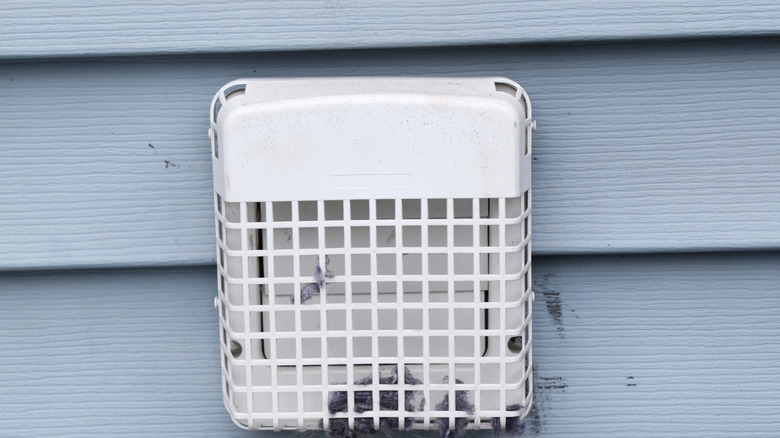
It might not always be obvious where bats are entering your home unless you know what to look for. Bats tend to leave dark streaky marks on the exterior of the house, right next to the place they're finding their way in. After watching for likely entry and exit points at night, verify those places in the daytime with a visual examination for rub marks.
Even if you don't see the bats themselves flying around entry points at night, daytime is more likely to reveal the telltale smudges they left behind. When bats squeeze their way into or out of a building, the natural oils from their skin are the culprit of the obvious residue they leave behind. Look for the spots on exterior areas such as chimney cracks, roof gaps, holes in eaves, plumbing or dryer vents, and loose pieces in the siding.
Isolate and release any single bats that are downstairs

If you do find yourself trapped in a house with one errant bat, you'll want to remove that particular bat from the house with minimum interaction — before investigating whether its one of many. Ideally, you should wait until it's flown into a room that has a door you can close. You should also remove any family members and pets from that room. If possible, before leaving the room, open a window or exterior door so that the bat can see itself out. If that doesn't work, call your local animal control department for help removing the bat safely.
You should avoid handling bats, especially with bare hands, since they can be a safety risk if they bite you. But if you have to mange it yourself as a last resort, put on some leather gloves and approach the bat slowly while it's inactive. Gently slip a box or container over the creature. Then, put a lid on the container and carry it outside, releasing the bat.
Observe bats' flight patterns to find entry points

It's important to figure out where the bats are entering in order to go about stopping them. Dawn and dusk are the most active times for bats. Specifically, about 30 minutes before either sunrise or sunset, bats are most likely to be seen exiting or entering the house. Rainy, windy, or cold days are bad for spotting bats because they grow sluggish during this type of weather. Of course, these conditions are also uncomfortable for human recon missions, so wait for the weather to clear up.
Stand outside during bats' active periods to spot their movement. Once you see them, try to zero in on which gaps, holes, or vents that they might be using to enter or exit. Binoculars or a camera with zoom can help you spot them more accurately, since the spaces bats can squeeze into can be quite small. You'll want to have as precise an idea as possible where the entry point is so that it can be sealed.
In late winter, seal up access points on your home's exterior
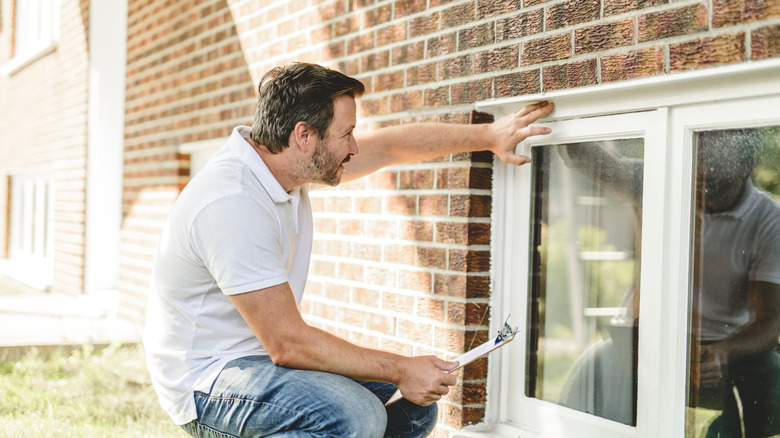
Once you've determined where the bats are entering, you need to figure out when and how to block those access points. The timing for excluding bats is important. In many regions, these flying creatures are less drawn to houses and other indoor spots between January and April. That's the period in which bats will most likely be out of the home — meaning you're less likely to trap them inside your house.
During this time of year, get to work repairing or replacing the entry points you've identified. You might need to replace old screens, caulk around exterior doors and windows, and put screening on chimneys and vents. Use the medium that works best for the material around the entry point. For example, screening or hardware cloth can go over vents. For cracks in siding or gaps around window frames, consider an expanding polyurethane foam or a high-quality putty. If the areas are too hard to reach or otherwise challenging, you may need to consult a professional contractor.
During the spring, install a check valve to humanely discourage bats
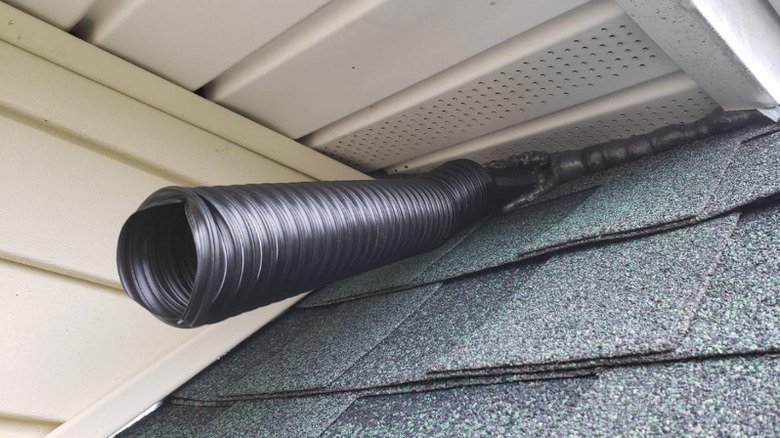
Sometimes, you can't confirm the existence of bats before needing to seal access points, leading to a colony trapped indoors. That's why it's essential to check your home for bats in the spring, if you haven't done so already. Spring is the time at which you can install special devices that allow the bats to exit – but not to re-enter. In this way, if the colony is hunkered down in your home during the mid-April to June nesting period, they can gently be prevented from coming back in.
A check valve is one such option that helps avoid the need for an exterminator or other exclusion methods. Plastic options like the The Bat Valve can be found at hardware stores or online retailers, but also be fashioned with mesh instead. These pipe-like fixtures, also known as bat exclusion tubes or one-way doors work by exploiting bats' natural flight patterns, which prevent them from landing in the tube.
Use light strategically to discourage bats

As you probably know, bats sometimes prefer to operate under the cloak of darkness. So, illuminating interiors where bats may otherwise live is one method for discouraging an indoor colony. But bats also like to chase insects hanging around outdoor light fixtures. So choosing the right exterior lighting can keep bats away from your porch and patio.
There are plenty of practical safety and security reasons homeowners may prefer to leave outdoor lights on — even if they do attract the kinds of flying insects that bats prey upon. As a compromise, look for bulbs labeled as "bug lights." These give off a yellow or amber hue, which is less attractive to bugs than white or bluish types.
Interior nesting spaces should be illuminated in order to discourage bats from bedding down in your home. If a colony is already dwelling in your attic or crawl space, keep lights on in these areas, day and night. If there are no electrical outlets, you can use battery-powered lanterns. It's important to make the lights as bright as possible, and positioned them directly toward the suspected roosting spots.
Set up attic fans to keep bats uncomfortable
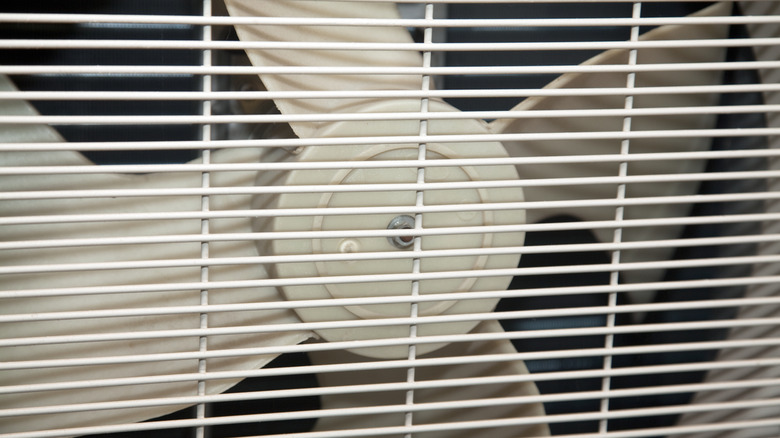
Setting up fans in bat roosting zones is another useful strategy for keeping the critters away. Anything that both moves and cools the air disturbs bats, who prefer warm and still environments to carry out their roosting and hunting. Luckily, keeping bats away by lowering temperatures and creating constant air movement doesn't have to be an expensive endeavor.
A strategically placed box fan or two will do just the trick, and can go for under $25 a pop, like the Lasko 20-inch Box Fan available at Walmart. Plus these fans are noisy, which adds another nuisance that bats would prefer to be without. You'll just want be sure to keep fans pointed directly at the areas where you see or suspect roosting bats. It is worth keeping in mind that this solution may not work on its own, and is best used in tandem with other deterrents and exclusion methods.
Use aromatherapy scents as low-tech bat repellents

Scent repellents may not make an entire bat colony get up and leave, but they could discourage a small group or the occasional random bat. The best part is that the very scents that bats dislike are ones which most people favor. Plus, you may already own an unexpected spice or herbal scent that keeps bats at bay, making this method free.
The three smells which bats seem to especially avoid are eucalyptus, cinnamon, and peppermint. Of course, you can scatter dried eucalyptus and peppermint leaves, as well as cinnamon sticks, in the corners of your attic or other roosting spots. They can also be tossed over areas in which you've seen droppings. Don't forget to set them near suspected entry points as well. For an even more concentrated odor, use essential oils. Dab cotton balls or cloths with one or more of these strong-smelling essential oils. Every few weeks, replace the spent cotton balls and cloths with fresh versions of these natural repellents.
Play a radio or use ultrasonic devices in roosting areas
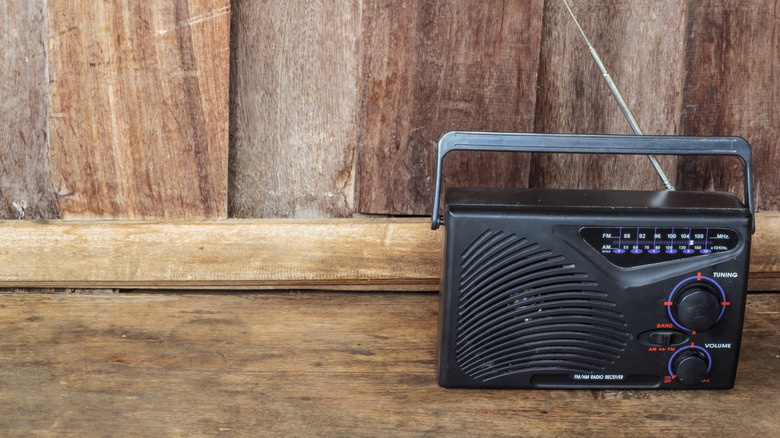
Noise may not permanently discourage bats, but coupled with some other pest management strategies, keeping things chaotic in the bats' would-be roosting area may be helpful. You can find special sound-emitting devices geared toward repelling bats at hardware stores or online. These include products such as the Ultrasonic Bat Repellant Deterrent. The effectiveness of ultrasonic deterrents is still being debated, but it's one relatively low-cost method to try.
Even cheaper? Try keeping a radio or speaker in your attic, turned to music or even static. The key is to keep the sound on as loud as you can stand it, without driving yourself or your neighbors crazy. If you don't want to have it on 24/7, you're in luck. The loud sounds are most effective when they're played during the day, since that's when bats are trying to settle in and get their rest.
Consider setting up a nearby bat box
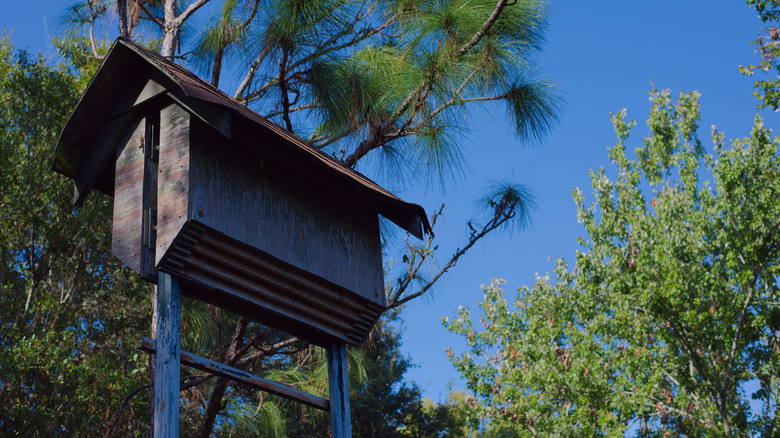
Bat boxes have their pros and cons, especially if you're using these new homes as a way of tempting the creatures out of your house. If you put the boxes too low, or too near the original entrance point, they may bother your family while outside or go back in the house. But if done properly, the bats have a place to roost, while you can still enjoy the insect-eating services they provide. Your best bet is to place the bat home higher on a tall post, or on an outbuilding that's well away from your home and play areas.
You can buy bat boxes new at a range of price points that vary based on quality and size. Relocating a massive colony of bats will require a bigger box that can be pretty expensive. But in many cases, you can buy something like the Nature's Way Triple Chamber Bat Box, which can house up to a whopping 300 bats at once, for just $60. Another options is to build a bat house yourself. But be sure to take precautions with the build and materials to avoid compromising the bats' health.