

7 Common House Noises (And 4 That Are A Cause For Concern)
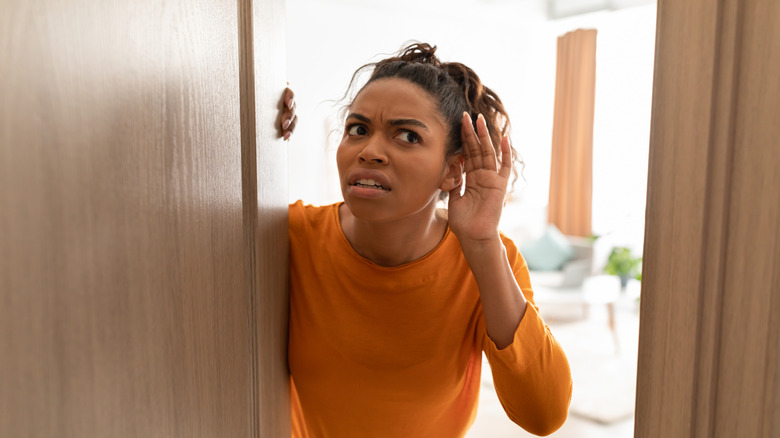
Over time, it's surprising how we become used to the myriad subtle noises that routinely crop up in our homes. Whether it be the hum of an air conditioning unit, a squeaky floorboard, or the distinct swish of a door moving over thick carpet. These sounds become an ambient backdrop for everyday life. We notice them more particularly at night, of course, when the rest of the world is comparatively hushed. But these sounds are always there, and we become so accustomed to them that they go unnoticed. Until, that is, something changes.
Knowing which noises are normal and which might be cause for concern is a tricky business. Houses, like any structure, have their own distinct audio personalities, after all. But don't worry. A quick read through the noises below will tell you what you need to know when it comes to identifying which ones are par for the course and which warrant further investigation. From suspicious scratching to curious cracking, we've got you covered.
Creaking floorboards are to be expected

Those little creaking sounds when you walk across your living room or up your stairs may be irritating. However, in most cases, those squeaks are perfectly harmless, and you may notice them come and go over the course of a year. The reasons behind this are temperature and humidity. Both affect wooden boards, making them expand or contract as the weather and the seasons roll by. This is perfectly natural, and the odd creak or groan as the weight of a human presses down upon them is nothing to worry about.
The only time you need to take action is if the noise substantially increases in volume or a large number of boards are becoming affected. There are a few reasons why you might be experiencing this. Boards that have been nailed down rather than screwed in tend to come loose more easily and shift when weight is placed upon them. If you can access them, reinforcing their installation to the joists can decrease the noise. More serious issues include misaligned joists or issues with sub-flooring. In that case, depending on your level of capability, you may need to call in an expert.
Roof popping comes with the territory (and temperature)
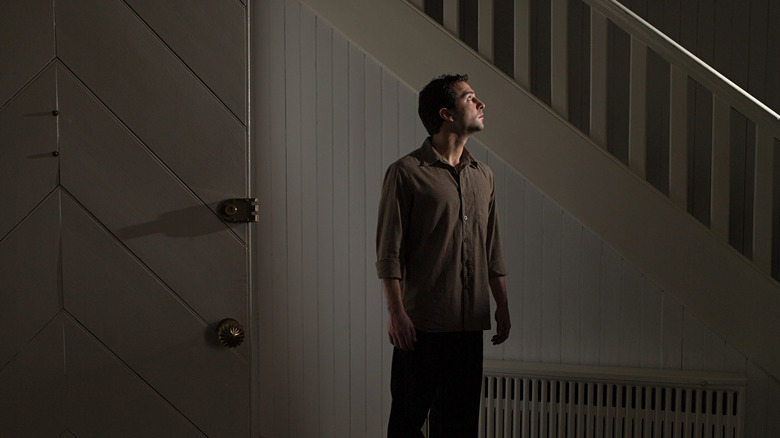
Once again, our old friend weather is at play here. You don't need a degree in thermal dynamics to know that all materials are affected by changes in temperature, to greater and lesser degrees. Thermal expansion and contraction are normal in any house. Your walls, floors, joists, roof tiles, doors, and windows will all behave differently when experiencing natural changes in temperature, whether seasonally or simply the transition from daytime to night. Because different materials expand or contract at varying rates, you will often hear snaps, crackles, or pops as components shift slightly in response to the changing environment.
This is not to say that you should completely ignore these sounds. Any noticeable, dramatic increase in the volume, location, or frequency of these occurrences warrants further investigation. They could be indicative of soil erosion or foundation shifting, so it's always best to double-check with an expert.
Screeching windows might not spell disaster
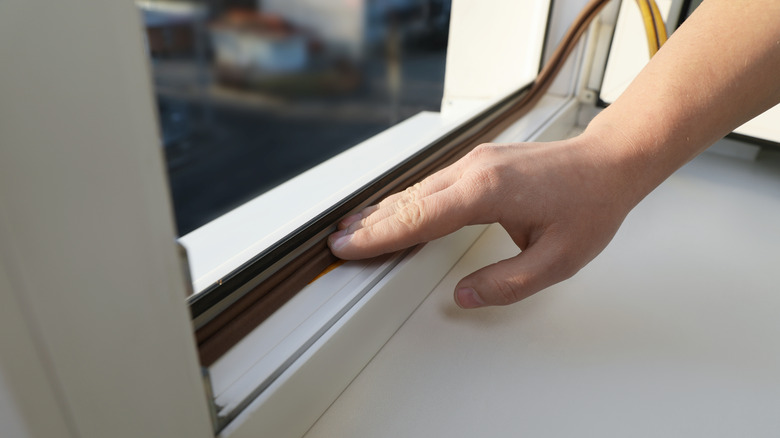
When the wind gets going, it's very common to hear squealing emanating from around your windows or doors. While well-fitted windows in top condition shouldn't allow for loud whistling noises, it's usually a very simple fix if they do. A new dose of window sealant around the edge of the glass will more than likely do the trick. Once you're done, it's easy to check your windows and doors for drafts.
Other potential causes of whistling windows include broken latches or worn-down seals. In either case, replacing the parts will have your doors or windows back to being silent and sturdy. Of course, there is always an outside chance that there may be something more serious at play. On rare occasions, you may find that your windows are slightly too small for their fittings, or that problems with the wall cavity are to blame. If you notice significant whistling or drafts after you've resealed and checked for functioning parts, have a window company come do an inspection.
Why cranking up the heat may result in clanking

It's common to hear clanging and banging when you turn a heating system on. As long as it's moderate, this shouldn't concern you. These noises occur when hot water enters the metal piping of your heating system, causing it to expand. These expanding pipes and radiators rub against floorboards, walls, and their own brackets, resulting in creaks and clanks. Think of this as your heating system waking up and having a good stretch!
If this noise is bothersome, it's worth spending time checking your exposed pipework to make sure it's fastened securely. This alone may fix most of the problems. Tapping or gurgling from your radiators might mean there is some trapped air in there. In this case, opening the radiator's bleed valve should allow air to escape. See our handy guide to understand the top reasons you should be bleeding your radiator (and how to do it). As always, if noises increase in volume or frequency, you should consider calling in an expert to give your heating system a once-over.
A scratching noise from your gutters is likely natural
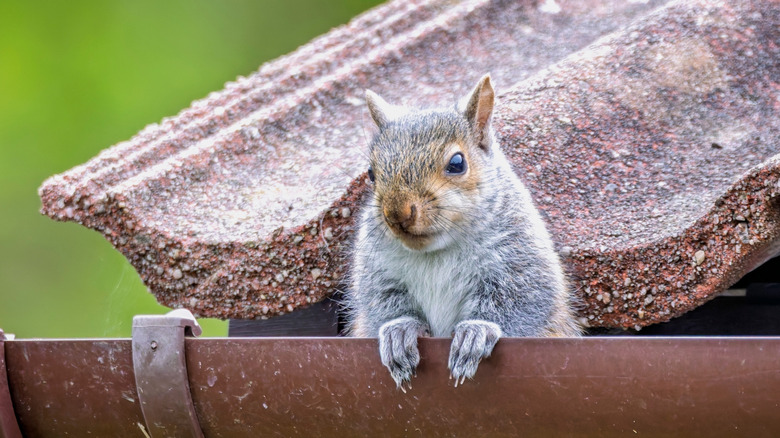
Any scratching you might hear in your gutters likely comes from the little paws of common wildlife, such as, depending on where you live, squirrels or chipmunks. Your drainage system provides a handy conduit for these critters to get around, and they don't usually inflict damage. However, it's important to keep gutters unclogged and clear of fallen leaves and twigs that can also make scratching sounds. If you're okay with heights, carefully use a ladder to inspect and remove unwanted debris.
That said, gutters and downspouts can also provide easy access to more problematic wildlife, such as mice and rats. These can then creep into gaps in the roofing material or siding. If the scratching is persistent and noisy, or if you are seeing other signs of rodent infestation, you will want to get a professional in to assess the situation.
Squeaky doors are usually simple to correct
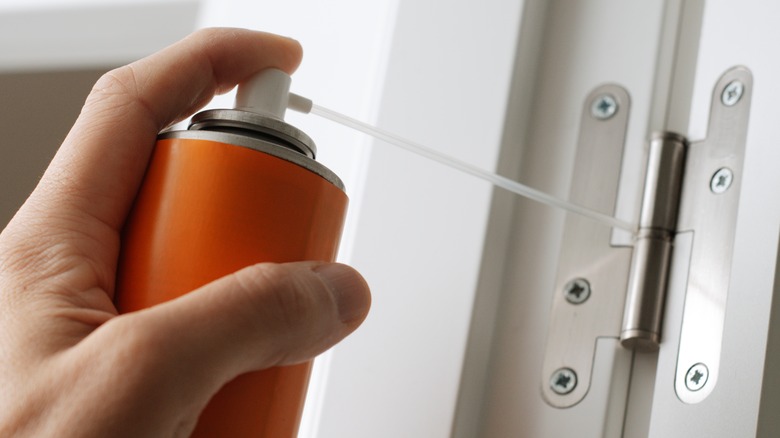
For many people, the sound of squeaking can prove immensely irritating. Inside your home, one of the most likely causes of it is your doors. Specifically, it's the hinges on your doors that you need to pay attention to. Any moving parts that are in contact with each other require some form of lubrication in order to function efficiently. Door hinges are no different, so if yours are beginning to sound like a choir of mice, the best answer is to whip out a can of WD40 and get to work. Before you do that, however, don't forget that in many cases you can fix tight and squeaky door hinges with a simple bathroom essential, a bar of soap.
If you're lucky, you may be able to lubricate door hinges as they are, without any need for disassembly. In some cases, you might need to remove the hinge-pin, which is easily achieved using a hammer. If you've thoroughly oiled your door hinges and the squeak persists, it could be that your door or doors are warped or misaligned. In this case, you'll want to look into rehanging or replacing them entirely. Once again, however, this is a last resort.
High pitched ringing or buzzing from lighting may be an easy fix
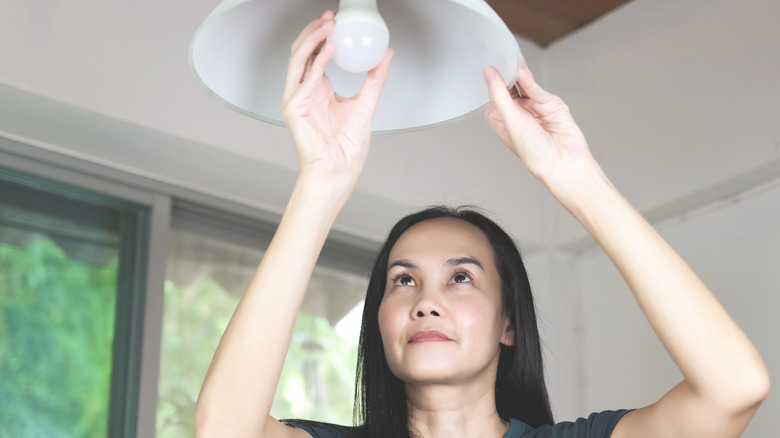
Fizzing, buzzing, or ringing, especially if high-pitched, is often a reliable indicator of electrical issues. Before you panic, however, it's important to remember that incompatible or poorly fitted light bulbs are also a common cause of high-pitched buzzing and often make for an easy fix. Fluorescent lighting will buzz as it degrades, and regular light bulbs, which are not screwed or pushed in tightly, can also be a culprit. In each case, a simple check and swap should do the trick. Additionally, modern LED bulbs may hum or buzz if used with older dimmer switch systems, in which case you might want to look at updating your system.
It's important to make the distinction between faulty wiring and a faulty bulb. You can easily check this by trying a different bulb in the same fixture, or plugging the bulb into a different fixture to see if it still rings. If you've determined that the light fixture is the culprit and you are capable of safely tackling electrical work, try turning off the power and making sure the wiring is securely installed. If so, it is likely that the fixture simply needs to be replaced.
Sounds of running water should always be investigated

Leaks can be insidious when it comes to potential household degradation, and repairing water damage isn't always easy. So, if you regularly hear running water (aside from when you are using the taps or shower, of course), it is well worth your time investigating. If these sounds are low and intermittent, that's probably just the natural sound of water running through your pipes. If the sound is continuous, loud, or frequent, you will definitely want to call an expert.
Pipes can and do burst, and not only during big freezes and thaws. Corrosion, clogs, intrusive tree roots, and poor installation can all cause burst pipes, which in turn can lead to serious, long-term damage. Therefore, if you're hearing the sound of running water anyplace other than expected, quick investigation is important. Other signs to watch out for are peeling wallpaper and damp or discoloured stains on walls, ceilings, or floors.
Dripping drains, slurping showers, and troublesome toilets
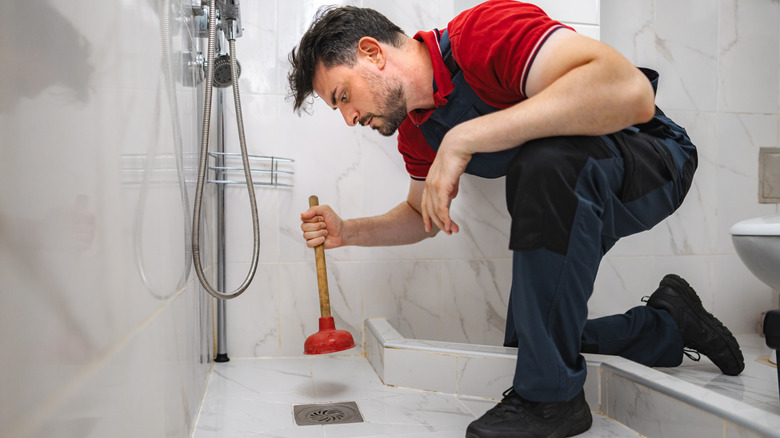
As we have already discussed, water damage can be a nightmare for homeowners, so this category is certainly one you should pay attention to. Hair, discarded food, and other less palatable items are all common causes of pipe blockages, which lead to pronounced gurgling and slow drainage. So, it's best to not let the problem build up. First, you should inspect drains for any visible blockage that can be removed. In other cases, a good go with a plunger may well sort out the issue. Then, DIY a drain cleaner with common household items like baking soda and vinegar to flush out any residue.
If gurgling continues once any obvious blockages have been dealt with, or if you experience several sources gurgling at once, then this could be a sign of a more serious problem. This may be anything from larger or multiple blockages to ventilation issues and intrinsic design flaws. So, now is the time to pick up the phone and call a plumber for help.
Sounds from inside your walls, basement, or attic could be down to little paws
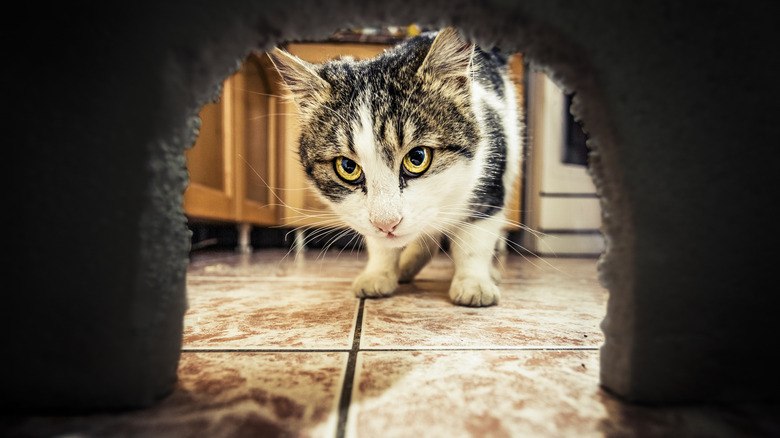
Scratching, thumping, scurrying, and general knocks that appear to originate from inside the walls of your house, or in the attic, might well be indicative that a family of furry friends has moved in. Squirrels, rats, mice, raccoons, bats, birds, and bees all thrive in the natural protective atmosphere of wall cavities and attics. These can all cause problems to varying degrees, including structural damage, bad smells, disease, and the attraction of insects. Signs of animal infestation to look for are droppings, unexplained damage, changes in behavior of any pets, and of course, those scratches and scurries.
Loose roof shingles, pipes, and any structural gaps in your property provide access for these critters. So, inspect your exterior and seal any of these access points. Safe removal of animals necessitates correct PPE (Personal Protective Equipment), disinfectant, a well-thought-out plan, and an awareness of any applicable laws. Sometimes traps can handle a few uninvited guests. However, for a significant infestation or when dealing with a dangerous species, it's best to hire a professional pest control company.
HVAC systems shouldn't rattle
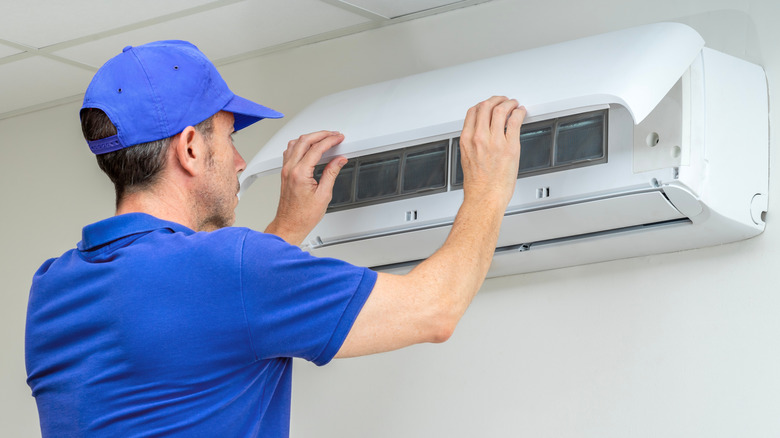
These days, many people rely on a good HVAC (heating, ventilation, and air conditioning) system to keep their homes at a stable and comfortable temperature. So, keeping this system in good running order is, of course, a priority. Any rattling or vibrating from your ductwork warrants investigation to prevent permanent damage.
Debris, loose joints or other components, gaps, and foreign objects can all cause a rattling noise in your HVAC system. A visual inspection is your first task, identifying any obvious gaps where ducting comes into contact with other surfaces. Clearing debris and securing loose components may well put an end to the rattling. Also, make sure the furnace is clear of debris and that the cabinet door is securely closed. If the sound continues, it's time to call a technician. Problems left to fester can lead to costly repairs, so pro-active is the way to be!