

Grout Haze: How To Prevent It During Your Next Tile Installation
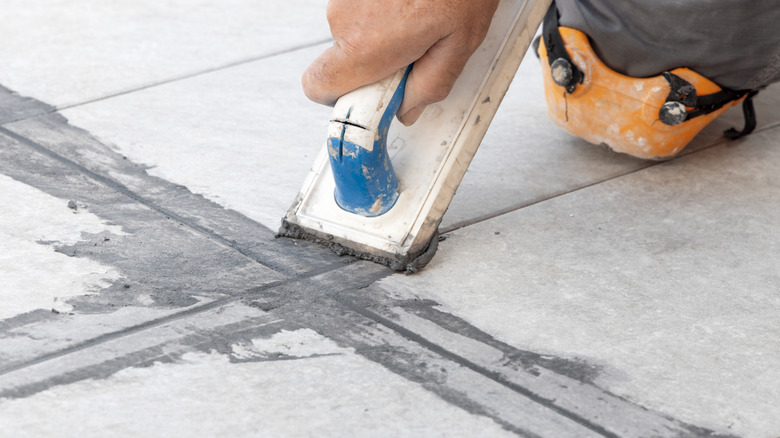
We may receive a commission on purchases made from links.
While tiling isn't inherently hard, achieving a flawlessly professional-grade installation can be quite challenging — especially for beginner DIYers. For one, it's hard to avoid mistakes when tiling, which can result in work that needs fixing or overhauling. One error that seems unavoidable, even when properly grouting your own tiles, is grout haze: the cloudy or chalky film that forms on and sticks to tile surfaces after installation. What's tricky about grout haze is that it doesn't show up when the tile is wet, making you believe that the surface is spotless. However, once the grout dries, the patchy buildup makes your tiles appear dull and dirty. Fortunately, this pesky residue can be avoided during or after the tile installation process with a quick wipe or specialist additives.
One method to prevent grout haze from forming is to clean excess grout immediately after installation. Using a cloth or sponge wet with clean water, wipe down the tile surface thoroughly after grouting. Once the grout starts to cure, repeat to polish the surface. You can also use a grout haze remover, like the Miracle Sealants Epoxy Grout Film Remover, which clears the residue from ceramic, concrete, natural stone, and porcelain tiles. Just mix the solution into your cleanup water. Sealing the grout with a grout sealer, like the Rainbow Grout Pen White Tile Grout Paint Marker, is another effective way to prevent grout haze while providing long-term protection to grout lines.
How to remove grout haze from tiles if you can't prevent it
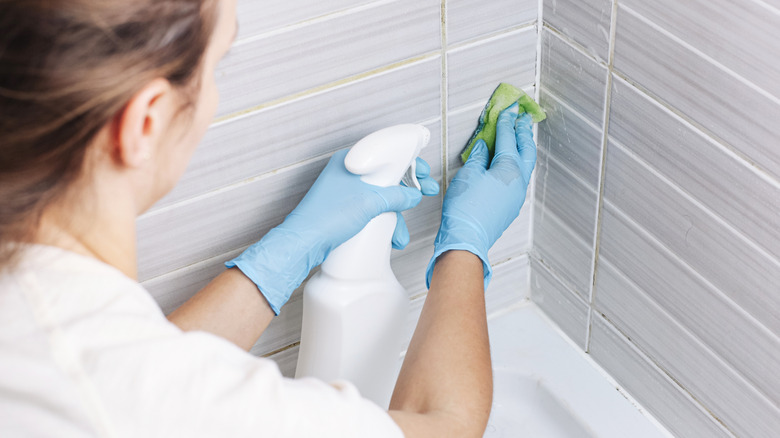
Prevention is almost always better than a cure. However, the thing about grout haze is that it's almost impossible to remedy if you weren't the one who did the tile installation. If you are faced with this unsightly residue after, say, signing a buyer's contract on a home and moving in, the only way to deal with the problem is to approach it head-on. There are ways to successfully clean grout haze after installation. To start, try mixing one part vinegar and four parts warm water in a bucket or spray bottle to create a cleaning solution. Use it to mop or wipe down any tiled areas with visible hazy film. For spaces with more prominent buildup, you might have to mop or wipe twice.
Another option is to use a commercial cleaner or grout haze remover, such as a phosphoric acid-based cleaner. The active ingredient in this solution reacts to the cement in the grout, causing it to easily detach from the tile surface during cleanup. Be sure to avoid the worst tile and grout cleaners, however, since they can damage both your tiles and grout. For instance, bleach and bleach-based products will break down the cement in grout, causing it to crack and crumble. They can also discolor your tiles. Highly acidic chemicals, like muriatic acid, can dissolve the alkaline materials in grout and some tiles. For sensitive grout or tiles, use a non-acidic cleaner, like Miracle Sealants Grout Haze Remover, or call a professional cleaner. They have access to specialized equipment and products that can safely and effectively remove the buildup — or tackle deep-set mold or mildew — while salvaging your tiled floors or walls.