

Red Grow Light Types You Should Know (& The Best Way To Grow Your Plants With Them)

Whether you want to start seeds indoors or provide supplemental light for houseplants, you've likely come across red grow lights. Red light typically refers to any light with a wavelength ranging from around 600 to 700 nanometers (nm), but in gardening, you can also get lights emitting longer wavelength light above 700 nm. Depending on wavelength, this light is either called far red light or infrared.
While grow lights come in a wide range of color spectrums, red light, in particular, is typically recommended when you want to encourage plants to flower or set fruit. However, it can also cause plants to stretch, becoming long and thin. So even though red light can help your houseplants thrive all winter, if you're trying to maximize growth or start seeds, you don't want to use a red light on its own. Both red and blue light are needed for photosynthesis, therefore, full-spectrum lights are recommended for most plants.
Moreover, the exact impact it has on plants can vary depending on the plant you're trying to grow. For example, short-day plants may actually delay or stop flowering when exposed to visible red light (600 to 700 nm). Meanwhile, red light and far red light (700 to about 780 nm) can stimulate flowering in long-day plants. Keep reading for a closer look at the differences between these different types of red grow lights, when to use each one, and when to avoid red light altogether.
When to use red light
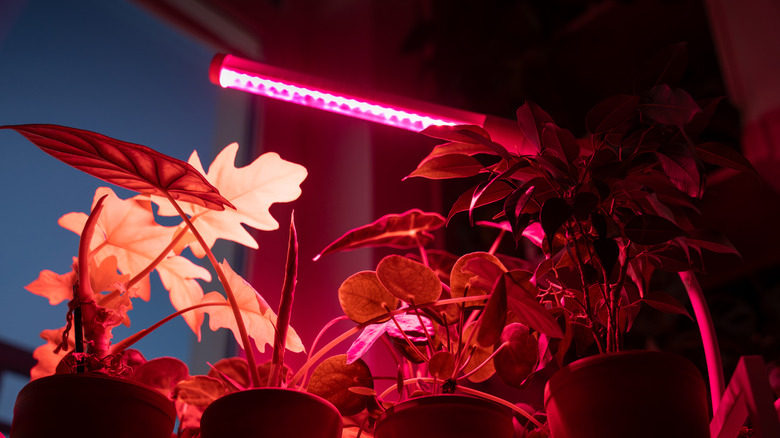
For the sake of growing plants, red light is usually defined as anything between 600 and 700 nanometers (nm). It's also thought that this is the upper limit of the "photosynthetically active radiation," or the range of wavelengths that plants are able to use for photosynthesis. In other words, once you go beyond visible red light and into the far red or infrared light spectrum, plants may not be using that light for photosynthesis.
So, when should you use visible red light? You can use it pretty much any time, because this range of waves is still photosynthetically active enough for plants to absorb while being more energy-efficient than blue or green light.
However, using red light on its own can cause plants to become stretched and thin, as if they aren't getting enough light. The best grow lights for indoor plants often have 90% red light and the rest split between blue and green. These can be used to grow plants without using up as much power as a more blue or green-dominant light.
When to use infrared light

Infrared light refers to wavelengths of red light that are beyond what the human eye can see. Typically, this means wavelengths of about 780 nm or longer. But plants seem to be capable of sensing it and even use it in plant signaling. For flowering plants, for example, infrared light is essential for blooming.
Infrared rays are hot, though, so too much of it can stress your plants. If you're using it at all, make sure to space your grow lights far enough away from your plants that the infrared doesn't overheat the leaves. It's also important to keep infrared to a minimum and save it primarily for the last stage of growth when you want your plant to switch gears into flowering. If you're growing vegetative plants or anything that you don't want to flower, you may not want to use any infrared at all.
When to use far red light
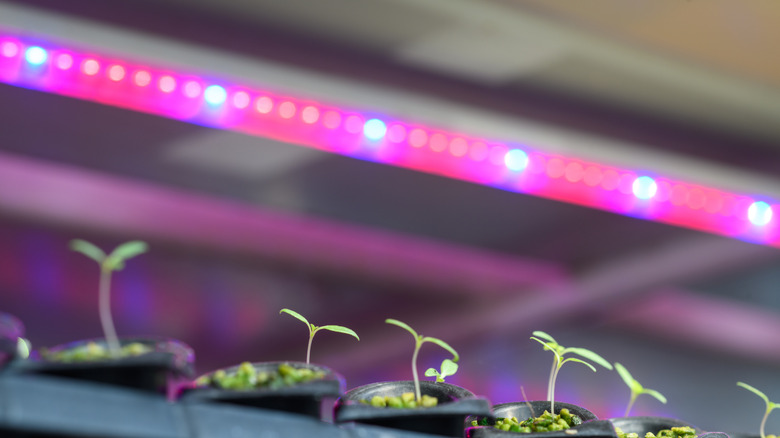
Far red light lands somewhere in between infrared and the visible red light that our eyes can see, or about 700 to 800 nm. While you may have heard growers say it's the most effective type of red grow light for stimulating growth, plants can't actually absorb it and use it for photosynthesis.
Despite not directly stimulating growth, far red light still seems to be detectable by plants and, depending on the plant, it will respond to far red light by growing larger leaves, longer stems, or by transitioning into its flowering or fruit development stage.
As a gardener, you'd mix far-red lights into your grow light system when you want plants to respond in this way. By keeping the full spectrum available, but dialing up the percentage of far red light, you may be able to encourage particular types of growth or more abundant blooming. Remember that every plant responds to far red light differently, so it's worth looking up how the species you're growing reacts to this range of light. If you can't find any species-specific information, experiment by placing different batches under grow lights with different amounts of far red light.
When you shouldn't use red light for your plants
If you don't have the time to dedicate to timing the length of light exposure and the specific spectrum of light your plants are exposed to, don't worry. You don't need to agonize over choosing the perfect grow light. Just get a full-spectrum grow light with a timer. While specific amounts of certain wavelengths of red light may help regulate growth and flowering, your plants will still grow just fine without this level of meticulous control.
The use of dedicated red grow lights is really for people who want to optimize each stage of plant growth for maximum production of whatever the plant produces –- or for people who have fun playing around with different inputs to see how it impacts their plants. But if you're just trying to keep your house plants happy or extend your growing season by setting up an indoor veggie garden, you're safer if you don't overthink it. Any full-spectrum LED light will do –- and too much red light can cause problems of its own.
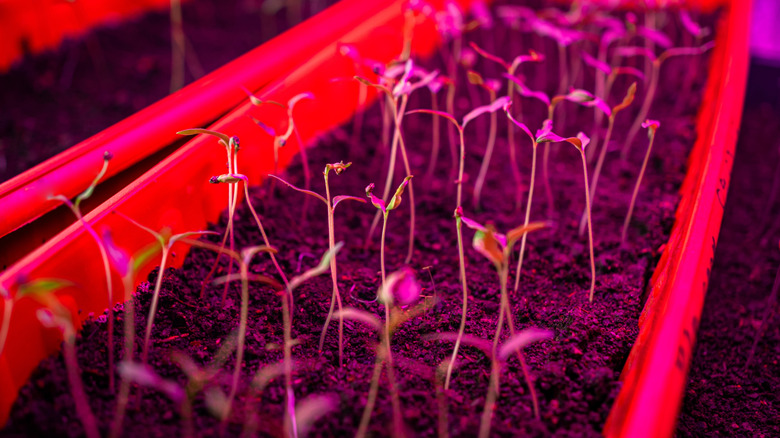
If you are starting seeds, for example, relying solely on red lights, especially far red or infrared, can delay germination, slow root growth, and slow overall plant development. When cultivating leafy plants, such as herbs or lettuce, relying on red light can trigger these plants to go to flower rather than develop their flavorful leaves. In some cases, herbs and leafy greens lose their flavor or turn bitter after flowering. Therefore, red light should be used to encourage flowering or fruiting plants in later stages of development, but for all other growing needs, stick with the full rainbow of colors.