

Want To Bring Power To Your Shed? Here's What You Need To Know Before Connecting It To Electricity
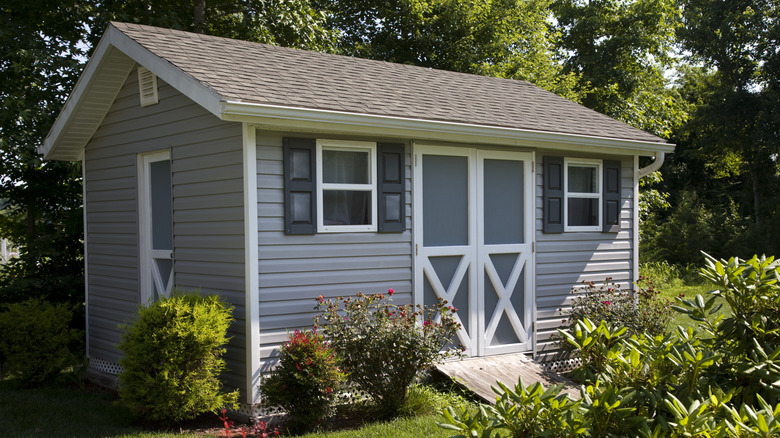
When someone gets caught speeding, they still get a ticket even if they didn't mean to. And just like with traffic stops, ignorance of the law is no excuse when it comes to building code enforcement. Navigating the ins and outs of building codes can be a headache, but if you're a homeowner in an area with tight enforcement, you could learn the hard way if you don't set up the proper permits. If you're thinking about building a shed or want to bring power to one you already have, before you lay a single wire you need to know whether a permit is required in your area and what that means for your project.
Homeowners with an HOA should also check the rules about sheds. And of course, there are significant safety considerations anytime you're dealing with electricity, so hiring an electrician is often recommended. But no matter who does the work or what size shed you have, when it comes to bringing power to it, you should begin by looking at the shed itself. In many places, homeowners can build sheds smaller than 120 or 200 square feet without a building permit. However, many of these same codes clearly state that you cannot install water, heat, or electricity in an unpermitted shed. Once you have a permit for your shed, you can proceed to obtain an electrical permit to put the power in.
How to determine if you need a permit to put electricity in your shed
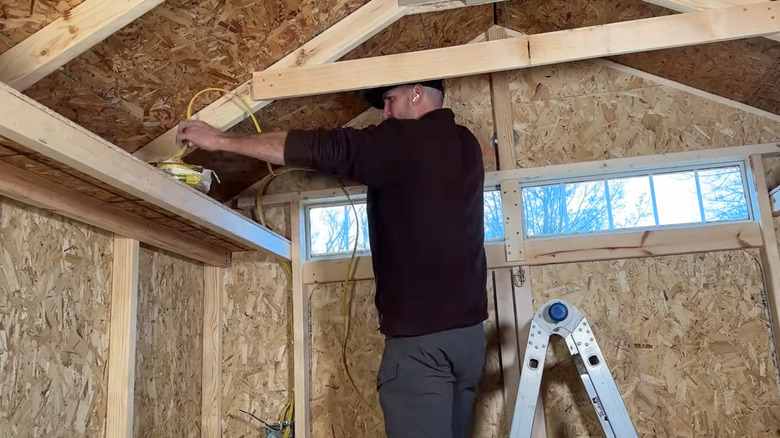
There are a lot of hidden costs when you're DIYing a shed, starting with the cost of permits. In some cities, you need an electrical permit to add a light fixture or an outlet in your house, so it makes sense that you would also need one to power your shed. However, every locality has its own rules, so you need to check with agencies in your area for specifics before you proceed. Just know that even if your shed is small, adding electricity almost always triggers a separate electrical permit.
Whether or not you can do your own electrical work (even if you have the skills) depends on local codes. Some states have DIY exemptions for homeowners, while others require all electrical work to be done by a licensed electrician. But even before you submit your electrical permit, there's a lot you need to know to draw up a plan. Codes determine everything from wire size to type and gauge, and there are rules about how to space electrical outlets. You'll need a service wire to go from your house or main panel to the shed, which is often underground and requires a trench. If you go overhead, you may need to consult with your HOA about rules governing that in your neighborhood. You also need to decide how much power you want to run to your shed.
The electrical permit and inspection process
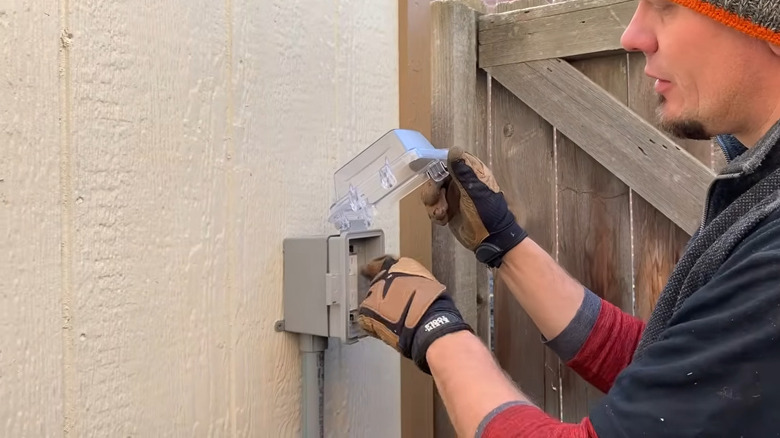
Before you even think about turning your shed into a tiny home or small studio with electricity, there's a lot you need to know. Every municipality is different, which is why the best advice you'll hear is to check with your local agency no matter what type of permit you're dealing with. When it comes to an electrical permit for a shed, the inspections are usually divided into two main stages: rough-in and final. Although many people hire an electrician to do the work, it can make the process go a lot more smoothly if you know what to expect.
From the service wire to the fixtures, everything must be installed before the rough-in inspection. This includes all the wires, boxes, and outlets as well as bonding the wires together to create a safe path for the electricity. The rough-in happens before anything is concealed, so don't cover anything up until an inspector sees it. You also need to have nail plates installed, and many places require foam fire blocking wherever holes are drilled through the top plates in your framing.
It's helpful to know that the service wire to the shed and the rough-in wiring are usually inspected at the same time. Once your rough–in wiring is inspected and approved, you can finish the installation by installing devices and appliances and covering all of the outlet boxes with switch or receptacle plates or blank covers. By following these steps, you can safely and legally bring power to your shed.