

The Ordinary Household Tool That Could Be The Secret To A Perfect Paint Finish
We may receive a commission on purchases made from links.
Paint is one of the quickest and most cost-effective ways to transform a space. A change that makes this big of an impact, though, also leaves plenty of room for error. There are lots of mistakes people make when painting their home, but even if you've taken the time to properly plan out your colors, precisely tape any edges, and use tools that provide a consistent coat of product, you might still be left with a less-than-perfect finish. If you've already followed all the tips for painting your home like a professional, and you've been less than wowed by the results, the problem might be something that you haven't considered: humidity.
Humidity levels between 40% and 50% are ideal when you're painting a room, but perfect conditions like this aren't always easy to come by. If you live in a particularly dry climate or keep your heat on year-round, humidity in the air can stay below these levels. If you live somewhere that's frequently muggy or have issues with your air conditioning, however, you could be dealing with the opposite problem. Painting when humidity levels are at either end of the spectrum can cause both short and long-term issues. To avoid this, it can be helpful to either use a humidifier or a dehumidifier throughout the painting process.
The impacts of humidity levels on fresh paint
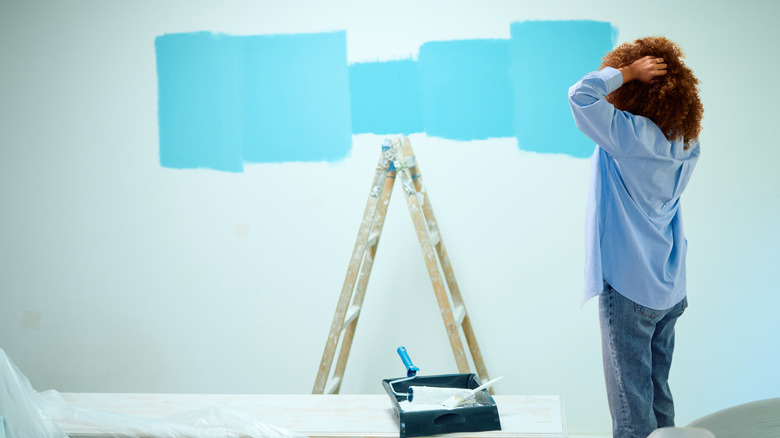
Low humidity causes quicker drying. While that might sound ideal for painting your walls, it can actually have a negative impact on your results. Paint is designed for very specific conditions, and if it dries too quickly, you could end up with a final color that doesn't match your expectations. Additionally, the dry air could cause more severe paint damage over time. You might notice cracking and peeling, a less-than-ideal outcome that will require sanding and repainting the entire space to smooth it out.
High humidity, on the other hand, slows drying time, which, in and of itself, is annoying. The issues don't stop there, though — too much moisture in the air can also prevent the paint from properly adhering to the wall, resulting in bubbling and peeling. In less severe cases, there may also be blotches and unevenness. If high-humidity conditions continue over time, mold and mildew could develop, sending you off on a complex and expensive mission to identify mold in your home and get rid of it for good.
How to maintain proper humidity levels while painting
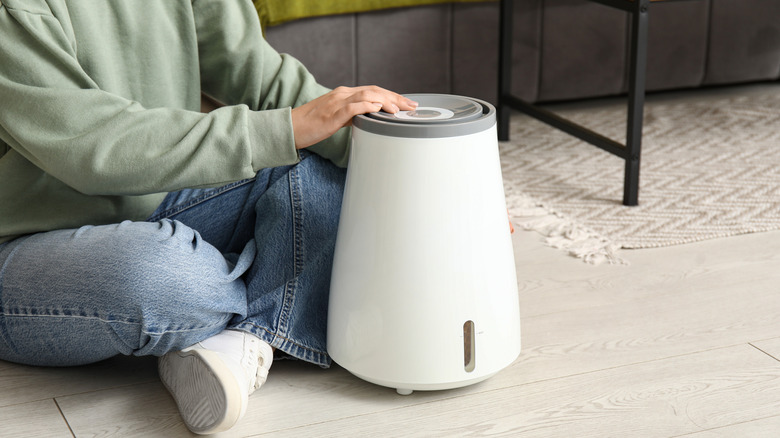
If you suspect you might have a humidity problem, check your levels to get a better idea of what you're working with before you paint. While some air conditioners and humidifiers have this built in, your best bet is to pick up a hygrometer. Thankfully, these aren't super expensive — this Govee Digital Hygrometer, for example, is less than $10 on Amazon. Once you get a reading on your room, it's time to determine a course of action. Humidity in the 40% to 50% range is ideal for painting, so if that's your result, you're good to go without any changes.
If your humidity is below 40%, you should use a humidifier to increase the moisture in the air until it's in this range. Make sure you check the humidity continuously while your humidifier is running — you don't want to accidentally raise it too much.
If your humidity is above 50%, it's not ideal, but you have some leeway. While humidity between 50% and 70% isn't ideal, you likely won't see any major problems when painting. Whether or not you want to bring in a dehumidifier is up to you. Beyond 70%, things get a bit more dicey, and at 80% or more, you're almost guaranteed to deal with some serious issues. If you do use a dehumidifier, follow the same advice as the humidifier and perform regular checks to make sure you're in a good range.