

11 Ways To Hide The Eyesore Of Air Vents For An Aesthetic Upgrade
We may receive a commission on purchases made from links.
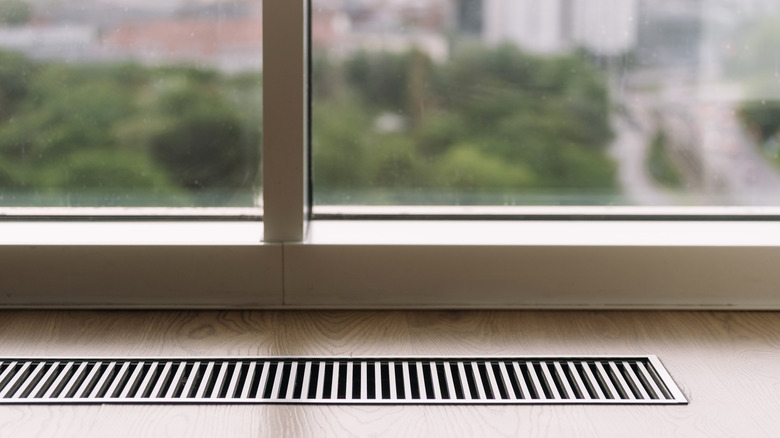
Vents may well be the unsung heroes of our homes — keeping us cozy in the winter and comfortably cool in the summer — but let's be honest, they're not always very nice to look at. In fact, unless you're shooting for an all-out industrial vibe in your home, the vents in your floors, walls, and ceilings can be incredibly conspicuous, often detracting from the interior look you've so painstakingly spent time to curate.
It's worth noting that you absolutely do not want to block your vents and prevent air flow. Because they are critical parts of a home's infrastructure, you could find yourself facing a world of climatic problems around your house if they get covered. The key is to think creatively, and to approach each vent individually. The good news is there are plenty of ways to disguise vents without impeding their function — and you can do it on a budget.
For example, vents in your baseboards may easily be disguised with the addition of a console table. Those on your walls can be made to blend in with a picture frame, especially when surrounded by a thoughtfully arranged gallery wall, and even if you don't have the space to surround your vents with family photos, you can always give them a lick of paint to help them blend in. You could install floating shelves, lay a decorative (and breathable) rubber mat over the vents in your floor, or strategically place some plants. With just a little outside-the-box thinking, it's entirely possible to enjoy the decor of your dreams without allowing unsightly vents to spoil the view.
Paint your vent to help it blend into the wall or floor
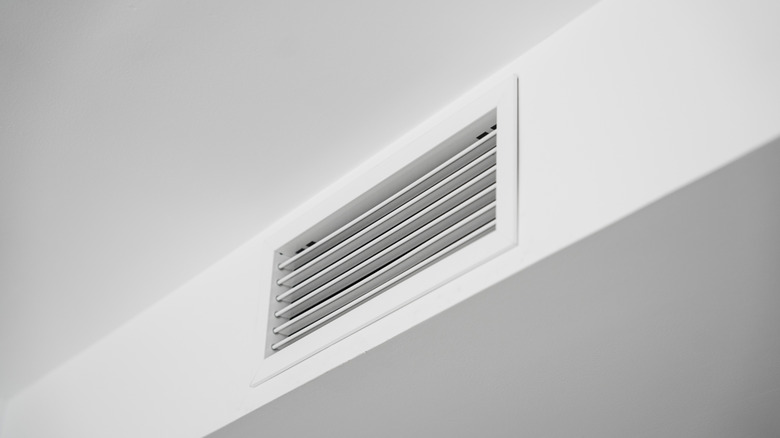
If your vents are sticking out like a sore thumb, then this is perhaps the most obvious solution. Painting will help to blend an unsightly vent into your wider decor, ensuring that it stands out less by matching it to the color of your walls, floor, or ceiling. If you recently decorated the rest of your room and you have some paint leftover — time to pull it back out. But if you don't have the paint, don't worry about spending on a full-size tin. An 8-ounce paint sample is more than enough to cover the size of the vent. If you are unsure exactly which paint is already on the walls, you may want to grab a few swatches from the hardware store to compare to your existing color.
Once you've found a paint that matches, remove the vent cover and give it a good wipe down. Lightly sand the surface, apply a primer, allow that to dry, and then coat it lightly with paint. If you're worried about brush stroke marks, then you could always spray paint the cover instead. You'll need to do this outside or in a well-ventilated space to avoid breathing in noxious paint fumes. But you may just find that spray-painting allows you to achieve a clean, stroke-free finish much more easily than using a brush.
Install decorative vent covers
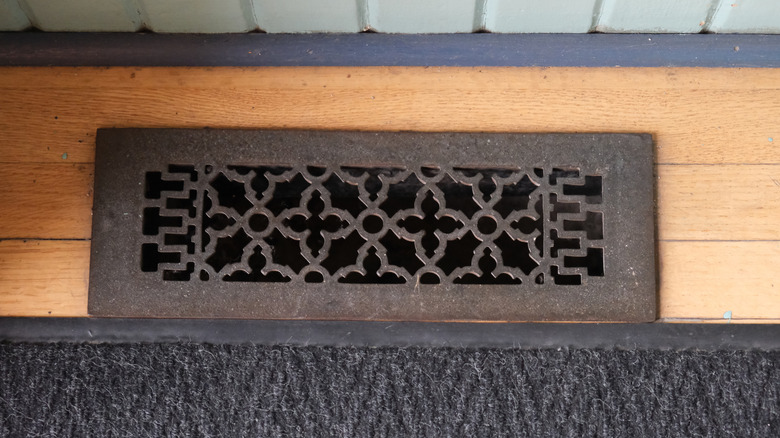
If you can afford it, consider making your air vents look like a work of art by upgrading them with decorative grilles, covers, or screens in areas of your home where they are more visible. In some cases, these can actually help to complement and elevate your decor, instead of detracting from it. Some of these covers are magnetic, which makes them super easy to install. But even those that aren't are usually quite straightforward to use, often requiring little more than a screwdriver and a few screws.
All you need to do is measure your existing vent covers, then take a look online or at your local hardware store for covers or grilles that are likely to fit. You'll be amazed at the array of styles and materials that are available. And even if you can't find something that truly piques your interior interest, don't worry. It's entirely possible to have your own custom covers made to suit both your style and your specific vent's size requirements.
Use wallpaper to match your vent to the rest of your room
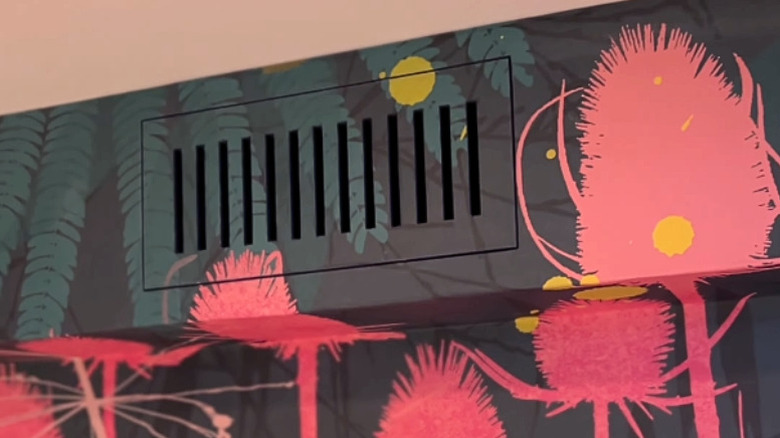
This has to be one of the most innovative ways to make use of spare wallpaper, and the best part is that you can use it in any room of your house. Especially if you're going to the trouble of wallpapering your living spaces anyway, wouldn't it be a shame to have your rooms spoiled by the sight of those utilitarian vents?
Now, as you've probably guessed, you can't just plaster over your vents with wallpaper and call it a job well done. Instead, you need to carefully cut the wallpaper to match the shape of your vent, including the grille holes that allow it to work. It's easy enough to do. The first thing step is to wallpaper over the vent cover where it usually sits on your wall. Once it's had a chance to dry, grab a scalpel and carefully score around the cover, until you're able to remove it from the wall without tearing the paper around it. Use the scalpel to cut the wallpaper away from between the cover's grille holes, then return it to the wall to finish out the project.
Frame the vent with trim or molding to make it feel more intentional
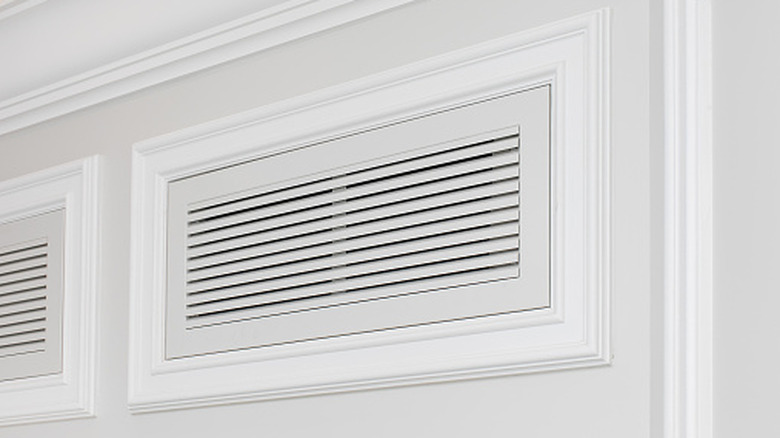
Sometimes it's better to lean into the presence of vents than to desperately try to hide them away or disguise them, and one way to do this is by installing intentional trims and moldings around your vent covers. Ideally, the trim should match features around the rest of your home. What we love about this idea is that it takes an unavoidable architectural feature and transforms it into a considered and celebrated element of your home's interior design.
Even if you'd still prefer to err on the side of not drawing too much attention to your vents visually, don't worry. By painting the trim or moldings the same color as your walls, you'll help the vents to blend into the background. Decorative molding can range from pretty minimalistic to fantastically ornate, so this approach can really suit all homes — no matter your design taste. Alternatively, if you decided to spring for some more decorative vent covers and you'd really like to make them stand out, then don't be afraid to make them pop by being bold with your trim colors and designs.
Disguise your vent with a picture frame
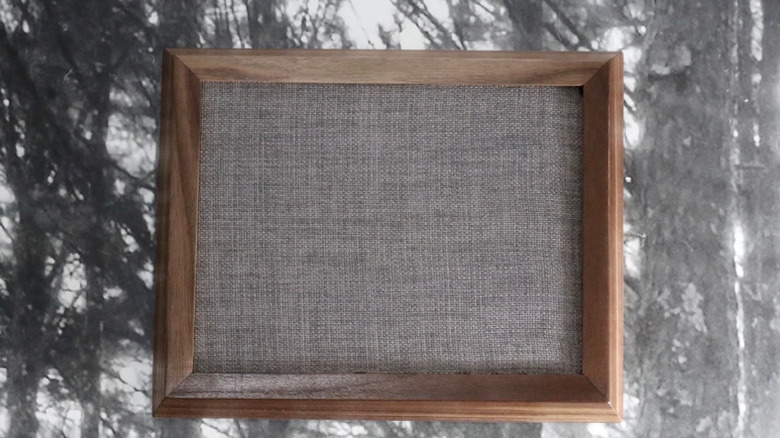
Integrating your vent into your wall may be as easy as hiding it in plain sight, so try framing and surrounding it with a gallery of other framed items. Using photographs of your friends and family, art prints, and your favorite posters are all great options for surrounding your vent. You'll just need a frame to mount around the edge of your vent to make it blend in – either by building your own frame or buying a custom-made one that fits its dimensions.
To hide the vent even more effectively, you could also cover the face of your vent with a decorative, breathable screen. Alternatively, you could frame the vent as it is and make it look like a considered piece of sculptural artwork. Either way, by creating a gallery wall around your vent, you'll be amazed at how easily it disappears.
Use a console table to hide your vent
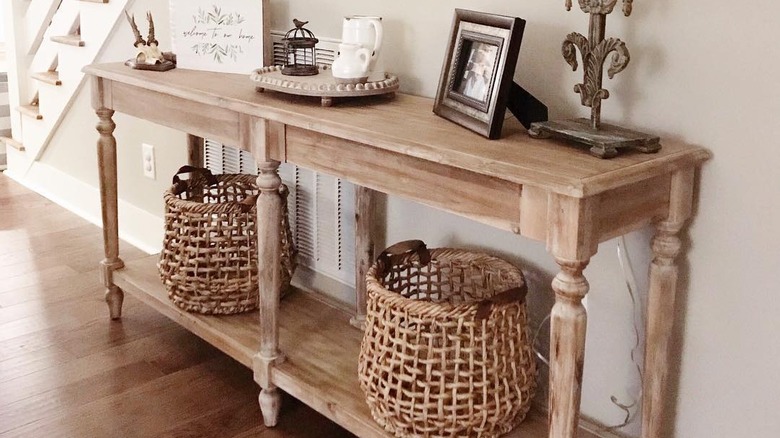
If you're hoping to hide those eyesore vents while adding style and storage to your living space, then all you really need is a console table. Try to find one that matches your home decor — or one that could easily be upcycled to match it — and shoot for as understated a shape as possible. The goal here is to blend the vented area in, not have it scream for even more attention.
For example, If you're working with an industrial-style decor, then something like Homeissue's Extra Long Sofa Table with 2-Tier Storage would be ideal. Alternatively, for something a little more coastal chic, try something akin to the Leick Home Coastal Console Table. In both cases, it's the inclusion of a bottom shelf that makes them so useful for masking your vents. You can use the shelf to hold baskets or boxes, or perhaps a selection of houseplants. Whatever you put on it, it'll help to break up the view of unsightly vents, while still allowing them the space they need to heat and cool your house.
Use artificial plants or greenery to break up views of the vent
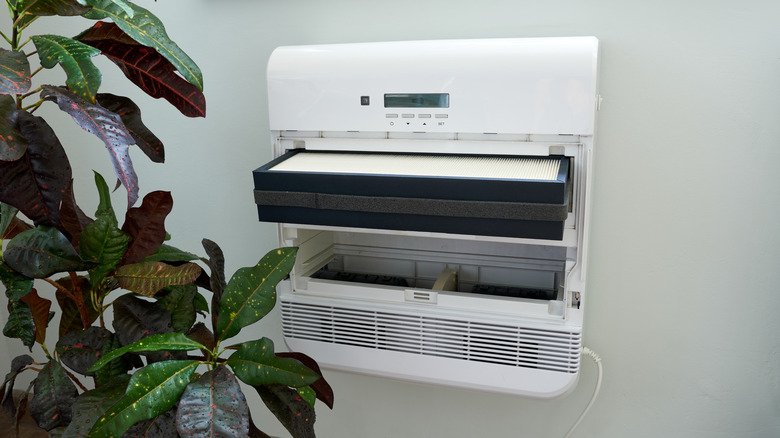
Decorating your interiors with houseplants is one of the most effective ways to break up sight lines and soften the harsh, straight-angled shapes of your home's more visible vents. Especially if you'd prefer to forgo the expense of replacing the vent covers or the even more arduous task of moving your vents somewhere less conspicuous, investing in a few choice plants could well be worth considering. However, live plants can suffer from being directly in front of HVAC vents, so you'll want to opt for the artificial kind.
These facsimile plants are not only safe from the drying effects of the air passing through your vents, but they can hang out in higher, harder-to-reach places where vents may be, without requiring an watering or plant care. Install floating shelves above your vents or use a ceiling mounted hook to hang a synthetic draping plant like IKEA'S FEJKA as a vent disguise. You could also install shelves just below your vent and choose an upright plant to help shield the vent from view. For return vents running along your baseboards or low on your walls, try placing tall artificial trees on the floor to draw the eye upwards and away.
Use flush-mount vent covers for a clean, minimalist look
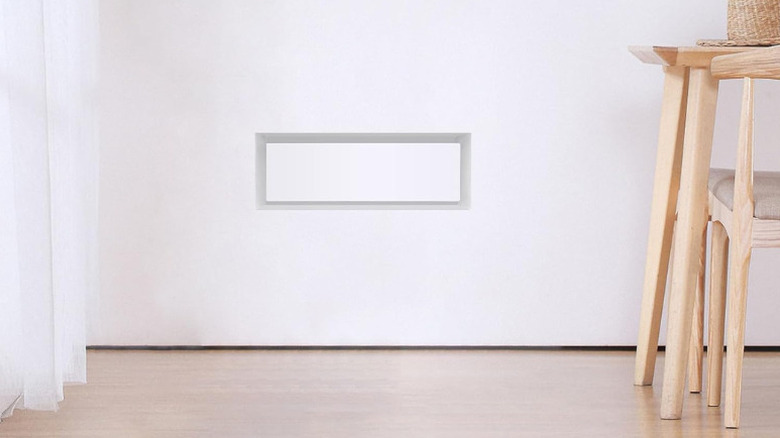
Offering an aesthetic upgrade to standard vent frames, recessed and flush-mount vents are a great choice for those who favor a seamless, minimalist finish. Per the name, they are designed to sit flush with the surface, be that your wall or ceiling. And the best part? You can absolutely fit them by yourself.
First, remove your current vent cover to measure your vent. Be sure to measure the actual opening, and not the dimensions of the cover itself. When you know what size your replacement needs to be, you can purchase a new recessed or flush-mount vent cover, like the Fittes Flush Wall Vent. It is worth noting that this install is somewhat more time and labor intensive than switching out your standard vent cover. It requires plastering over the frame with drywall, sanding it down, and repainting for that truly flush-to-the-wall look, so make sure you're comfortable with those DIY techniques before embarking on this project.
Use louvered covers to elevate your vent's appearance
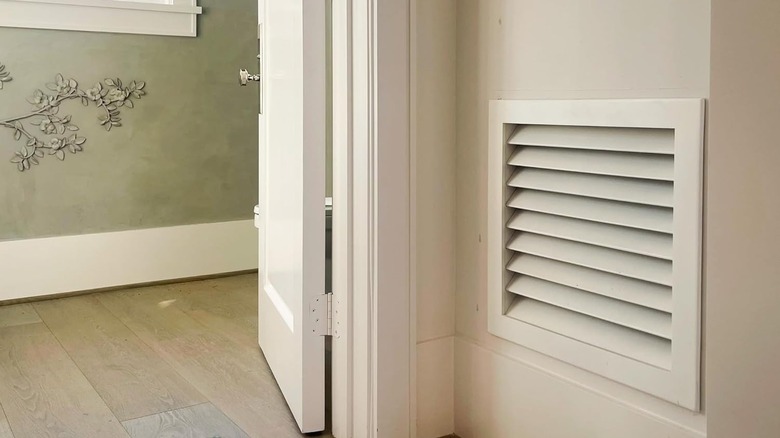
Instead of letting the grille grates of standard vent covers spoil your home interiors, consider replacing them with something a touch softer. With louvered covers, you can easily elevate the look of your vents, taking a utilitarian feature and transforming into something homey, reminiscent of traditional window shutters. The louvers will continue to allow for plenty of airflow (which is key to your comfort when the weather's both hot and cold), but they'll soften the vent's original industrial appearance.
Now, as with any other decorative decision, the key to upgrading your vents with louvered covers is to choose a material and color that matches your wider decor. Fortunately, you'll find there are lots of dedicated louvered vent covers to choose from, like this Worth Home Products Deep Luxury AC Return Grille. Not only is this available in an array of sizes to ensure a perfect fit, but it's also pre-primed for painting, meaning you can lacquer it with whatever color you like in order to suit your wider decor.
Disguise floor vents with a runner or rug
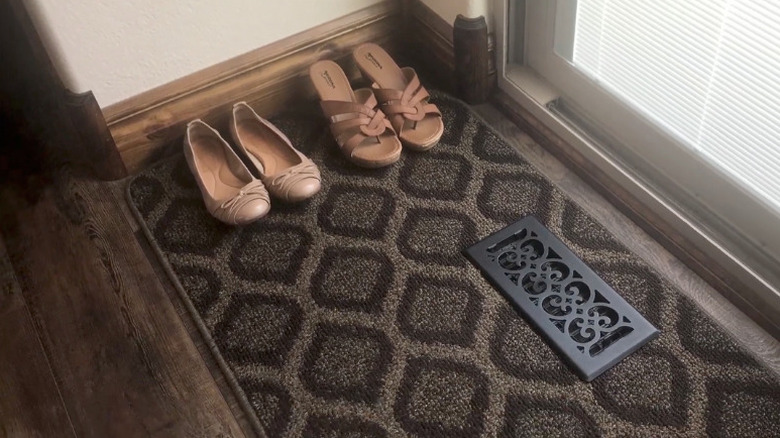
There are several things you need to consider when choosing a doormat, but if your home has floor vents, then you need to choose even more carefully. If those vents are near your door, then you can't just simply cover them up with a standard mat. And depending on which door the vents are next to, it may look downright strange to do away with a mat entirely. Fortunately, there are several ways to get around it.
The first is to buy an ornate rubber doormat. These can be used on floor vents whether they're next to your door, or wherever they happen to be. Since they're made from rubber, they tend not to slide on the floor. The key is to buy one with an open-weave style of design, like this A1 Home Collections Indoor-Outdoor Doormat. This can be laid, like a regular runner, over the top of your floor vents. It'll disguise the vent underneath, but thanks to its open design, it will still allow the vent to breathe freely. Another option is to cut out a section of a regular rug or runner to match the size of your vent. The vent frame can even help to keep the runner in place, while the rug will help to disguise the vent and soften its appearance.
Conceal an obtrusive wall vent with a fireplace surround and black paint
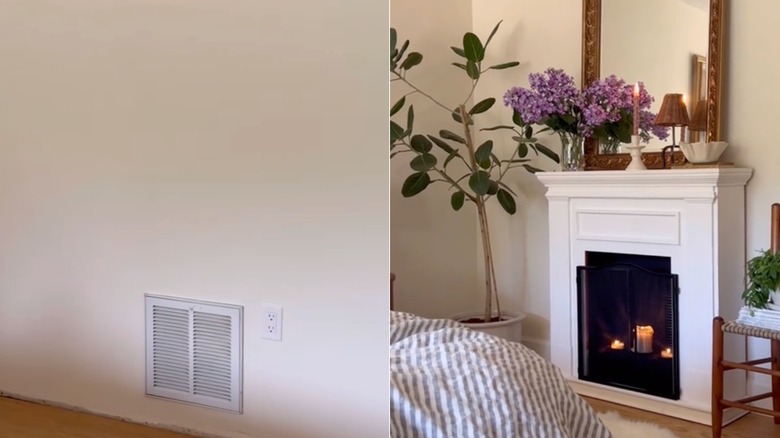
Using nothing more than some black paint and a fireplace surround, you can obscure even the most awkward and unsightly vent. The method is very effective, and if you're trying to disguise a vent in your living room or bedroom, it can actually help to bring a whole new level of coziness to your space — turning an otherwise underwhelming wall into one of your space's primary features.
To try it for yourself, first get yourself a fireplace surround. Keep an eye on Facebook marketplace or Craigslist, and try to snag one cheap if you can. If not, you can expect to spend at least $100 when buying one new. Once you have yours, place it against the wall around your vent and sketch the surround opening with a pencil. Then, coat the marked area of the wall, along with your vent cover, in black paint. Once dry, fix the surround to the wall using some proper drywall hardware and anchors. The result is your very own "fireplace" that disguises your vent without obstructing its function.