

The Buttery-Yellow Rose Variety Julia Child Loved So Much, She Gave It Her Name

Roses have been cultivated for centuries, with over 30,000 varieties available, from wild-looking ramblers to elegant, polished hybrid teas. There truly is a rose for everyone, no matter what your favorite style or color is, and some of these rose cultivars bear the names of those who loved them. One of these roses is the 'Julia Child' cultivar (Rosa 'Julia Child'), which Child selected to have her name. A chef famous for bringing French cuisine to the U.S., Julia Child loved cooking with butter and therefore, was drawn to this rose with rich, yellow blooms.
Cheery and bright, 'Julia Child' is a floribunda rose that blooms profusely from late spring until fall. It's yellow, clustered flowers reach around 4 inches in diameter, holding numerous ruffled petals in each head. It can get to around 3 feet in height, having a medium, compact growth with glossy green foliage. It is a heat-tolerant and disease-resistant rose cultivar that can be grown in USDA Hardiness Zones 5 to 10. This rose variety will make your garden smell heavenly, too, with a rich licorice aroma emerging once it has bloomed.
Growing the 'Julia Child' rose in your landscape
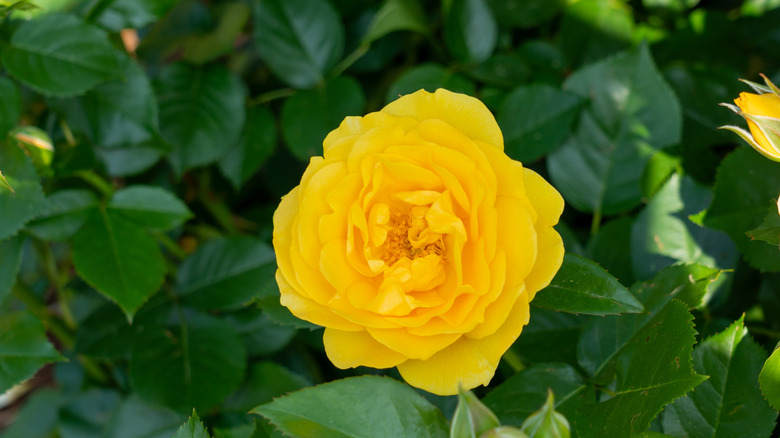
The Julia Child rose is fairly easy to grow and maintain and can be planted in containers to brighten up a deck or patio. Place it in a location with at least six hours of sunlight a day and ensure that the soil is rich and well-draining. It may be helpful to amend the soil with compost two weeks before planting the rose to give it the best start possible. Keep the soil moist throughout the year, but don't let the roots sit in soggy soil for too long.
Both feeding and pruning the Julia Child rose are helpful for getting healthy, long-lasting blooms. Prune your rose in January or February to shape it and remove any dead, damaged, or diseased canes. Give the plant a balanced fertilizer in early spring and in early summer to help it produce those gorgeous, bright blooms. As it is a repeat bloomer, deadheading when the flowers fade will help it continue to bloom into the fall months.