

Cleaning Vs. Descaling Your Coffee Maker—what's The Difference (And Why It Matters)
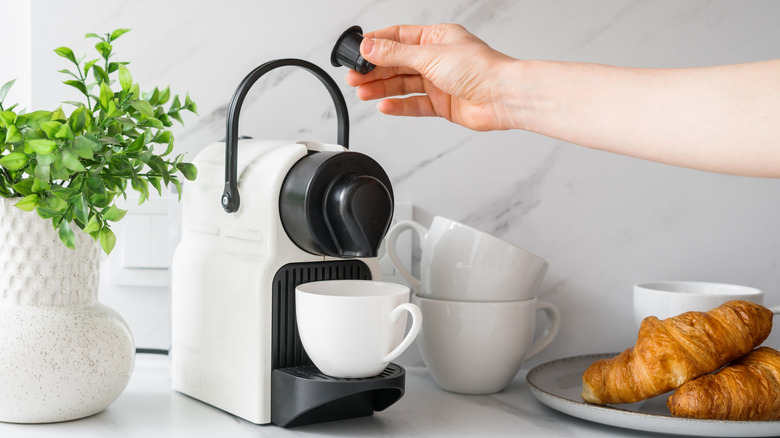
If your morning cup of joe has started tasting bitter and your machine is slowly wheezing its way through a brew cycle, you might be thinking about getting a new coffee maker. However, there's a good chance it's totally fine and just needs to be descaled. While many folks use the terms "cleaning" and "descaling" interchangeably for coffee makers, they're actually two separate actions that target different issues. Your coffee machine needs both steps to function properly, and here's why.
Cleaning your coffee maker, versus descaling it, is the first step in this maintenance process. While descaling focuses on removing mineral deposits, i.e., limescale, cleaning focuses on the visible residue that gets left behind by coffee beans. Coffee is oily by nature but as these oils sit in your carafe and filter basket, they oxidize and turn rancid. And if you aren't regularly cleaning them with soap and water, that film will ruin the taste of every cup you make, no matter how fancy and expensive the beans are.
Cleaning is for hygiene, and the same reason you wash your dishes: You wouldn't eat off of a greasy surface, and you shouldn't brew through one either. This step involves scrubbing away any biological grime that could give bacteria and mold a foot in the door. It's best to wash removable parts after every use, and do a deeper vinegar-based wipe-down monthly. Keeping the pathway from the basket down your coffee pot clean and free of residue is the only way to be sure that the only stuff hitting your mug is delicious fresh coffee. Neglecting this leads to gross-tasting coffee that not even sugar or a fancy creamer can mask.
Why regularly descaling your coffee maker is non-negotiable
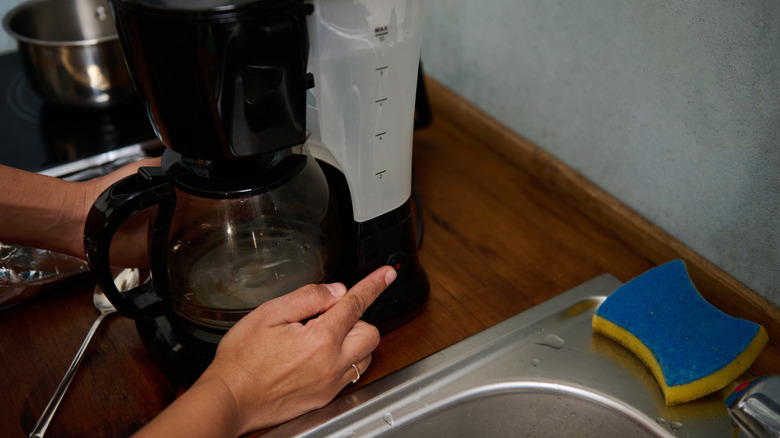
Descaling your coffee maker is the other half of the maintenance process. Why? Because it tackles any inorganic mineral buildup, like calcium and magnesium, that's in the water you brew your coffee with. These minerals are invisible when dissolved but become silently problematic when heated. And over time, they even crystallize into limescale; this is a hard and chalky gunk that coats the internal heating elements and water lines. Descaling is the process of using an acidic solution to break those deposits down, like vinegar. Buildup gets more problematic the deeper it hides in a coffee maker. The buildup will start affecting any internal machinery with its mineral deposits, forcing your machine's motor to work overtime; this can eventually lead to a total mechanical breakdown. Think of this like cholesterol buildup in your arteries, which could eventually cause a total blockage in your heart. It's bad news.
Even though it's harder to see mineral buildup in your coffee maker than residue, the stakes for descaling are high since it all impacts your machine's lifespan. Limescale also acts as an insulator. This means your machine's heating element has to work harder to reach the right temperature; this will eventually fry internal components. When to descale depends on how frequently you use your coffee maker and your local water hardness, but aim for roughly once a month. And remember, while cleaning keeps your coffee tasting pleasant, descaling is what ensures you make your coffee maker last. Mastering both parts of this maintenance process is important, and the reward is a delicious cup of coffee every day. What's not to love about that?