

I've Been DIYing Home Renos For 20 Years. Here's The Biggest Mistake I've Made With Laying Tile Floors
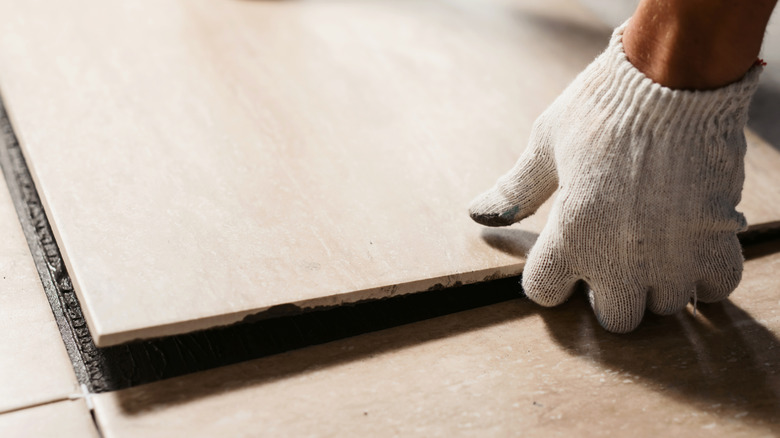
Having remodeled different homes over the past few decades, I have some projects I like better than others. Laying tile floors is one project that I enjoy doing, but it took some trial-and-error mistakes on my part before I became confident doing it. When it comes to mistakes everyone makes when laying tile flooring, I certainly made a bad one the first time I did this work.
My wife and I decided on tile floors when finishing our basement in a 1920s home. Placing the tile over the existing concrete floors felt like an easy job compared to mudding drywall and adding a bathroom to the space. Had I done my homework, though, I would've realized that failing to install tiles correctly over a sturdy and level subfloor could lead to them cracking. I've learned my lesson.
The old concrete basement floor was mostly level, but it had a few areas where it had shifted slightly. Had I bothered to use a really long carpenter's level, the slight variations would've been readily noticeable. I didn't. Additionally, the concrete floor had a small drain for the HVAC system's condensation drain line. I knew I could install a perforated drainage tile over the existing drain to allow the condensation drain line to continue working. However, I didn't account for the floor's slight slant around the drain, which wasn't a good match for putting tile directly over the concrete. Because of my mistakes, I discovered the biggest downside to tile flooring when several of the tiles wiggled and cracked when people started walking on them.
How I should've checked whether the concrete was level
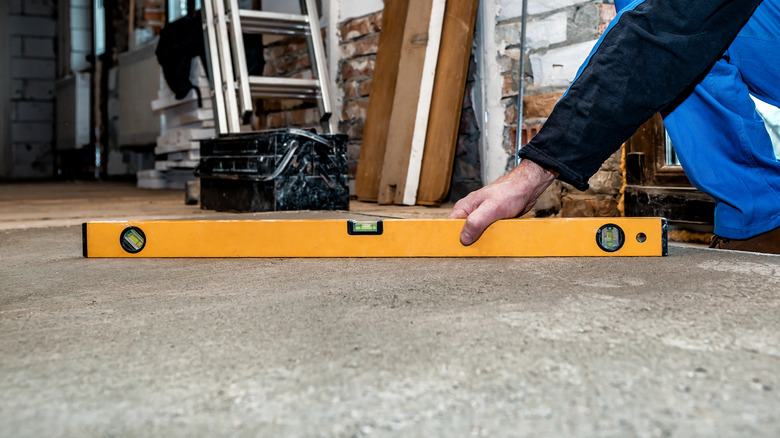
There are a number of ways to check whether the concrete subfloor is level before installing the tile. Since I was working on a pretty tight budget at the time, the easiest option would've been to stretch a chalk line along the floor and see where dips and humps in the floor existed. I could've marked these spots with chalk and fixed them before starting the tile installation.
Another option would've been to place a long carpenter's level on the floor and to mark spots that were too high or low. It would've taken a while to move the level around the floor in multiple spots to measure the entire space, however, this kind of preliminary work would've saved me a lot of time spent replacing the cracked tiles.
Additionally, if you have a bigger budget, renting a laser level is a good idea. I could've placed it in the middle of the room and easily seen where the high and low spots were. Because I was in a hurry and wanted to try to save as much money as possible, I figured the subfloor was "close enough" to being level and chose to plow ahead.
How I should've leveled the concrete before installing tile
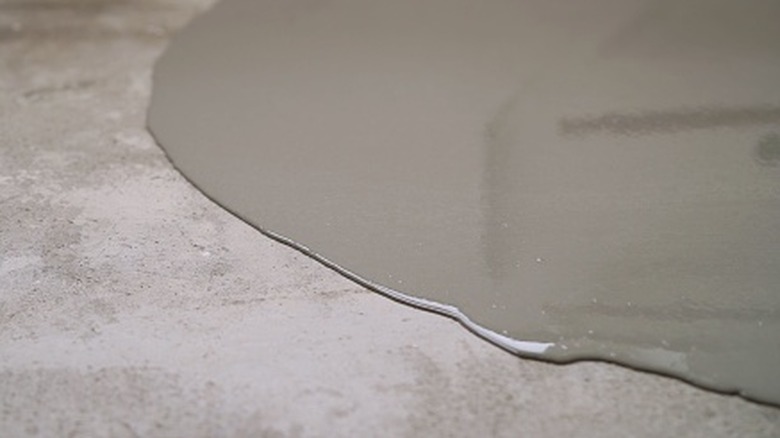
Based on what I've learned from my tiling mistakes, I now know I should've taken the time to level the uneven concrete floor. After giving the floor a thorough cleaning, the next appropriate step would've been to use a self-leveling compound before installing the tile. In subsequent projects, I learned that using a concrete primer over the old concrete is the best way to give the self-leveling concrete the ability to grip to the original floor. You can apply concrete primer similarly to how you'd apply paint. I typically use a roller with a thick nap.
Once the primer dries, you can add the self-leveling concrete. Depending on the product you select, it might dry quickly, so mix enough to cover the entire square footage and apply it right away. I've never made this mistake, but you should always start applying self-leveling concrete in the farthest corner of the room from the door and work your way across the floor while moving toward the door. You don't want to box yourself in!
After giving the self-leveling product time to dry, I would suggest testing whether the space is now level. If you still have a few slight dips, I'd suggest using a patching compound on the specific spots. Once everything is level and dry, you should be able to install the tiles without having them wiggle or crack. As I learned when making my mistakes, proper preparation is essential.