

All The Tools You Need From Harbor Freight To Build Your Own Deck
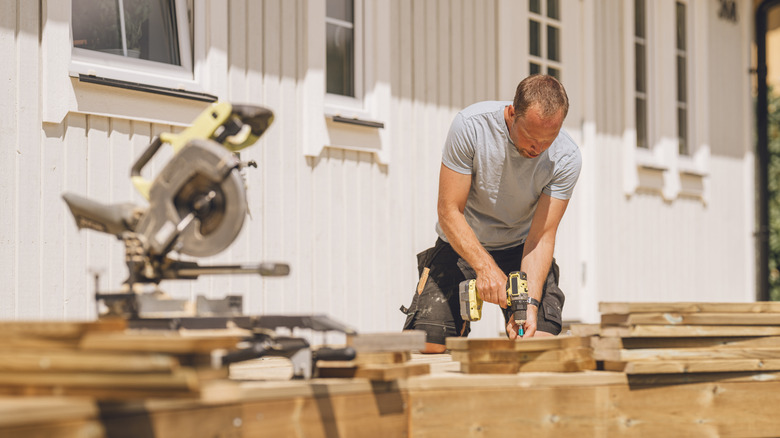
The cost to build an average-sized deck when hiring a professional can be as high as $9,500. You might want to investigate some budget-friendly DIY deck ideas to save some money. Building your own deck is time-consuming and challenging, but you'll potentially save several thousand dollars by only needing to purchase materials and tools.
If you want to save even more money, you might consider picking up the tools you need at discount hardware retailer Harbor Freight. Why are tools at Harbor Freight cheaper than their competitors? Harbor Freight purchases its tools directly from factories, rather than using distributors, which allows it to sell tools for a lower price.
Some people trust the quality of this retailer's tools, while other people say the quality is poor. Consequently, if you're ready to try building a DIY deck with products exclusively purchased at Harbor Freight, it's important to do a bit of research to find the right products, which is where this list can help. Many of the tools required to build a deck can be used for other DIY projects so you may already own some of them, like safety goggles, a long bubble level, and a jigsaw. For those that you don't own, though, you can use your local Harbor Freight store or the retailer's website to make the purchase. As a budget bonus, if you select multiple 20-volt battery-operated Harbor Freight power tools featuring the same brand name, such as Bauer, you can share the batteries among all of those tools.
Safety goggles are essential when building a deck

One of the most important woodworking safety precautions to take for a home project like building a deck is wearing eye protection. Safety goggles protect your eyes from potential splinters and other airborne particles. Chunks of wood can fly away from a blade at more than 100 miles per hour. To reduce the risk of a severe eye injury, purchase the Ranger Heavy-Duty Safety Goggles from Harbor Freight. They include shatter-resistant lenses for maximum protection. You'll appreciate the anti-fog coating that prevents the lenses from collecting condensation on a hot day.
Use a posthole digging bar to secure posts for the deck

As part of the design of the deck, you'll have locations marked on the design for support posts or footings. Building a deck usually requires a 4-by-4-inch or 6-by-6-inch pressure-treated wood support posts. Manually digging the holes for these posts before adding the quick-dry concrete is easier with the Greenwood 17-Pound Posthole Digging Bar. Among Harbor Freight customer reviewers, 93% of them would recommend buying it. With a weight of 17 pounds, it's heavier than other digging bars, which provides a little more leverage to penetrate compacted soil.
A long tape measure simplifies making accurate cuts
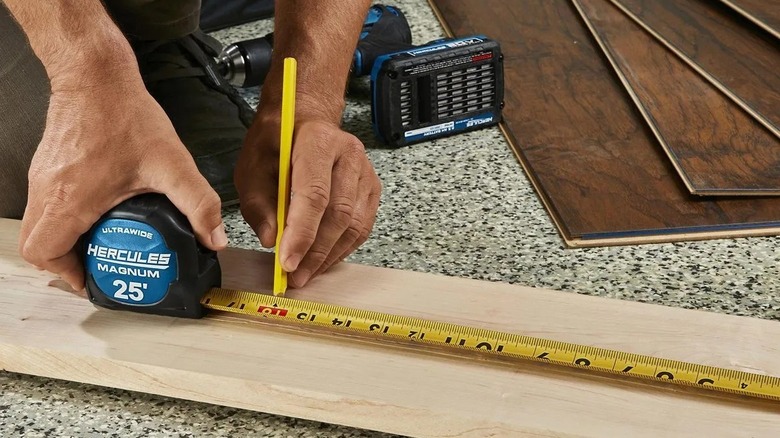
When building a deck, you need a long tape measure that can span across the entire length of the deck to simplify taking measurements. A 25-foot long stiff tape measure should do the job for you. A wider tape helps with rigidity, making it more useful for the large spans you'll be measuring when building a deck. Harbor Freight's Hercules 25-Foot Tape Measure has a 1 1/4-inch width in the tape, which gives it plenty of rigidity. The tape measure's case has rubber edges to survive a drop of up to 80 feet.
For the straightest lines on a deck, you need a chalk line
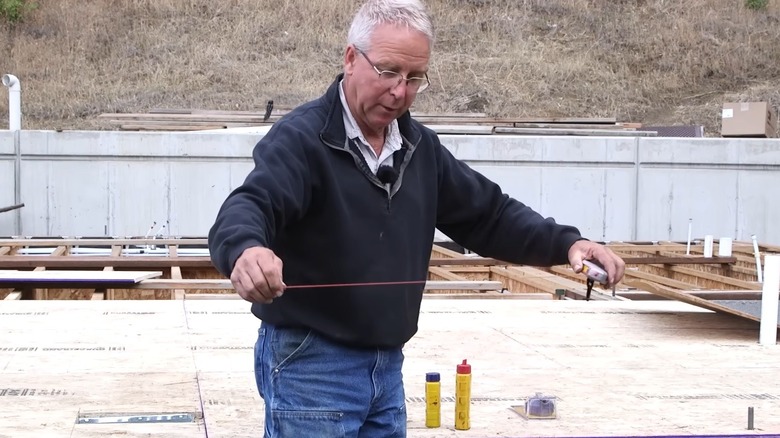
Because an average-sized deck covers about 19-by-19 feet, it can be difficult to create straight lines over such a long span without some help. Snapping a chalk line lets you mark a straight line in one motion with an easy-to-use tool. Harbor Freight's Pittsburgh Blue Chalk Line Reel Set includes 100 feet of string inside a durable reel and a 4-ounce bottle of blue chalk powder. This tool can double as a plumb bob if you need one to mark the corner posts.
Mark boards quickly for cutting with a speed square
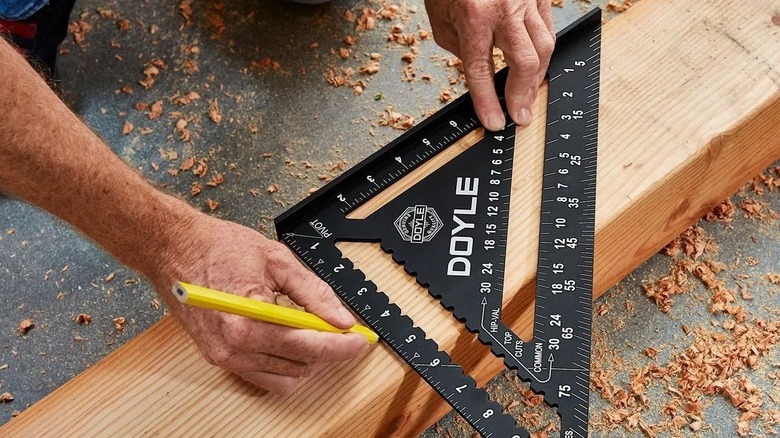
When building a deck, you'll have to mark a lot of boards for cutting. A triangle-shaped speed square tool has measurements marked on the edges, while also including marking lines for making accurate angled cuts. You can also use this tool to check that installed boards are square. The Doyle 12-Inch Professional Square consists of metal, so it can handle rough treatment. The white measurement markings etched onto the dark metal make it easier to find the necessary information.
Portable sawhorses simplify cutting boards on-site
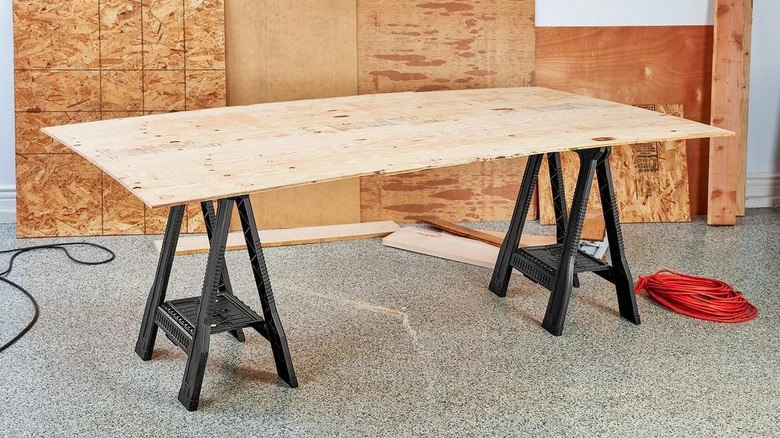
Because you have to cut so much lumber when building a deck, you need a stable surface for sawing. Having a pair of sawhorses lets you make the cuts or take measurements without having to work in an awkward position. The Central Machinery 32 In. Folding Sawhorse from Harbor Freight can support up to 500 pounds of force on its polypropylene plastic frame. (You'll want to buy two of them.) It uses a lower locking shelf that maximizes stability, which is important while you're working outdoors on uneven ground.
For making perfect cuts, a miter saw is a must-have tool
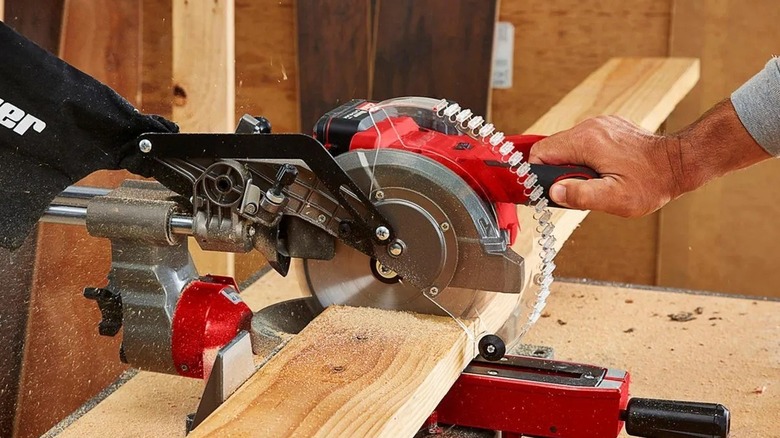
Although some people might successfully use a circular saw when building a deck, a miter saw is a better tool for this work. The miter saw ensures precise cuts at any angle. When cutting dozens of boards, the miter saw makes the job go faster than a circular saw, too. Harbor Freight's Bauer 7-1/4-Inch Miter Saw runs from a 20V battery, making it a portable option that's ideal for working outdoors. The battery, charger, and saw blades are sold separately.
Use a jigsaw for cutting notches and other unusual cuts
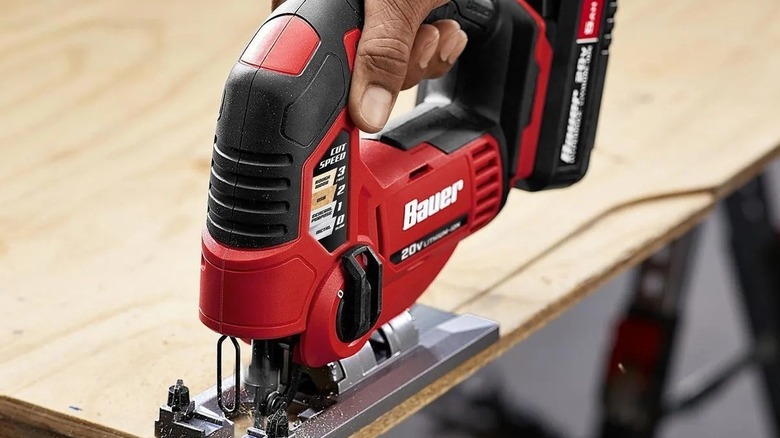
You might occasionally need to make a cut to an installed board in a tight space or cut a notch out of a deck board to work around a support post. A jigsaw is the best tool for this work. Its tiny blade can be tough to control, though, so use it carefully. Harbor Freight offers the Bauer Cordless Jigsaw, which runs from the same 20V battery as the Bauer miter saw, also sold separately. It includes a tilting foot plate to manage beveled cuts.
A long bubble level is essential when building a deck
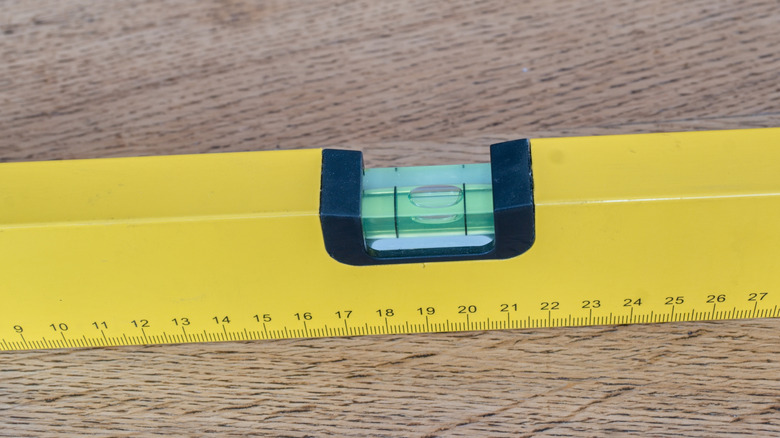
A bubble level of at least 4 feet in length is useful for long spans, such as are found when DIY building a deck. You can use the bubble level to ensure the proper alignment of the boards and deck frame, while ensuring the surface of the deck is slightly sloped away from the house for rain runoff. Harbor Freight's Pittsburgh 48-Inch Frame Level uses a metal frame to ensure durability. The shatterproof bubble vials and rubber end caps protect the tool in case you drop it.
An impact driver speeds up fastening your deck boards
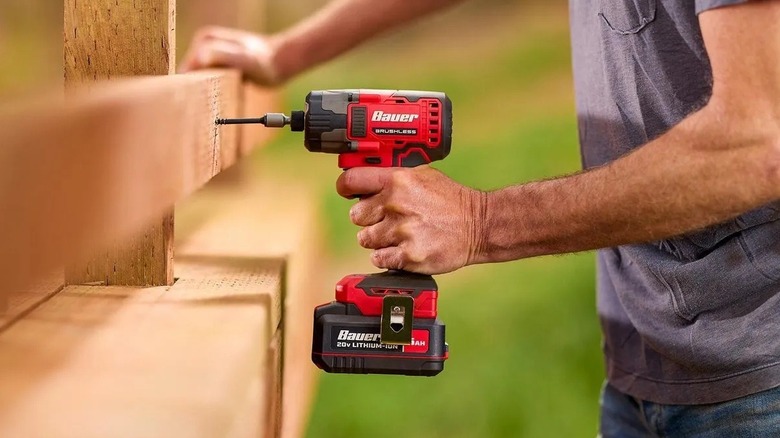
An impact driver is an ideal tool for adding screws to deck lumber. It delivers more torque than a power drill, which allows you to install a large number of screws faster. Considering you're driving 350 to 500 screws per 100 square feet of decking, the impact driver's faster performance quickly accumulates. The Bauer Cordless 3-Speed Impact Driver from Harbor Freight has a 99% customer satisfaction rating. It includes three LEDs that illuminate the area where you're working. The 20V battery and charger are sold separately.
A framing hammer delivers plenty of nail-driving power
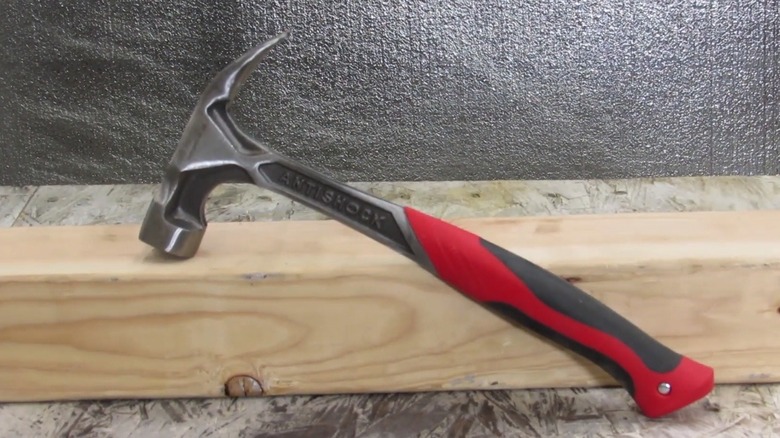
For parts of the deck frame where you'll be driving nails, a sturdy framing hammer is an essential tool. A framing hammer makes the work go faster because of its heft and length. Its milled face keeps the hammer head from slipping off the nail head, and a manual hammer is easier to use in tight spaces than a nail gun. The Pittsburgh Pro 22-Ounce Framing Hammer from Harbor Freight is made of of steel, delivering the heft and durability needed for this type of work. Its shock-absorbing design and cushioned grip are helpful.
A framing nail gun speeds up deck building
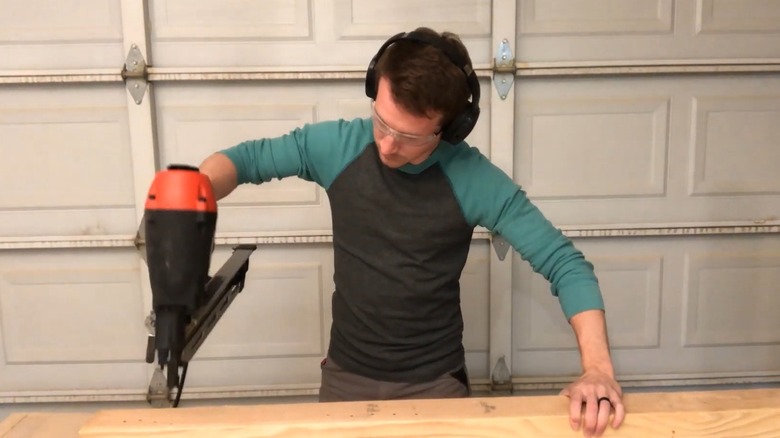
Although you can build a deck frame with a hammer, if you want to speed up the process, a pneumatic framing nailer will do the trick. The nail gun drives nails to the same depth every time, while saving wear and tear on your arm muscles. It's a good tool when you have plenty of space to work. Harbor Freight's Banks 21-Degree Framing Nailer with adjustable nail depth is a good all-around nail gun with 94% of customers recommending it. (You'll have to buy an air compressor separately.)
A pry bar with a nail puller helps correct mistakes
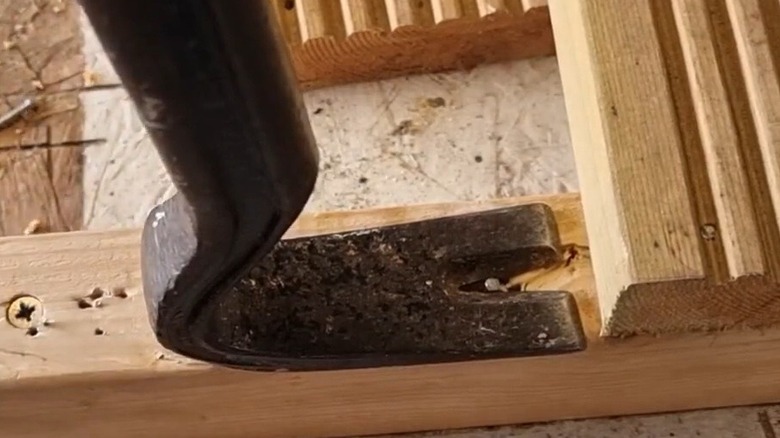
When DIYing a deck building project, it's common to make some mistakes. To remove fasteners and lift slightly askew deck boards while causing as little damage as possible, a pry bar with a nail puller is a good tool to have on hand. Harbor Freight's Pittsburgh 15-Inch Flat Pry Bar has nail-pulling slots on both ends, making it a useful design. The beveled edges allow you to slide the ends under boards without causing significant damage, while the 15-inch length helps you gain the leverage needed to remove fasteners.
Use a socket set to drive lag screws in deck framing
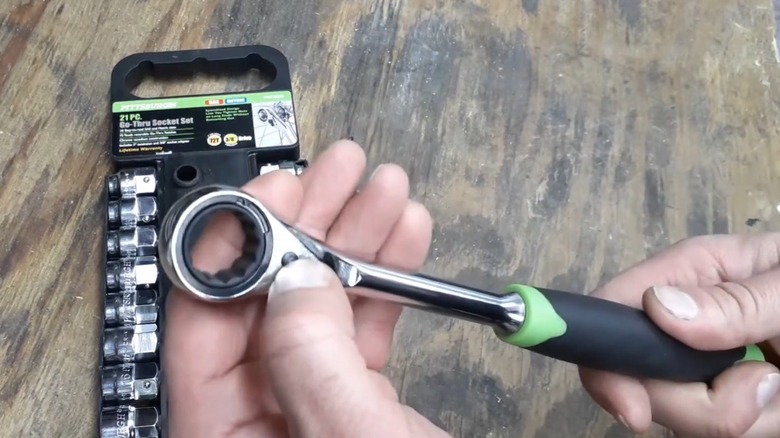
At the areas of maximum stress in the deck framing, you need to install lag screws and bolts. A socket wrench set lets you securely install these larger fasteners. Harbor Freight's Pittsburgh 21 Piece Socket Set is reasonably priced for a small set, but it should have all the socket sizes you need for this task. Its SAE sockets range from 5/16 to 3/4 of an inch, while the metric sockets range from 10 to 19 mm. The set includes a 3-inch extension for working in tight spaces.
A belt sander prepares the deck for staining and sealing
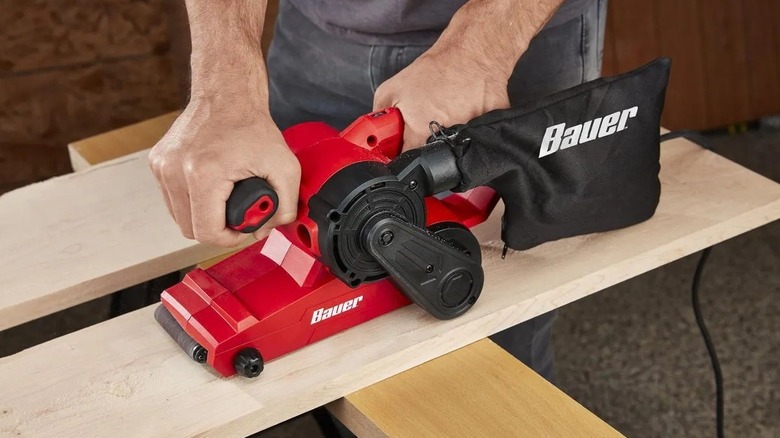
After installing all the wood for your deck, you'll need to sand it to prepare it for staining and to reduce rough spots. A belt sander has the power necessary to speed up the sanding process. Use the belt sander on the main sections of the deck before using an orbital sander for the edges. Harbor Freight's Bauer Variable-Speed Belt Sander has a 89% customer satisfaction rating. Its design includes a large handle with a rubber coating near the top, allowing you to easily grip and control the sander.
An orbital sander delivers the finishing touches on your deck
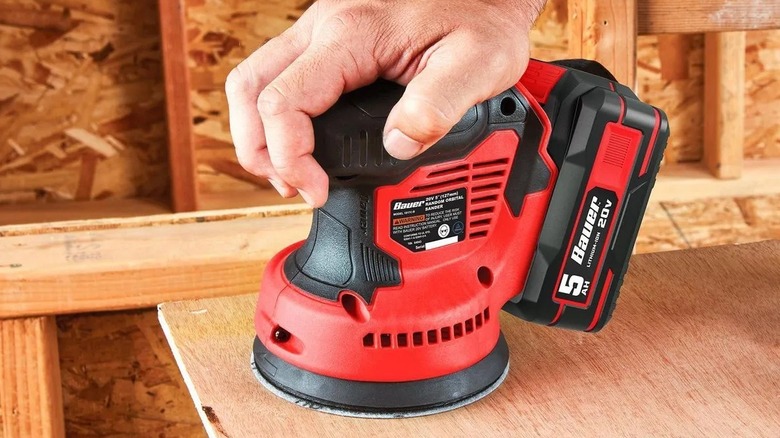
For the final touch on your deck planks, an orbital sander is easy to control in tight spaces, such as at the edges and corners where the belt sander can't reach. With its round sanding pad, it reduces sanding marks before you stain the wood. The Bauer Cordless 5-Inch Orbital Sander runs from a 20V battery, allowing you to use it anywhere. (The battery and charger are sold separately.) It has a rubber-covered palm grip that helps with control and reduces arm and hand fatigue while working.