

The Best Sponges For Cleaning Your Walls
We may receive a commission on purchases made from links.
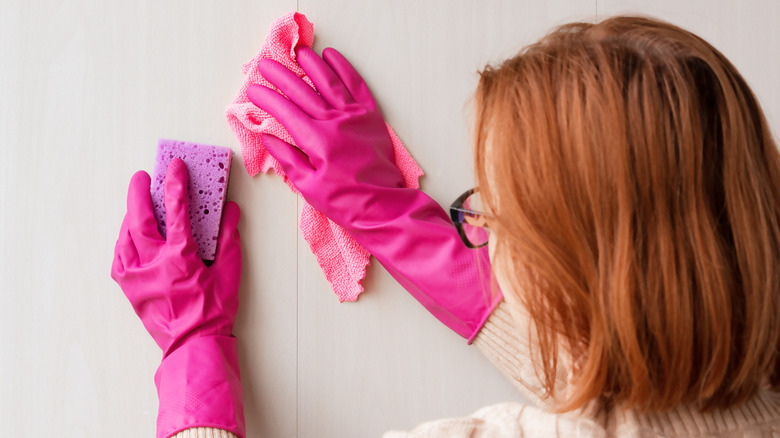
Cleaning walls can seem like an intimidating task. It's common for everyday dust (or even pollutants that waft in from open windows) to linger while we don't lift a finger to them for fear of making mistakes when cleaning painted walls that could cause damage. But even though you need to be mindful of how you use them, there are tools within reach: certain sponges that are easy to find at retailers or which you may have in your cleaning supply to get those walls clean. The best sponges for cleaning your wall are polyester sponges for a general clean and melamine foam and dry chemical sponges for removing stains or marks.
Besides choosing the right sponge for the job, there are steps to make sure you're getting the best possible clean on your walls. Getting any loose dust off the walls first is important, so you don't wind up just moving it around and causing unsightly streaks. Cover a mop or broom with some cloth and use it to give the walls a thorough dusting. You'll also want to inspect the walls to get an idea of the paint on them. If you notice a sheen on the walls, it's a sign that you can apply a bit more pressure when cleaning, but if the walls look or feel flatter or more matte-textured, be prepared to go lightly with the sponge. After you clean (and the method will differ depending on the sponge you use), pat the wall dry with a clean cloth.
How to choose the best sponge for different types of wall cleaning
If you just need to refresh your walls, there's no need to put the paint job at risk with an abrasive sponge. Heavy-duty polyester sponges are a good go-to because they're both soft and durable. Plus, they are inexpensive and available at most big box and hardware stores. Their all-purpose nature makes them useful given how often you need to clean your walls. In between your monthly or twice-yearly wall cleanings, you can sanitize these sponges and use them for kitchen or outdoor cleaning projects.
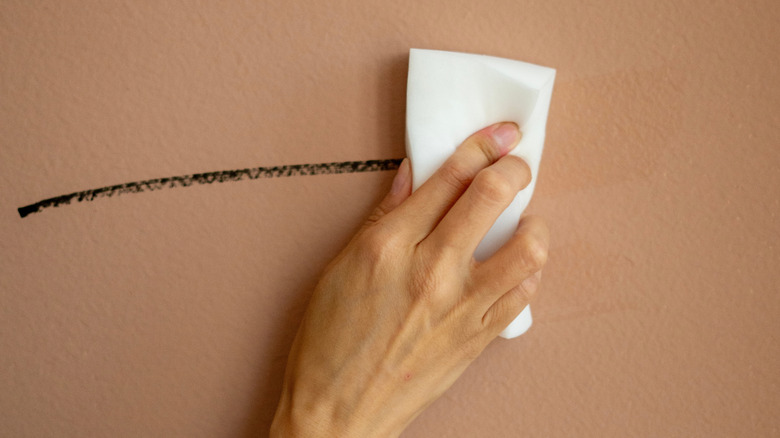
Sometimes, life happens and walls get scuffed or even assaulted with crayons and markers. This is where sponges crafted from melamine resin is your friend. Mr. Clean Magic Eraser is just one type of melamine foam product, so you can try a store brand to save money. Unlike other sponges, you don't need to add a detergent here; simply wet the sponge and apply it gently to those stubborn spots.
What if the walls are dingy due to environmental factors like accumulated pollen or even wildfire smoke? Dry sponges, also known as chemical sponges are the right choice. Their vulcanized rubber structure will capture soot, dirt, pet hair, and more. You can wash dry sponges after use, or cut off the top layer to get multiple uses out of them. Brands like SpongeCo offer them in packs to cut down on replacement costs.
How to clean your walls with these sponges
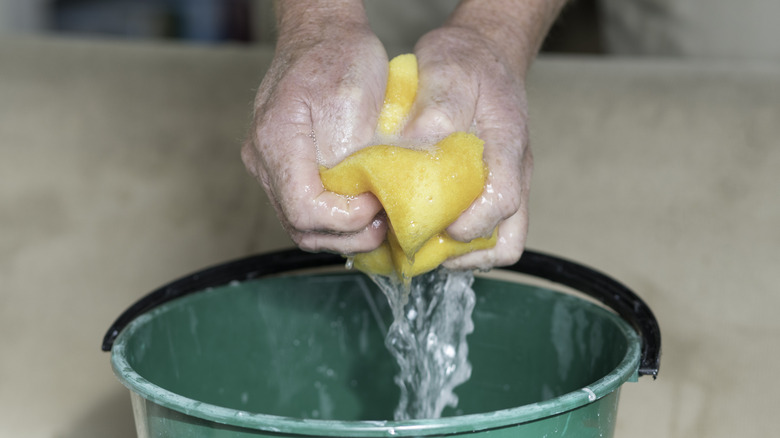
The methods for cleaning your interior walls will vary depending on the type of sponge you select. While you will want to have a bucket filled with water and a mild cleaning agent like dish detergent, and another filled with rinsing water for your basic clean with a polyester sponge, melamine sponges don't require the detergent, and dry sponges need to stay dry to work effectively (and to prevent the particulates on the wall from getting smeared together).
When using a Magic Eraser or other melamine sponge, you can just dip it into a bucket of plain water and squeeze out any excess. It's also important to press gently (especially when cleaning flat walls), because this type of sponge can remove paint. Because of this risk, test a small spot on your wall with the sponge before proceeding with the rest of the walls.
Besides foregoing water when using dry sponges, there's also a different trick to remember during the process that differs from standard cleaning. When you're using a polyester sponge, the common approach is to move the sponge in a circular path and go upward with the sponge to avoid creating streaks. But if you're working with a dry sponge, you should move it in the the opposite direction — from the top to the bottom of the wall. Also, the dry sponge may not take care of deeply ingrained marks under the grime, so you can combine methods and try a melamine sponge afterward if they remain.