

11 DIYs To Transform Scrap Wood Into Useful Garden Pieces For Your Plants
We may receive a commission on purchases made from links.
Chunks of wood from old building projects, trim you removed when you remodeled, chunks of logs from the backyard — scrap wood comes in many forms. If you don't have a specific purpose in mind for those wooden leftovers, you may be tempted to toss them. But you might be surprised by how many ways you can use little pieces of wood inside and outside your house. You can repurpose wood scraps into handy storage organizers for your home, for instance, or turn them into a statement accent wall. But we're more interested in ways to transform these old pine, oak, or MDF pieces into functional and beautiful garden accents. From pallet vertical gardens and walkways to supportive garden trellises and beneficial insect houses, the list spans all types of garden needs.
Using wood scraps for your garden projects saves you money since you already have the building materials on hand. Even if you paid for the lumber originally, you're getting your money's worth by using every last bit of it. Old, worn, reclaimed wood shows off its history in every little notch or scratch, and that rustic character fits in well with the nature in your garden. It's also a sustainable option since you're making something useful out of what might have been trash otherwise. Plus, wood is a sturdy building material that works well for a variety of gardening features. Gather up your wood scraps, and put them to good use with these ideas for inspiration.
Invite beneficial bugs to your garden with an insect house
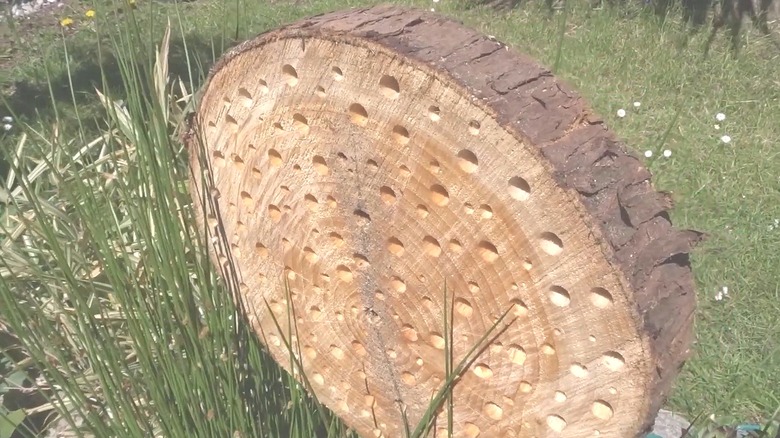
If you're looking for ways to bring good insects into your garden, make an insect hotel from scrap wood. It's essentially a piece of wood with lots of holes in it — the inspiration project uses a slice of a tree trunk, but you can just as easily use a thick piece of scrap wood. Then, drill holes of various sizes in it. Or, build a simple rectangular frame (kind of like an outdoor shelf) from scrap wood, and fill the shelves with thin bamboo stakes, thin branches with holes drilled in the ends, pinecones, and other materials that will be appealing for insects to nest and overwinter in.
Go up with a vertical planter made from a pallet
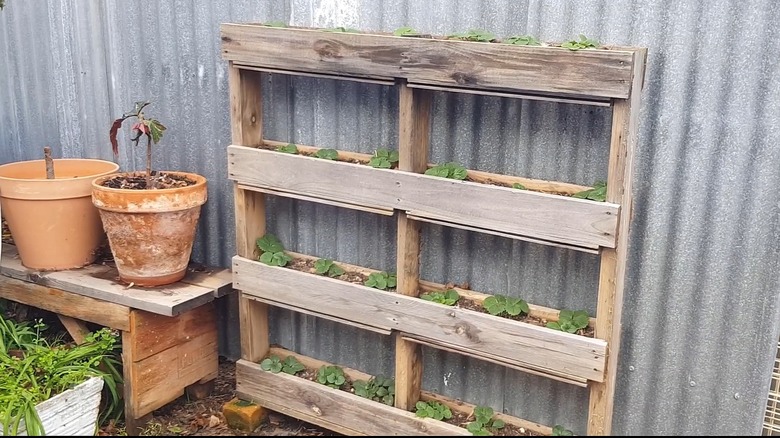
The one safety check you can't skip before working with wood pallets is looking for chemical treatment evidence. As long as your pallets are free of chemicals, turn a whole pallet into a vertical garden. Remove every other board on the front, and nail those boards to the back side, aligned with the remaining boards, to create planting troughs. Then, nail additional scrap wood to form the bottoms of the troughs. Fill each section with dirt, and plant strawberries, herbs, or other small plants.
Support plant growth with a simple pyramid trellis
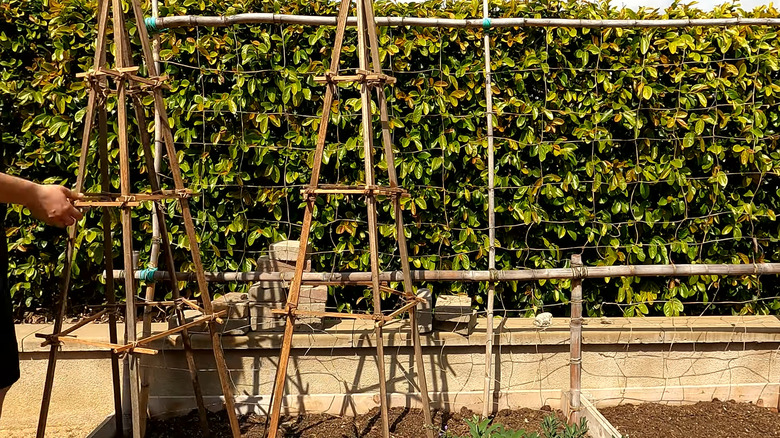
A DIY pyramid trellis (sometimes called a teepee trellis) is one of many garden trellis structures that'll upgrade your gardening game, and it's simple to make with three or more pieces of scrap wood. For a basic form, grab three to five long, thin boards with the tops overlapping and the bottoms spread to create the wider base. Tie the tops together securely with twine. You can also add short horizontal braces, which you'll also tie with twine. Use this type of trellis to support vining vegetables, like pole beans and sweet peas, or vining flowers, like morning glories.
Label your plants with DIY wooden plant markers
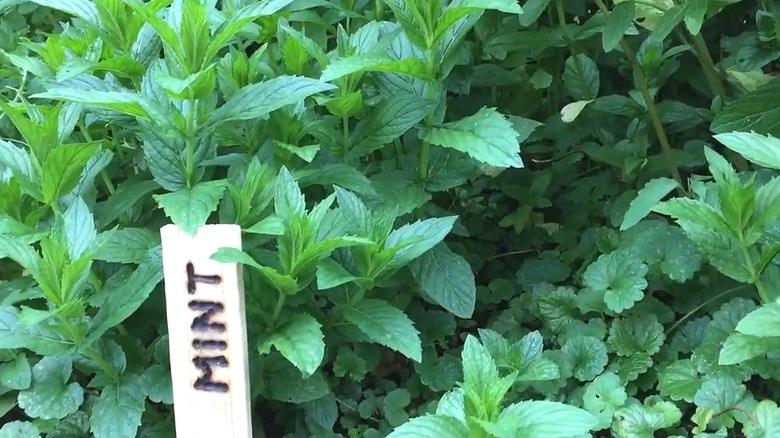
Plant labels are cute decorations, but they also help track your crops. Scrap wood makes for affordable DIY markers. For a simple option, grab a thin, wide piece of wood (the width and thickness of an old paint stirrer), and use a permanent marker to write the plant name (or, if you're crafty, use a wood-burning tool to write the name of the plant). You can even repurpose old wooden spoons in your garden as labels.
Designate walkways to protect growing plants with pallet wood
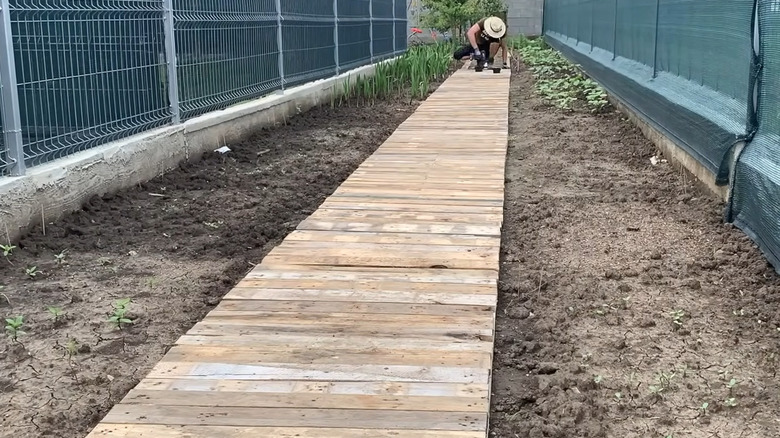
An old pallet creates the foundation for a new walkway through your garden plants. For a raised walkway, you'll need three long boards running the length of the walkway — one on each side and one down the middle — for support. Then, place shorter pallet boards horizontally, and nail them to the support pieces underneath. This project is faster with a power saw and drill, but you can cut the boards with a hand saw, and use a hammer and nails to attach them if you're not comfortable with power tools.
Create a sunken scrap wood garden walkway
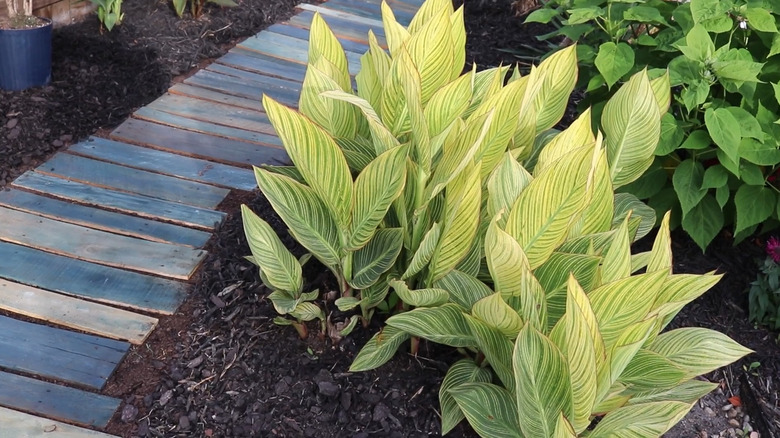
If you want a wood walkway without braces and nails, grab scrap wood and place it on the ground. Don't forget that if you're using untreated wood, it will last longer with a sealant like Nordicare wood sealant oil. Don't worry about pieces being the same size or shape — you can mix and watch for a quirky, rustic stepping path. Press the boards into sand or mulch to keep them in place. You can butt them next to each other or leave small gaps between.
Define garden beds with wood scrap edging
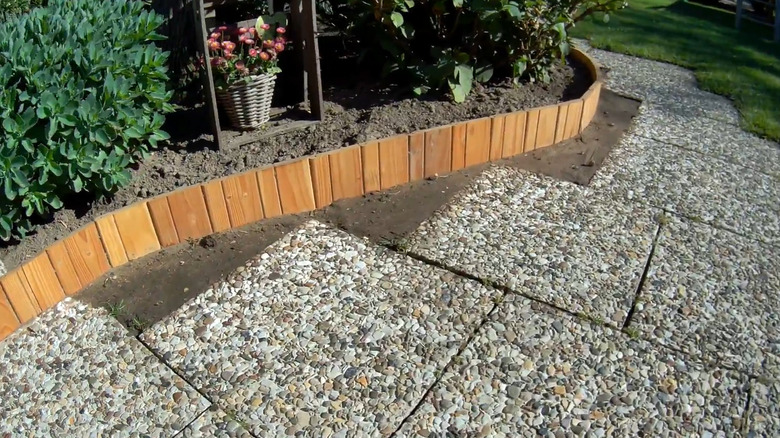
There are several types of edging that'll prevent grass from growing in flower beds, but you don't have to buy the materials if you have scrap wood. If you have tongue-and-groove planks on hand, cut them to the desired height, and connect them to secure the edging. Otherwise, any piece of wood will work, including wood pickets or decking cut-offs. For a polished look, cut the boards to the same height with a hand saw or choose random heights for a more natural look.
Enjoy the garden from a simple bench
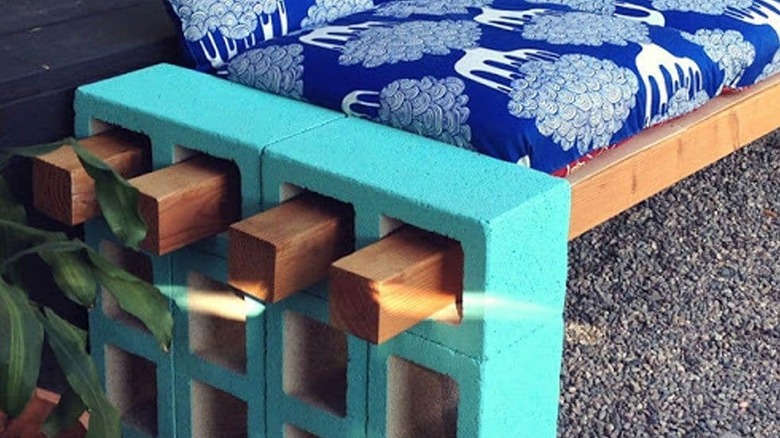
Cinder blocks and sturdy pieces of scrap wood combined make a simple garden bench — it's a way to repurpose cinder blocks in your garden, in addition to your repurposed wood. One option is to stack a row of cinder blocks vertically, followed by a horizontal row — secure them with concrete adhesive. Then, run thick post-style boards through the cinder block holes in the top row. Or, stack and adhere two cinder blocks horizontally on each end for the legs, and run sturdy wood planks between them, using more adhesive to secure the top.
Store garden tools conveniently with a pallet rack
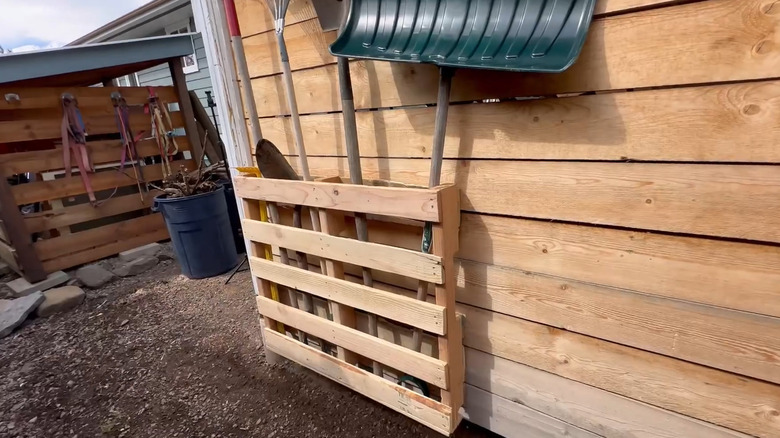
Of all the tips and tricks for organizing gardening tools, having a designated storage spot is one of the most important. One simple option is cutting a pallet to an appropriate height — about four or five pallet boards high. It should be tall enough to hold larger tools, like shovels and rakes, securely while allowing the top portions to stick out for ease of access.
Elevate potted plants with a simple fence shelf
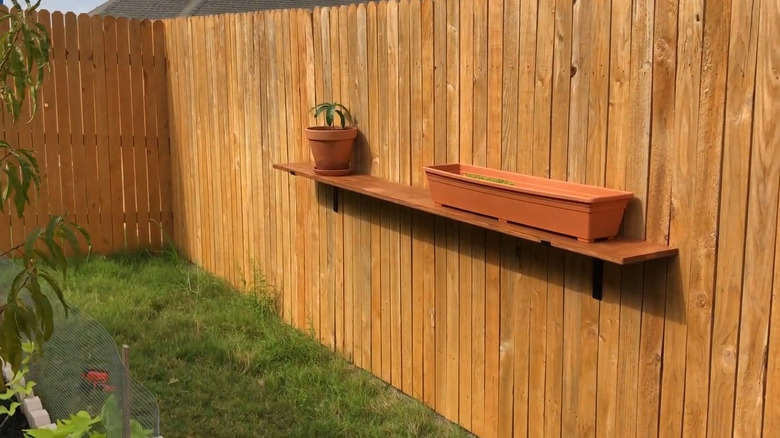
Potted plants take up space on your patio and kill grass if they sit directly on your lawn. Adding a simple shelf to your backyard wood fence helps remedy that situation. Screw in a pair of metal shelf brackets, and secure a long piece of scrap wood on top of the brackets. Choose a sturdy board that can handle the weight of your potted plants. If you make an extra long shelf, you may need additional shelf supports.
Customize a large garden sign as a backdrop
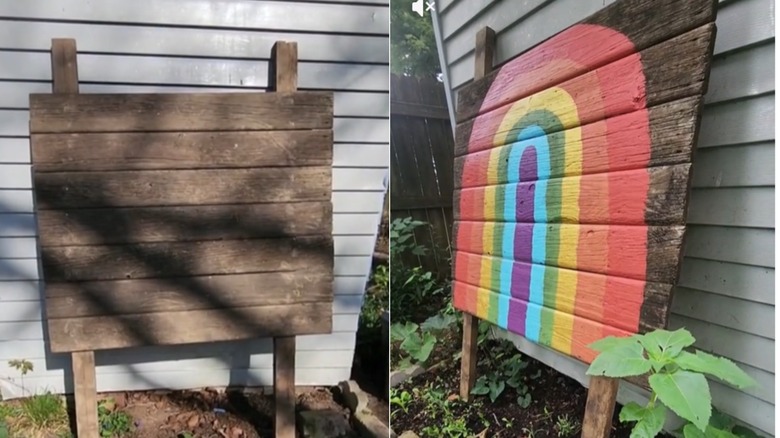
When you start a pollinator garden, your plant choices are crucial. But it's also fun to add a bold, bright background, like this rainbow sign. To create the sign structure, cut scrap wood boards to the designed length. You'll also need two sturdy boards to create the legs and braces. Lay the sign boards across those braces, and nail them in place. Then, paint whatever design you want as the backdrop for your bee garden.