

16 Ways To Improve Curb Appeal Without The Hassle Of Landscaping Contractors
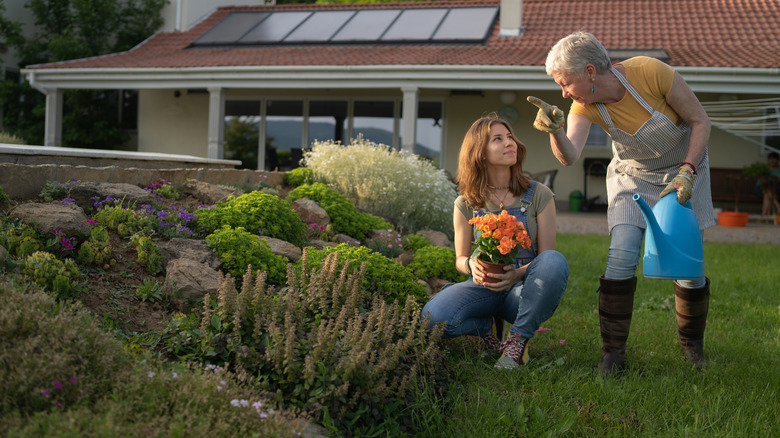
Lifting your home's curb appeal doesn't always mean you have to hire a gardener or landscaping contractor and make dramatic changes to your yard. There are plenty of things you can do yourself that will improve the look of your outdoor space. You can start with simple jobs like tidying beds, borders, and overgrown plants, then decide on a few projects or other specific areas you want to improve.
Know your own limits, though. If you don't have the skills, time, or ability to use heavy machinery or do days of hard labor, be smart and don't start it. Otherwise, you'll end up creating a nightmare for yourself that will lower curb appeal or mean you have no choice but to hire a pro to fix the mess you made. For example, unless you know what you're doing, I wouldn't recommend trying to fully regrade your lawn. You're better off working on things like plant choice, top dressing, improving how your property handles storm runoff, and how your garden frames your house. Here are some ways to improve curb appeal that you can do yourself, but will have everyone thinking you hired a landscaper.
Swap thirsty ornamentals for climate-smart native plants
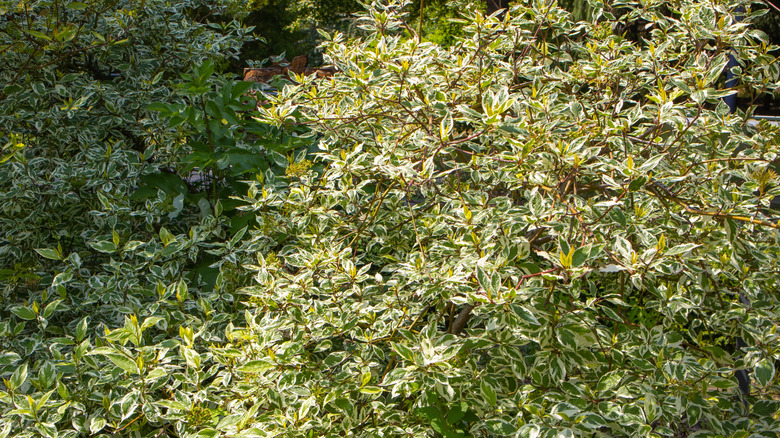
High-maintenance ornamentals often look spectacular when you first plant them, but they need a lot of regular attention. Over time, they can struggle and end up looking sad and tired. Or, they'll just die off. Basically, if you choose to plant something that doesn't do well in your local climate and soil conditions, you'll most likely come to regret it. The answer is simply to replace these plants with native ornamentals that thrive in your garden's soil conditions.
Native shrubs, perennials, and grasses are adapted to your local climate, so they need less watering and overall maintenance. If you choose sturdy, reasonably hard ones, they'll be okay with a bit of benign neglect, too. Aside from smart plant choice, focus on building healthy soil naturally so whatever you plant has plenty of food, adequate water, and rich, light, loamy soil. Look honestly at your garden and pay attention to what plants need a lot of maintenance, are prone to disease, or are constantly riddled with pests — those are the ones you want to replace.
Add a shallow swale or rain garden to tame standing water
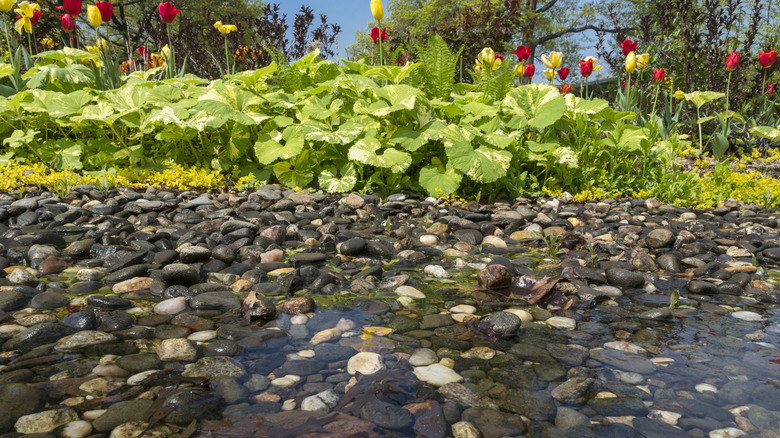
If you have problems with standing water whenever it rains, or you know your property doesn't handle snow melt and storm runoff well, you do have options that don't cost loads of money or require professional help. Regularly having standing water in your yard drowns your lawn's roots and you end up with bare patches. Plus, of course, the affected areas take ages to properly dry out. And runoff can wash away soil and mulch, too, stripping your garden of nutrients and protection.
Adding a swale or a rain garden helps you manage the way water behaves on your property. A swale is basically a shallow channel that holds and directs water where you want it to go. It controls and slows runoff. A rain garden is a basin or depression planted with water-loving plants. The benefit of a rain garden is that it holds rain, snow melt, and storm runoff and lets it gently, slowly soak away, and it also helps filter out pollutants. Feel free to combine the two features. So, you'd add your swales and direct them to the rain garden. You essentially deliberately direct rain water away from your house and lawn and into the rain garden, where it can steadily drain away.
Prune back overgrown shrubs so the house is visible
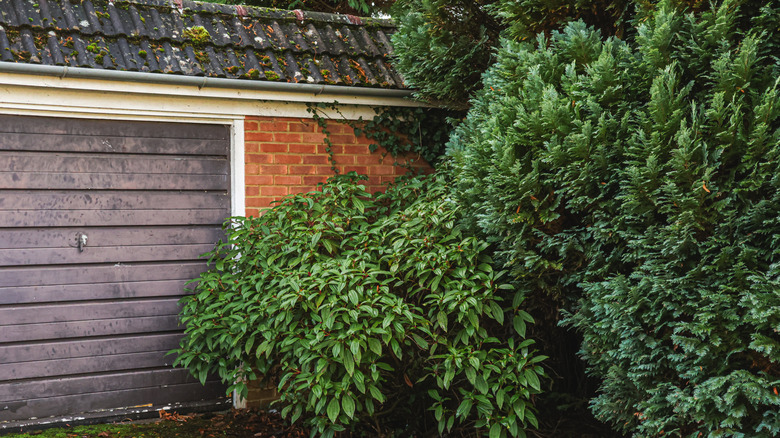
Pruning back and taming overgrown shrubs is one of the easiest things you can do to boost curb appeal. Shrubs creeping over windows and blocking large portions of the house from view can give your property a feeling of neglect. Letting shrubs get so unruly that they block the view of the door or hide the address feels unwelcoming. Plus, when those big, bulky plants are right against your house, they create a hiding place and, potentially, easy access to your home for all manner of critters.
Before you make any cuts, stand at a distance and look at the shrub in question. Cut branches back from steps, pathways, and driveways, as these are all safety issues. Next, cut away growth that blocks sightlines from inside the house to let in more light. Then you can think about shaping the shrub into a more pleasing general appearance. But don't go crazy and hack the poor thing too much. I always advise against removing more than a third of a plant's growth in one go. So this might be a job you have to tackle over a couple of seasons, giving the plant a chance to recover fully between cuts.
Refresh mulch in beds for a tidy, finished look
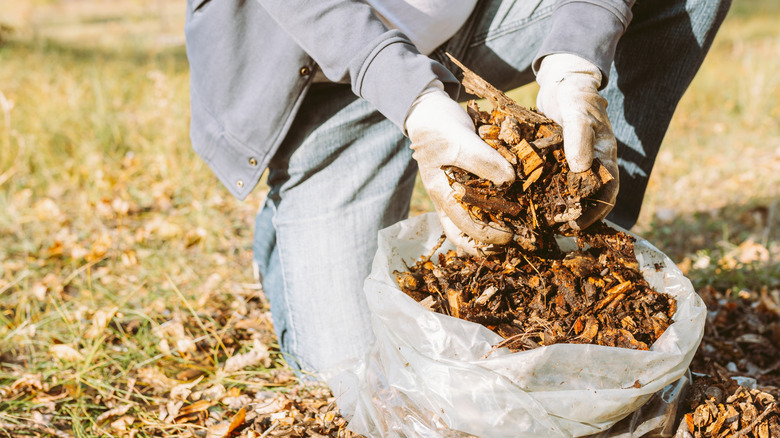
Old mulch looks thin and sad. It tends to get weedy, patchy, or full of fungus as it ages and breaks down into the soil. This is a natural process, and it's exactly what's supposed to happen. Breaking down into enriching organic matter over time is one of the main benefits of natural mulch, but it also shows that your garden is overdue for some attention.
Topping up mulch is a ridiculously simple way of making your garden look well-maintained. As long as you can operate a wheelbarrow, a spade, and a few bags of mulch, no professional help is required. Fresh mulch makes the transitions between bed edges and lawns look sharp and professionally maintained. Plus, of course, it suppresses weeds, keeps soil temperatures stable, slowly releases nutrients, helps limit top soil runoff or scouring, and reduces compaction. Just remember not to volcano it right against tree and shrub trunks. Instead, leave a 2 to 4-inch gap. For beds you rarely dig, go with something that's slow to break down like wood chips. But for beds with a high plant turnover, or where you grow food, go for high-quality compost or even straw.
Topdress and overseed thin lawn patches
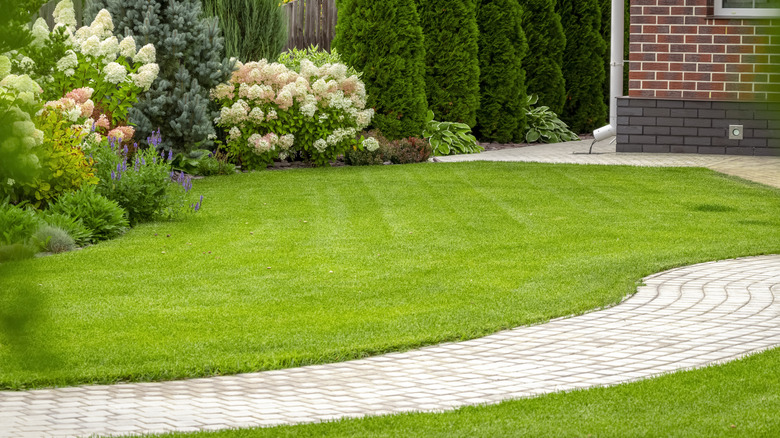
Thin, patchy lawns filled with weeds and bare muddy patches feel unwelcoming and uncared for. But it's also true that fully replacing and regrading a lawn is expensive and labor-intensive — and requires a contractor. The middle ground is to improve your lawn's health yourself. It's not quite as fast as getting a pro to level the ground and lay brand new turf, but it's definitely cheaper and easier.
As a master gardener who specializes in organic and permaculture methods, I always recommend people build soil health naturally, as it's the foundation of plant health. For lawns, you should get in the habit of topdressing every year in the fall. Just spread a thin layer of compost over the surface of the yard and lightly rake it in. Then let it sit over winter and slowly break down, releasing its nutrients and adding organic matter to the soil, helping to reduce compaction and build good soil structure. If your lawn is already thin and patchy, once you've spread the compost, overseed it. You basically broadcast the grass seed across the lawn, lightly rake it in to improve seed-to-compost contact, and then keep it moist until it germinates.
Plant a smart-looking hedge to frame the property
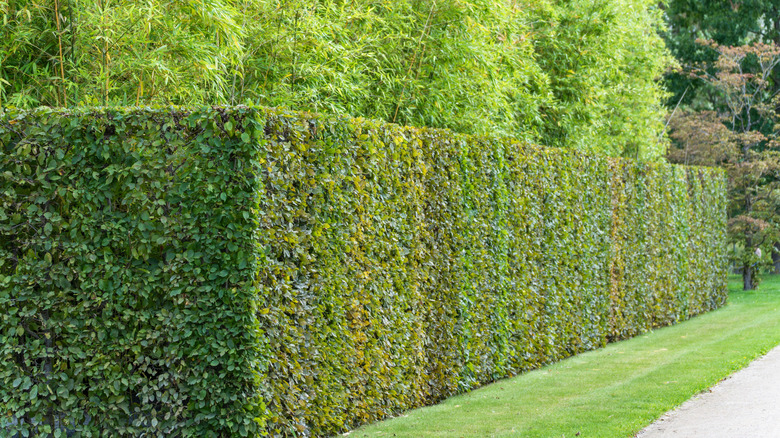
A strategically planted hedge can frame your property beautifully. Hedging can define property boundaries, hide less attractive views, and draw the eye to an entryway or interesting feature. A well-kept hedge also makes a property look cared for and intentionally designed. Plus, it can provide privacy and block views from the street or neighboring properties.
When choosing hedge plants, think about how big your space is. Some fast-growing privacy hedges can get really big, really fast and are just too much for small yards. You also need to consider which plants will grow in your zone. And, if privacy and year-round cover are important to you, make sure you choose an evergreen, not a deciduous type.
Flank front steps with a pair of well-chosen plants
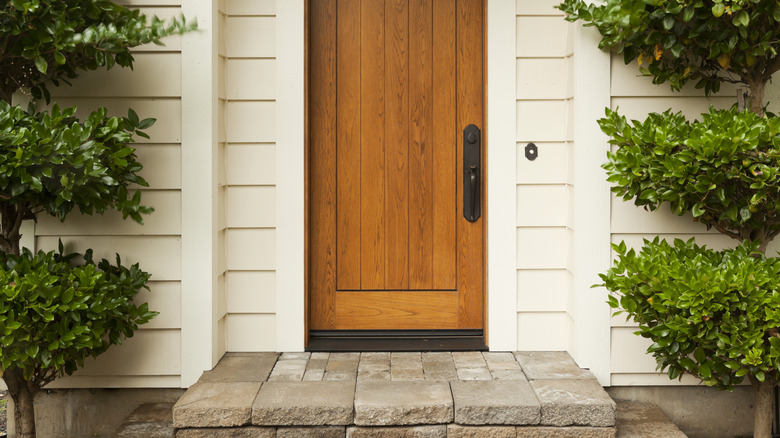
Digging a small bed or even using nice, decorative containers on either side of the front steps with a matching pair of well-chosen shrubs or evergreens creates a dramatic, landscaped look without too much work. It's such a simple technique, yet has a big impact. Flanking shrubs or evergreens draw the eye and invite people in.
The key is your choice of plant. Go with slow-growing, reasonably compact plants that won't get out of hand and dwarf or block the entryway as they mature. Small evergreens look great year-round and should only need occasional light trimming. If you want more color, choose a compact flowering evergreen shrub, like a dwarf azalea.
Edge and redefine beds along paths and the driveway
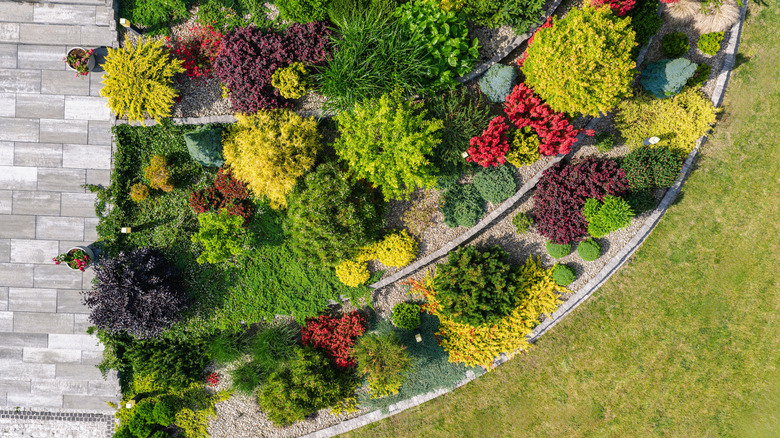
Bed edging gets away from you — it just does. Even if you have the best of intentions, you'll find eventually your beds lose their lovely crisp edge. Grass creeps into the beds, the soil from inside the bed washes or slumps outward, and mulch breaks down. But getting that crisp edge back is a super-fast way to lift the look of your yard. Recutting your bed edges immediately makes your garden look like a landscaper just came to tidy up.
There are lots of tools for this, but I use my decades-old half-moon edger, as it does such a beautiful job on smooth curves and straight lines. Remove a slim strip of turf to get a sharp edge. If you want a bit more definition, cut a shallow "V" instead. This is where you angle the edger to cut at a slight angle, then do the same inside the bed, angled so you're cutting toward the edge and creating the second half of the "V." Then, weed the bed and refresh the mulch while you're there for a freshly landscaped look.
Create a simple front path with flanking planting strips
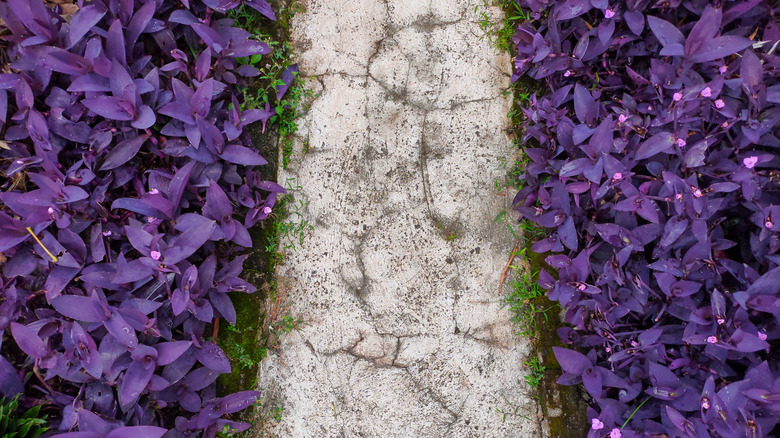
This is basically the same idea as flanking the front steps, but a little less dramatic. If you already have a basic path in place, half the work is already done. If you don't, you can go with something as simple as garden stepping stones ideas that you just need to dig in. Or a modest pathway of pavers, if you can dig, level, and lay them.
Whatever pathway option you choose, make it look more finished and inviting by digging narrow plating strips or borders to each side. Fill these borders with low-growing shrubs, compact perennials, and ornamental grasses. Just make sure you choose plants that stay small and won't spill over onto the walking surface, otherwise you're only creating more work for yourself.
Fill bare soil and slopes with low-maintenance ground covers
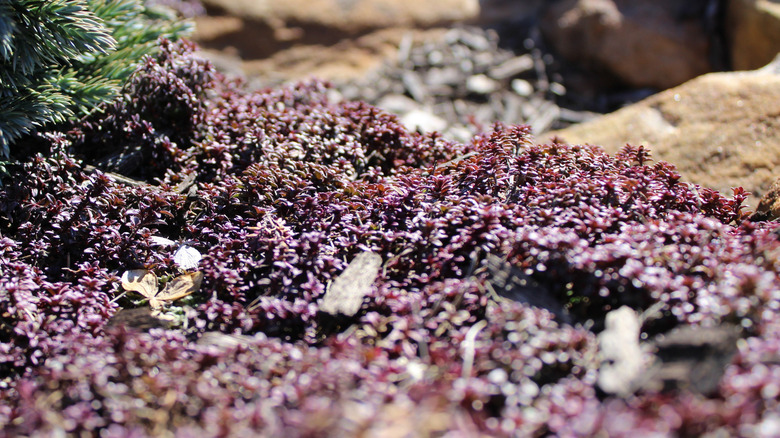
Most of us have those problem patches in our gardens where most things just won't grow: under trees, along foundations, a bare sloping area, or a "waste" patch that's full of rocks and has thin, poor soil. These areas pull down the look of the whole space. Plus, bare and thin areas are subject to erosion, scouring, and runoff, which depletes these areas further, creating more problems.
My favorite way to "fix" these problem spots is with low-maintenance ground covers. Depending on your hardiness zone, you have a ridiculous number of ground covers to choose from. I love creeping thyme and creeping myrtle, because both can withstand foot traffic, they grow fast, and their flowers are amazing for pollinators. They're also evergreen. Or, you can choose specimens like black mondo grass for striking color, or creeping phlox, creeping juniper, or sedums. These plants protect the soil on the surface and hold it together below with their roots, and they do a fantastic job of hiding the "problem" spots.
Rework the parking strip or hellstrip with tough plantings
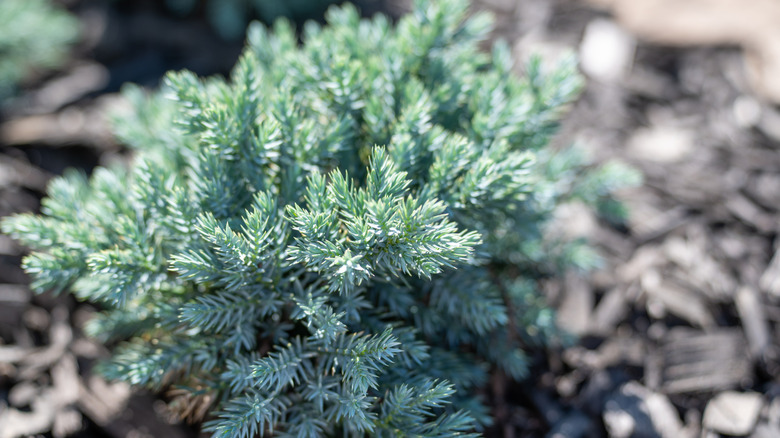
So many properties have a hellstrip, and, because it's not easy to plant, it gets left as an inevitable bad patch. The hellstrip is that often fairly small strip between the driveway and the yard or the road and the property boundary. It gets beaten up, compacted, weedy, and drags down the first impression of a home. This little parking strip is exposed to foot traffic, animal waste, road splash, and heat, so naturally, regular grass or delicate border plantings won't do the job.
Instead, go for tough, hardy plants that like things a little rough. Small shrubs, like blue star juniper, or hardy ground covers like drought-tolerant stonecrops are great choices, because they fill the area quickly. Plus, they don't need a lot of maintenance, they can cope with a certain amount of abuse, and their full chunky growth habit discourages people and animals standing on them.
Create a small island bed as a focal point in the lawn
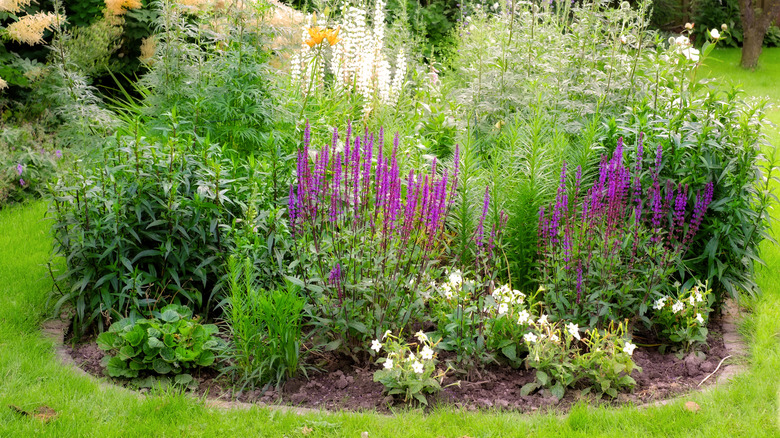
If you've got a large expanse of uninterrupted lawn, it can really be quite bland and dull. Plain lawn looks lifeless, and it really is, unless you're actively growing a bee-friendly lawn. However, if you want to keep your perfectly manicured carpet of green, you can still add visual interest and support local pollinators and wildlife by incorporating a single island bed, or even a series of them, in the middle of a large lawn.
Go with a circle, oval, or kidney-shape bed, and size it so that it doesn't overwhelm the lawn. You want it large enough to draw the eye and add real visual interest, but not so big that it dominates the whole space. A small tree or multi-stemmed shrub in the center of the bed provides height and interest to the garden. You can then underplant with a colorful, pollinator-friendly ground cover or a selection of mixed-height perennials, like woodland plants, such as foxgloves.
Refresh foundation beds with layered shrubs and perennials
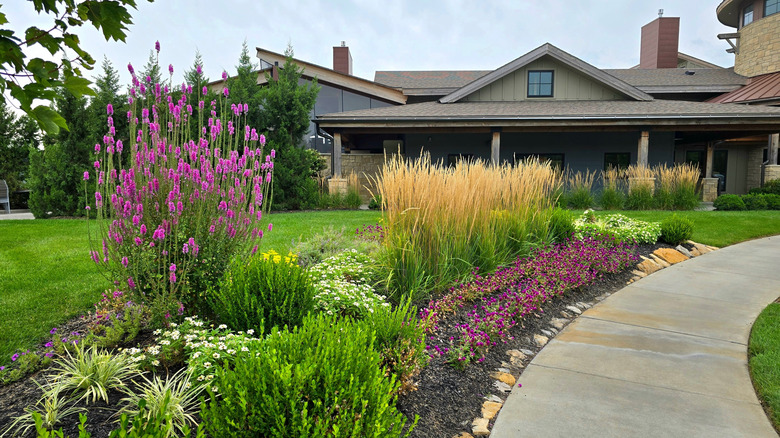
The old habit of planting the same single shrub species in a straight line along the front of the house or all along a long border looks dated and flat. And it's worse if those shrubs have been left to their own devices for years without much care. Even if the plant in question is evergreen, mass plantings are still monotonous with nothing else planted to break up the single color, height, and texture.
Play with height, color, and texture, and plan for color and interest year-round. Go with tall plants toward the back of the bed, more compact ones at the midpoint, and low-growing ground covers and perennials at the front. Think about winter interest, too. Use a mix of evergreens and deciduous plants that still have interesting texture. For example, purple cone flowers die back in winter, but their seed heads are beautiful. Plus, they feed wildlife and provide habitat for overwintering insects.
Add a small ornamental or edible tree for height and seasonal interest
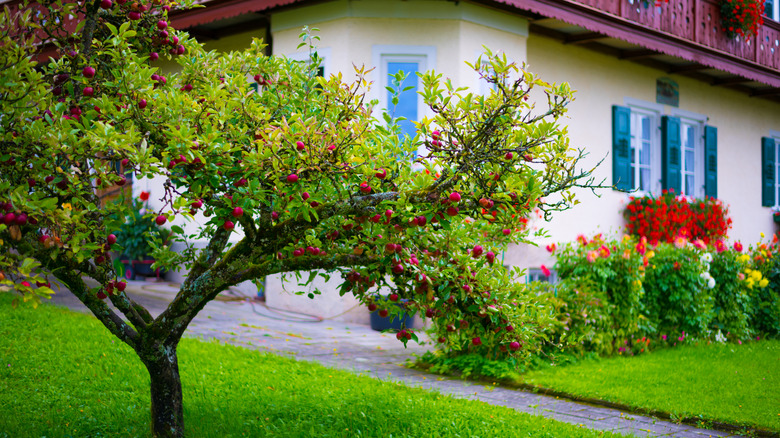
Many front yards lack vertical elements. People focus on the lawn and the pretty little bedding plants, but they don't think about using vertical space. This can make the property look very flat and two-dimensional. Even if you only have a small yard, adding a single tree can make a big visual impact.
Obviously you need to consider how big the tree gets at maturity. Avoid choosing anything that grows huge and will overwhelm the yard or block too much light from your home. I enjoy planting things that are beautiful and useful, so I tend to go for productive trees, like fruit or nut trees. You can get compact varieties of apples, plums, walnuts, cherries, almonds, beechnuts, and loads of other types. And, of course, you can train, or espalier them, so they grow in compact, straight lines. This makes any produce easy to pick and keep a tree confined.
Clean up tree bases with proper mulch rings and underplanting
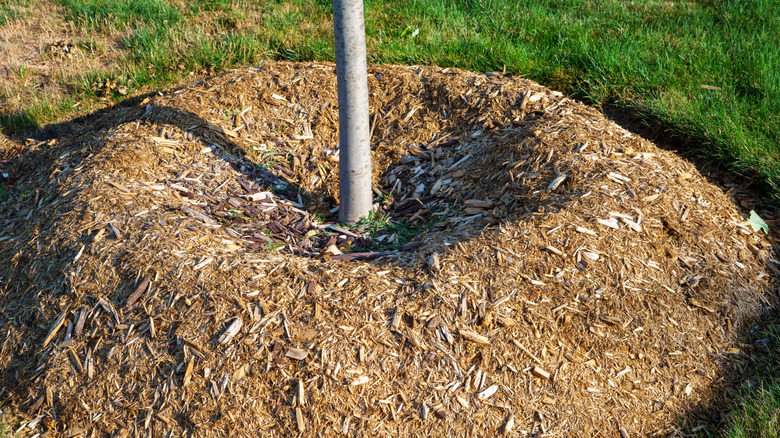
It's pretty common for trees, especially old ones, to end up surrounded by patchy lawn, as beds get consumed by encroaching grass. But it does tend to make the yard look like it's lacking regular care and maintenance. Plus, you end up accidentally damaging the trunk with strimmer line or exposed roots with the mower blades.
The easiest fix is to add a mulch ring around your trees of about 2 to 4 inches deep. You want to suppress the grass with a layer of cardboard or very carefully remove the very top layer without touching the tree roots or trunk. Then apply the mulch over the top. Keep it 2 to 4 inches from the trunk, and extend it, ideally, to the diameter of the drip zone or canopy. Obviously, with very large trees this might not be possible, but it's the ideal because it protects and nourishes the whole root zone. To keep things neat and make it look truly landscaped, if you've extended the mulch to the drip line, you can cut a circular bed edge. I'd also recommend making the most of the mulched area and fill it with shade-tolerant plants that provide pollinator food, wildlife habitat, and plenty of visual interest.