

The Concrete Driveway Color That Looks So Sleek
Whether you're building a new home or replacing an old driveway to boost curb appeal, the material you choose can have a surprisingly big impact on your home's overall appearance. Most people will typically consider asphalt, concrete, or pavers to get the job done, but each has its own pros and cons. If you want to stand out in a sea of cement, luckily, there are materials to use on your driveway that go beyond basic concrete and lend a sophisticated look. If you love the dark contrast that an asphalt driveway provides, but you want a more elevated and long-lasting material, look no further than black colored concrete. This eye-catching driveway material instantly elevates a whole yard, and it looks especially luxurious paired with the sleek architecture of a modern home.
There's more than one way to acquire a black concrete driveway. Concrete can be finished with surface-level stains or dyes applied after it sets, or integral color additives can be mixed directly into the slab before it's poured. For the richest and even dark black color that will withstand UV rays, an integral pigment is the best option. Concrete with color additives isn't that much more expensive, but it must be carefully portioned, mixed, poured, and sealed for results that are attractive, durable, and long-lasting. Therefore, it's a task best left up to professionals.
Cost of adding black pigments to a concrete driveway
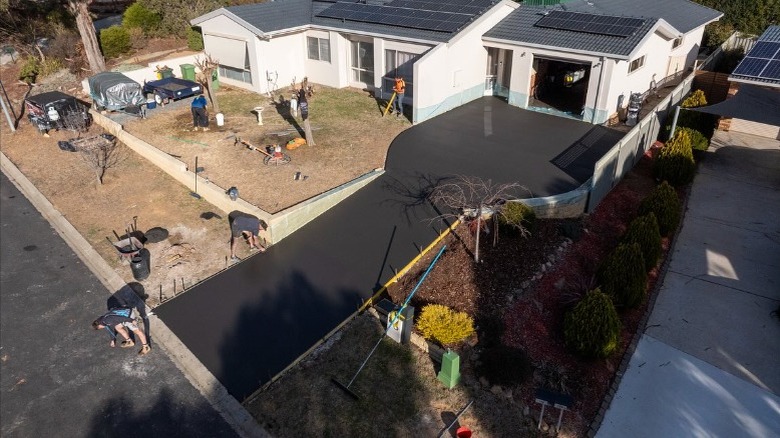
The installation process for a black concrete driveway is much like any other concrete project, although it might take a bit longer to mix in the colorants. Integral concrete color pigments cost about $0.75 to $2.50 per square foot. This may not seem like much, but it can quickly add up, especially on a lengthy driveway. Another factor that may affect your final cost is the specific pigment type you use. Most black concrete driveways will be done with an integral pigment that is either iron oxide or carbon-based. Iron oxide is the most common option. It's also the most recommended, since it withstands harsh elements outdoors and is resistant to fading or washing out.
However, iron oxide delivers a very dark brownish-charcoal hue, which may not be dark enough to suit some people's vision for their home's exterior. In these cases, a carbon-based pigment may be preferable to achieve that super dark look. Carbon black tends to be more affordable and can lean more blue-toned. However, it fades quite easily, and often doesn't stand up to the elements as well as iron oxide. No matter which pigment you choose, a colored concrete driveway must be sealed immediately after installation to prevent fading, and it may need to be resealed every few years.
Know the pros and cons before you pour a black driveway
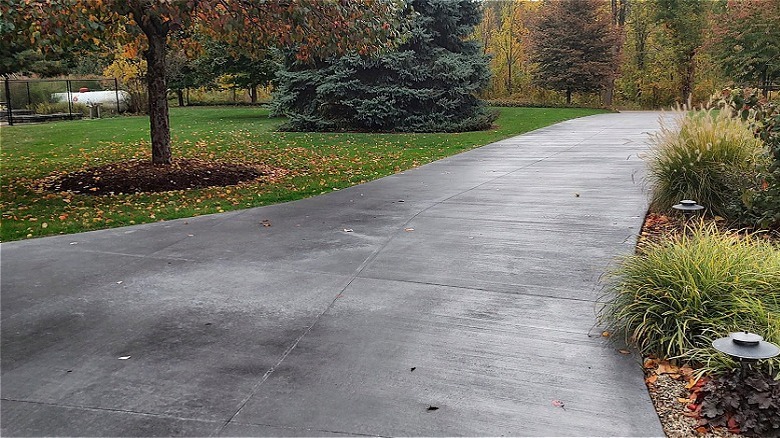
A black driveway can have some unexpected practical benefits. For folks in all climates, a dark charcoal or black driveway may hide muddy tracks, spills, or oil stains. Black also tends to absorb more heat from the sun's rays, so it's less likely to accumulate snow and ice. But there are also some downsides to this chic driveway color. If you live in a cold climate, you may be used to applying salt to your driveway. If you have a black concrete driveway, that's not such a good idea, as it can show efflorescence and salt stains quite easily.
Some concrete experts warn that black driveways may easily develop cracks. Black pigment additives, especially carbon, can affect the concrete's air entrainment agents, which reduces the number of tiny air bubbles that allow the slab to expand and contract when it freezes. Concrete construction engineer Terry Collins told Concrete Decor, "If you increase your air entrainment [agent] dosage, you should be able to bring your air entrainment back up to the same level. However, air entraining agents aren't free, so that may increase the cost of the concrete mixture." If all the maintenance and mixology make you want to say no to solid concrete, there's another trending driveway material that looks upscale.