

10 Salt Hacks Worth Trying This Winter And 6 You Can Skip
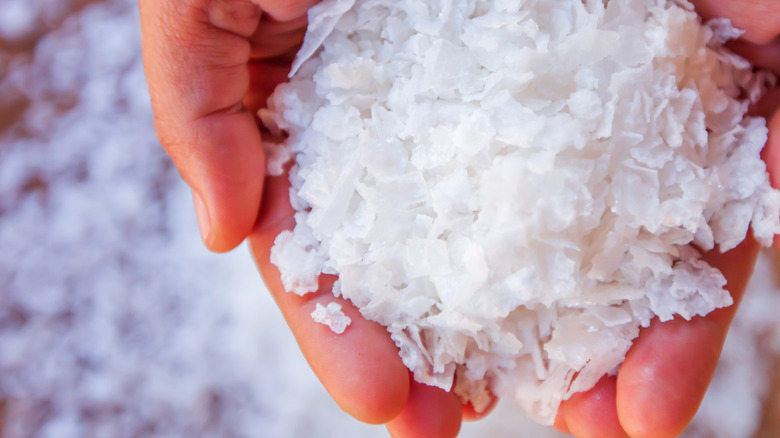
Once you begin counting the ways that salt in its many forms helps get you through the winter, you'll realize that the mineral's uses are practically endless. From gargling table salt to ease sore throats, to soaking shovel-weary muscles in an Epsom salt bath, to "de-bittering" coffee with a pinch of Himalayan pink salt, it's clear that salt is truly the gift that keeps giving during the coldest months. And that's not counting all the clever ways salt can clean your home, or liven up those warming stews and casseroles!
But beyond its healing and culinary gifts, salt has other roles to play in helping you get through the winter. Use the mineral in its many forms to keep you safe while outdoors, as well as to get through power outages, and dry up condensation. But as useful as many of these hacks are, a few pieces of advice you see online may just be too good to be true. Here's a rundown on the ones that will make life easier — and ones that are worth being skeptical about.
Salt walkways before it snows to prevent sticking
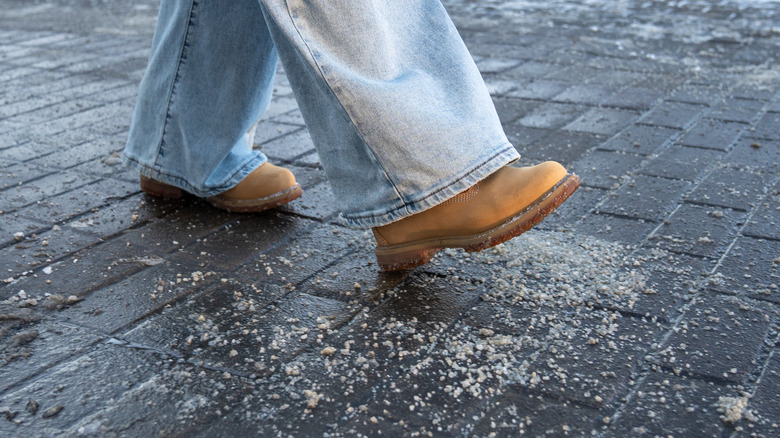
Rock salt is most effective when it sits directly on top of a paved surface, rather than on snow itself. Otherwise, it needs to melt into the several inches of snow to reach the ground before it can be effective. That's why putting down a good layer of rock salt before it snows can jump-start the melting action once the flakes begin to fly. Less snow will stick to the driveway or walkways that you cover. When it comes to shoveling vs. salting your sidewalk, the trick is to do both, but in the right order.
Just before snow is forecast, apply rock salt to all the areas you can, including steps, sidewalks, parking areas, and the driveway. This precaution will create a buffer between the surface and the snow, making later shoveling much easier. It also means you will use up less of your rock salt stash. If you've missed your weather window, get outside to shovel when you can, then apply salt to the just-cleared areas. Try to scrape up as much as possible, and shake salt onto cleared pavement.
Use a lawn spreader to evenly distribute rock salt
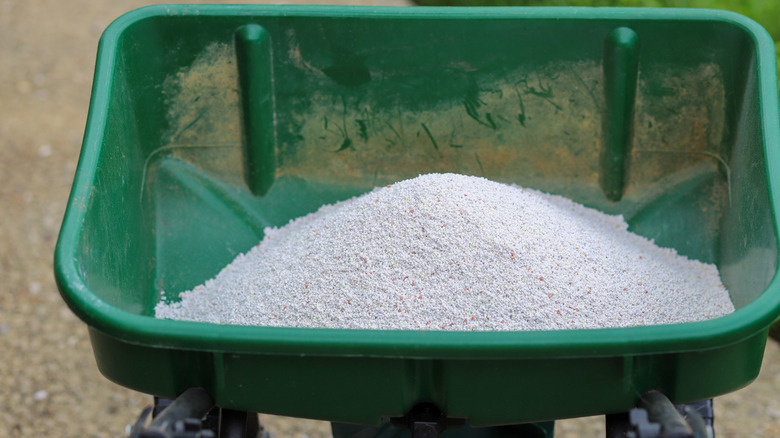
If you have a lawn spreader, don't bury it in the garden shed for the winter! The same tool that works so well for evenly distributing grass seed or fertilizer can also be pressed into service for more even applications of rock salt. It might take some experimenting to find the right setting that works best for larger granules of salt. But once you find that setting, it will greatly speed up distribution. Rolling spreader types are ideal, but even handheld devices can make for a more precise application of rock salt.
First, put the rock salt in the compartment where seed or feed usually goes. Fill it halfway. Then, adjust to the setting you think will meet your needs. You'll probably need to open the chute wider than you normally would for smaller pellets or seeds. The size of the granules matters, but also remember that a little goes a long way with rock salt. Follow the spreader's instructions and begin using the machine to distribute the rock salt. Don't forget that putting the mineral on freshly-shoveled (or pre-snow) ground is the most effective.
Pour rock salt into large shaker-style jug to distribute it more easily
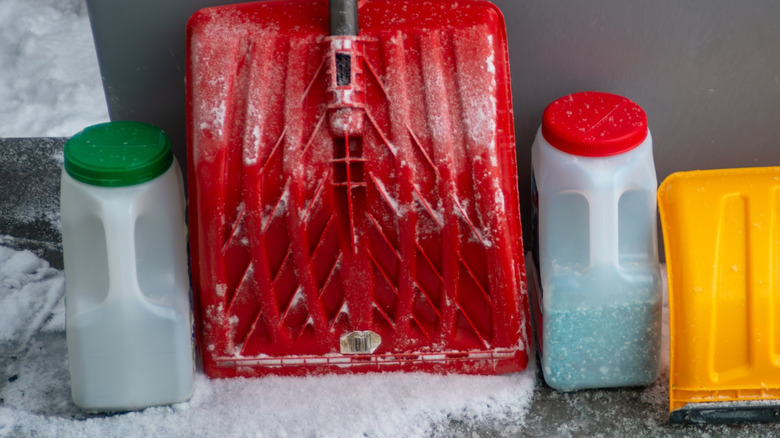
Rock salt tends to come either in wide buckets or large bags. Both types make for awkward spreading. Using these bulky containers to pour out rock salt inevitably leads to getting too little salt in some spots and too much in others. To solve this problem, transfer some of the salt into an empty plastic jug with a specialized lid made for applying large granules. If you plan ahead, you'll have one or two of these handy containers saved from weed-killing or lawn-feeding applications.
The shaker-style top allows for even distribution, while the jug's size handles larger loads than, say, a Tupperware bowl with holes punched in the lid might. (Of course, if the plastic jugs you have on hand don't have an applicator lid, you can always punch out a few holes in the lid with a screwdriver or drill.) Keep the salt-filled plastic jug just outside your front door, or in your mudroom, for easy access.
Put salt in front of outdoor drain pipes to prevent freezing
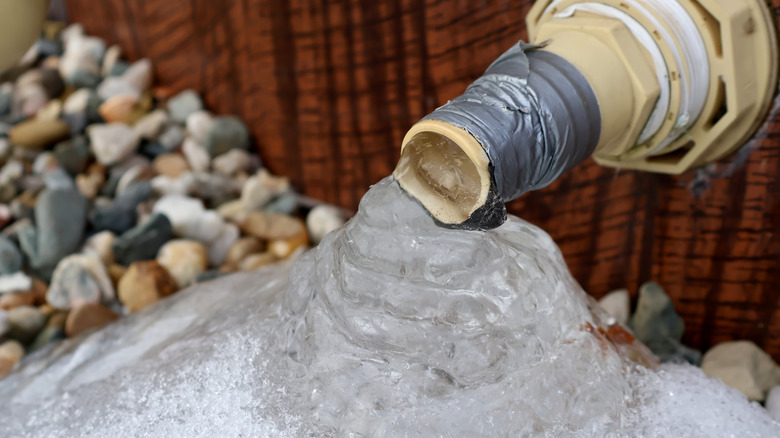
Some furnace outlet pipes are designed to safely eliminate condensation created by the system when it runs by draining it outside. During extremely cold weather, the piped-out moisture can pile up on the ground just beneath it and freeze. That ice heap can potentially plug up the opening to the drain itself and interfere with the heating system. Putting rock salt under your furnace's drain pipe can help mitigate the ice buildup when water drains through it.
Ask your plumber or HVAC servicer to verify which outlet is the furnace pipe if you're not sure. It will probably look like a basic PVC pipe coming out near ground level. Before cold weather strikes, set a mound of rock salt just below and slightly in front of the drain pipe. During the winter, add or replace rock salt as needed. If you can't keep the ice from accumulating and backing up into the pipe, call a professional. The drain line may need extra insulation.
Set bowls of salt in front of windows to stop condensation
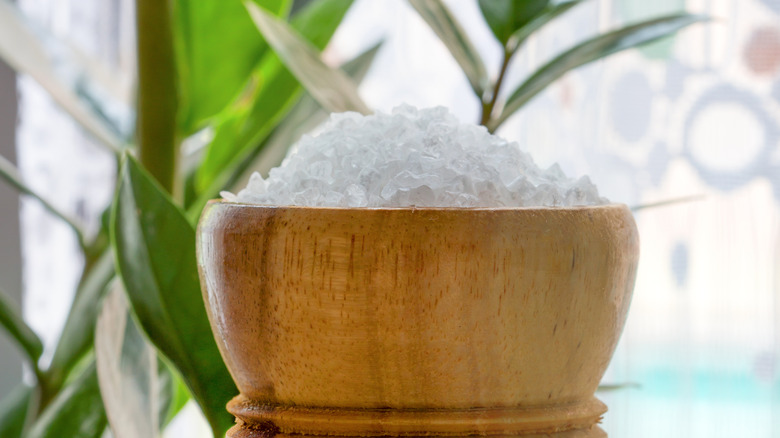
Have you heard of the winter hack that has people putting a bowl of salt by the window? Damp windows are a common headache in the winter, as cold outdoor air interacts with the heated indoor atmosphere. It's not just that those water drops and rivulets are visually chilling. That dampness can cause issues that outlive the cold weather, including mold, wood rot, and loose wallpaper. But a solution is far less complex and costly than you might expect. A mere bowl of salt placed in front of condensation helps dry up some of those watery beads.
Look for a bowl or rimmed dish that fits on your sill, or a table that's placed near the window. Broader is better than deep when it comes to the bowl, because you want the largest possible surface area for the salt. Fill the bowl with table salt or rock salt, and leave it to do its hygroscopic (moisture-absorbing) thing. Replace the salt every so often if you notice more clumps than individual grains.
Spray salt water on windshields to de-ice them more quickly

We all know how hard it is to chip away at iced-in windshields. Turning on the car's defroster eventually works, but when you're running late, "eventually" doesn't cut it. It's also not-so-great for the environment to let your car idle for more than a couple of minutes. Salt water in a spray bottle is an effective de-icer to use before scraping. It's even better to use it as a precaution the evening before temperatures plunge.
Use about ¼ cup rock salt, or 1 cup table salt, per spray bottle of water. It's helpful to use warm, but not hot, water, if possible. Shake the bottle vigorously to dissolve the salt crystals so they don't clog the sprayer. Evenly mist the windshield, focusing on the glass and avoiding the metal parts of the car as much as possible, as well as the vents. Just be careful not to use the briny spray too much or too often, as it can harm wildlife or nearby water areas.
Use rock salt under car wheels if you get stuck in the snow

Whether you've skidded off a lonely road or find your car plowed under in your own driveway, there are times when you're just plain stuck. There are a few things to keep in your car in case of this type of emergency, and rock salt is one of them. Along with rock salt, keep on hand a spade and ice scraper, a screwdriver or rebar, and some extra car mats. If possible, keep these supplies in the back seat instead of the trunk, which can be hard to access in freezing weather.
Just as with salting a sidewalk, rock salt will be most effective when you can get some of the ice and snow out of the way first. The screwdriver (or a piece of rebar) tackles hard ice, while the spade removes the snow. Once you've cleared away snow or roughed up the ice for traction, put down rock salt in front of your tires. Back up slightly, then go forward. You may need to do this a couple of times before you're unstuck. If the rock salt doesn't provide enough traction, try the spare car mats, kitty litter, or sand.
Stop candles from dripping during power outages with table salt

Sometimes, a bit of salt is all you need for a longer-burning candle. Candles are always crucial to have on hand before winter storms, providing steady light during outages that flashlights can't quite manage. But because they're only helpful for so long, people are always looking for ways to extend their burn time while preventing dripping and black smoke. As it turns out, the old-timers' trick of sprinkling candles with salt may be the fix you need.
Once your candles have burned for several minutes, check for melted wax around the wick and sprinkle a small amount of fine table salt into the mix. Use a fork or toothpick to gently distribute the salt around the top of the candle. If the flame makes you nervous, you can blow it out, distribute the salt, then relight the candle. The salting action will allow the candle to last longer, drip less, and burn more cleanly.
Turn to table salt when you run out of rock salt
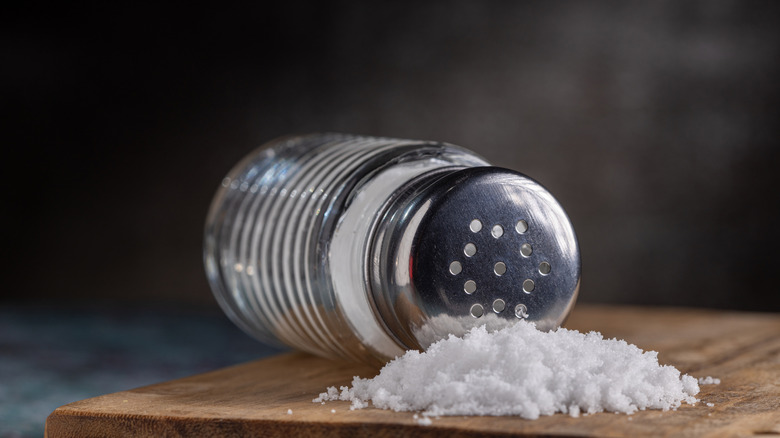
Table salt is certainly more expensive than rock salt, and rarely comes in quantities that would inspire you to tackle a long driveway. Yet in a pinch, so to speak, table salt basically works the same as rock salt. That's not surprising, since both types come from the same mineral, sodium chloride. The only real difference between them is that rock salt is less refined, making for bigger lumps and more jagged edges. But when it comes to getting the job done to melt smaller areas, table salt is a worthy substitute for its rocky sibling.
Certainly, if you're out of rock salt, table salt is definitely worth pulling out of the pantry for smaller jobs like the front steps and walkway. To help it go further and enhance its effectiveness, try mixing it with sand for added traction. Just remember that, like its chunkier sibling, table salt does not work as well below roughly 15 degrees Fahrenheit.
Consider alternative salts to keep your spring landscapes happier

We've all seen how roadside salt can damage plant life. That's also true when the same mineral is used on your property. As convenient and ubiquitous as those big bags of rock salt are for wintry surfaces, sodium chloride has its downsides for both the landscape and certain materials. Rock salt can eat away at brick and concrete. The mineral also pollutes nearby water sources. Come spring, you may find that plants near your steps, paths, and the parking area are damaged from salts accumulating in the soil.
To avoid browning needles and other defoliation in the warmer months, consider using other salts this winter. In fact, there are many types of salt that can melt snow. None are totally guaranteed not to harm nearby water and soil, but they are considered less harmful.
Among them is Epsom salt (magnesium sulfate). To stretch your budget and jump-start its melting action, combine the Epsom salts with sugar in equal proportions before applying it to steps and other small areas. Other salts that are more earth-friendly than rock salt, albeit more expensive, include calcium chloride, especially mixed with sand, and magnesium chloride.
Skip: Relying on rock salt to clean out your sooty chimney
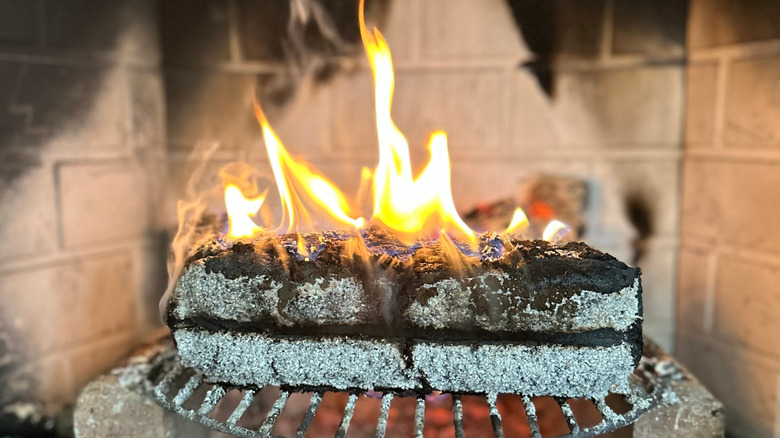
There's no doubt that creosote is the bane of fireplace owners. The flammable substance builds up slightly with each new fire. Left uncleaned for too long, the buildup poses a risk of chimney fires. Woodstoves tend to amass more creosote than regular fireplaces, but eventually, either type of untended chimney is at risk. While rock salt can help a bit with this issue, it certainly shouldn't be relied upon for serious cases of creosote buildup.
Tossing a bit of rock salt onto a burning fire might loosen small amounts of creosote, but not enough to forgo any other preventative measures. Too much salt could also cause damage to chimneys with a metal flue. Bottom line? It might not hurt to try the simple salt hack to keep your chimney clean. But, in general, it's better to have your chimney serviced by pros at least once a year.
Skip: Using salt in a sock to remove moisture from wet winter boots
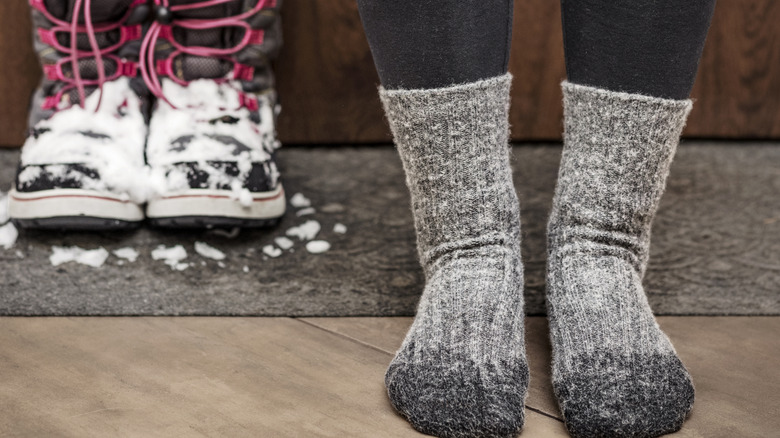
Unfortunately, wet boots and winter tend to go hand in hand. Too often, those boots are still damp in the morning. While some people sprinkle salt directly into their damp footwear in order to suck up moisture, most recommendations involve using rice, kitty litter, or crumpled newspapers instead.
One possible reason that salt is not the go-to drying method this time is that salt can damage footwear. Even if wrapped in a sock, the dampness from the wet insoles may cause salt seepage that poses a slight risk of staining certain materials.
If you do want to try salt, just make sure it's not rock salt, which can be corrosive and jagged. Otherwise, crumple up non-glossy newspaper sections or paper towels and leave them in the wet boots overnight, before removing the damp paper in the morning. Boot manufacturers additionally recommend stuffing old socks with drying materials, such as rice or kitty litter.
Skip: Using salt water to unfreeze locks
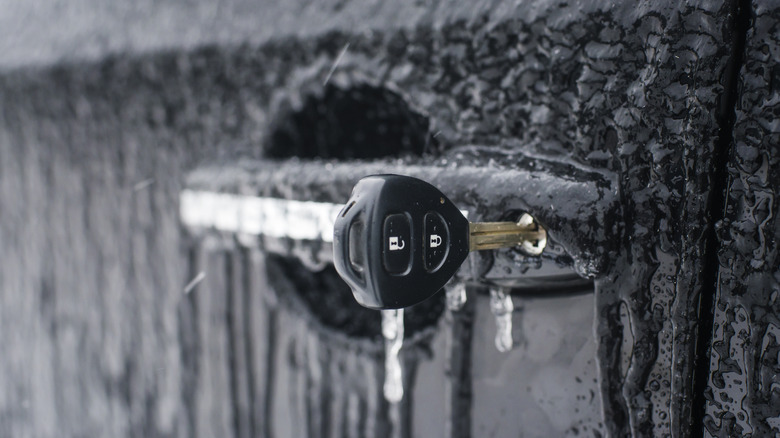
What to do if your car doors have frozen solid and you can't get the key into the lock — especially if you don't have a commercial de-icer on hand? Salt water certainly seems like the ideal way to unfreeze a frozen car door lock. After all, salt or salt water is great for windshields and sidewalks.
The problem with spraying salt water (or, heaven forbid, a handful of dry salt) into a frozen lock is that the granules will eventually clog the car door's locking mechanisms. Fortunately, there are better hacks for this problem that won't have you needing to replace the ruined locks.
Instead of salt or salt water, try spraying undiluted isopropyl alcohol into the frozen locking mechanism. To prevent door locks from freezing in the first place, consider applying WD-40, petroleum jelly, or hand sanitizer to the lock prior to cold temperatures and storms.
Skip: Using rock salt outside in super-low temperatures
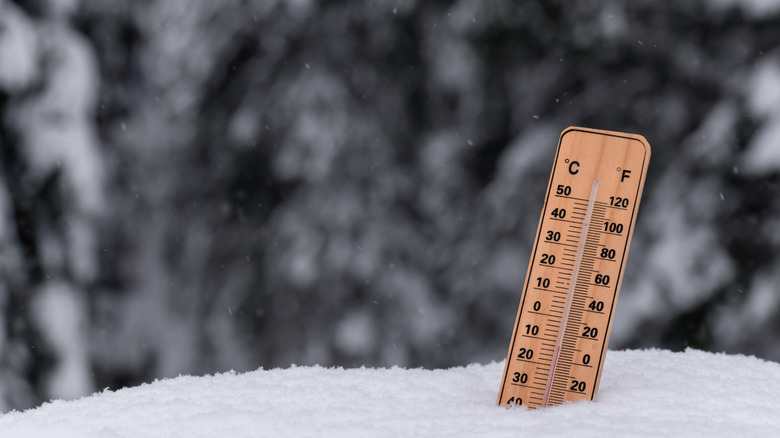
One thing that highway crews understand to a science is how temperatures affect the melting rate of salt. Believe it or not, sodium chloride — also known as table salt or rock salt, depending on how finely it's processed — doesn't always have the same level of effectiveness throughout the winter. The same amount of rock salt that can melt more than 45 pounds of ice at 30 degrees Fahrenheit can only melt a fraction of that amount when it's 20 degrees Fahrenheit.
That's why once the temperatures plummet below 20 or 15 degrees Fahrenheit, it's time to turn to alternatives. If you have a pump sprayer, consider making a salt brine solution with 3.5 cups of rock salt per gallon of hot water. The salt brine has better melting ability in colder weather because the salt no longer needs to take time absorbing moisture from nearby snow or ice to activate its melting action. Alternatively, look for de-icing products that are rated for lower temperatures.
Skip: Trying to turn your home into a detoxifying salt cave

Indoor winter air can certainly get stale and germy. That's why you may have seen so many influencers advocating for placing bowls of salt throughout your home. The theory is that because salt is so drying, the natural mineral sucks up fumes, mold spores, and other indoor pollutants. But this advice should probably be taken with the proverbial grain of salt.
While there may be some logic to large amounts of salt detoxifying interiors, you'd need more than a few bowls of salt to make it happen. Sadly, this online hack isn't practical if you're looking for the ultimate detox. Instead, consider a trip to a salt cave. While the science is still emerging on exactly how much good it does you, you'll at least be exposed to the large amounts needed for halotherapy, as it's known. It's considered safe for most people — and won't have you trading your own furniture for blocks of salt!
Probably skip: Putting salt water down drain to thaw frozen pipes
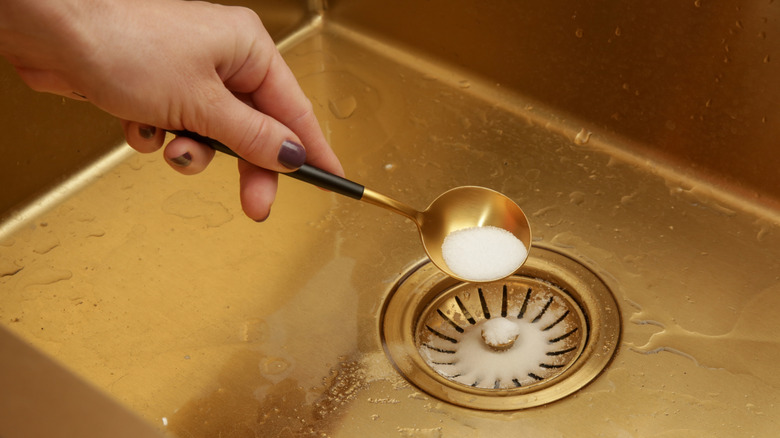
Plumbers seem to have different opinions on whether pouring salt water down the sink drain is the best way to deal with drain issues. Some do suggest it for small problems like a recent grease buildup or other minor issues. But the salt treatment is likely ineffective for frozen drains, and may even cause damage when used in large quantities.
The reason that frozen drains respond differently from sidewalks to salt applications is literally surface-level. Salt doesn't need to penetrate very much on a mostly shoveled walkway. But ice in a pipe can be much deeper, so the salt will likely just sit on the surface. In the short term, it's better to use heating solutions like warm water or a hairdryer. Not surprisingly, the ultimate solution is probably to consult your local plumber if you suspect you have a problem.