

The Affordable Tool That Can Make Worn Furniture Look New Again
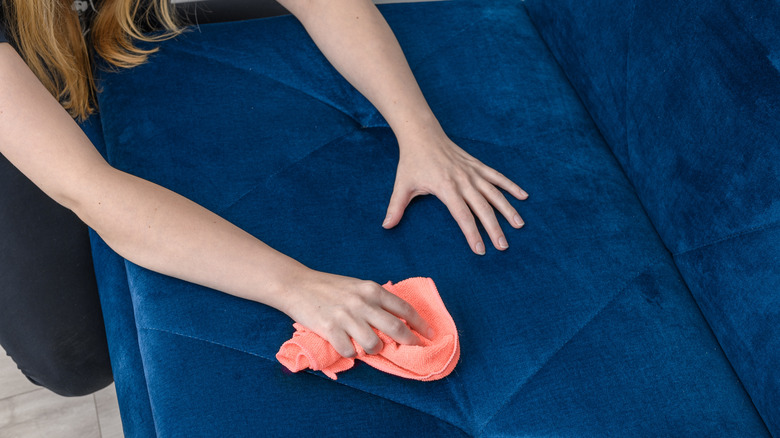
It's a common frustration for homeowners: you invest in a beautiful, comfy couch only to find it looking tired and cheap after mere months of use. This worn look usually isn't because of structural damage or stains, but rather pilling, the buildup of tiny, stubborn bits of fuzz. Pilling happens naturally due to friction, like scooting in and out of a seat each day. While it might look like a sign that your furniture needs to be replaced, these annoying little bumps are really just a surface-level issue. The good news is that you don't need to do anything drastic (like replace the upholstery) to bring your furniture back to life again. All you need is a simple, handheld fabric shaver and a few minutes of your time.
Odds are, you've already seen or even own one, although they're more commonly marketed for clothing like sweaters. The best fabric shavers can act like the ultimate "skincare routine" for the textiles around your house. For a fairly low price (usually between $10-$20), you can get a high-quality electric defuzzer that outperforms manual lint rollers or razors. And after gently removing those fuzzy fiber pills, you'll see the smooth fabric of your furniture underneath that looks as good as the day you got it. It's an easy process that revitalizes the silhouette of your furniture so the colors pop again. High-traffic areas like armrests and seat cushions are gonna be the best targets for this tool, which will help you breathe new life into old favorites without breaking the bank. This affordable gadget bridges the gap between a worn-out living space and a home that feels curated and well-maintained.
Why a fabric shaver is the best way to refresh your home
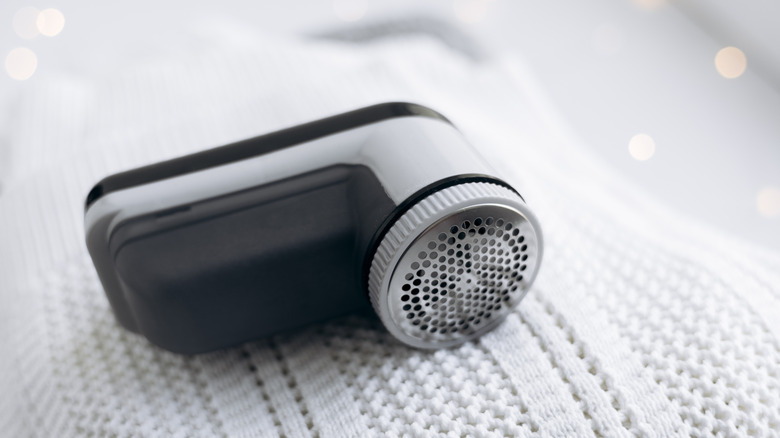
Using a fabric shaver is straightforward, but achieving pro-level results requires a bit of technique and finesse in order to nail it. To get started, ensure that any upholstery you're working with is pulled completely taut. Any wrinkles or loose fabric can get accidentally caught in the rotating blades, potentially leading to small nicks or holes. Once the surface is flat, move the device in light, circular motions across the affected areas, but avoid pressing down too hard — let the sharp blades do the work for you. Because furniture pieces like sectionals or armchairs have way more surface area than a cardigan, you'll need to empty the shaver's lint collection chamber frequently. A full bin slows down the motor and reduces the shaver's overall ability to do a good job, so you may want to keep a small trash bin nearby as you work.
When shopping for a shaver specifically for your furniture, look for a model with a larger shaving head, ideally one that's around three inches wide. While battery-operated versions are convenient, a corded or rechargeable model is often better for large projects to ensure you don't lose power halfway through the job. This tool is safe for most fabric types; however, be extra cautious when working with delicate or highly textured materials like silk, boucle, or cashmere. While this is actually just one of many clever ways to use a sweater shaver around the house, taking a little time now to refresh what you already have lets you keep your furniture looking nicer for longer.