

How To Turn A Simple Indoor Spider Plant Into A Big & Beautiful Statement Piece
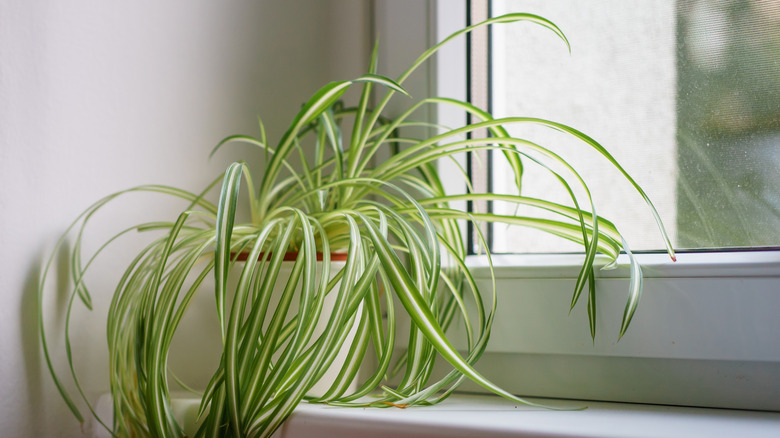
Spider plants (Chlorophytum comosum) are a popular houseplant for beginners. Low-maintenance, adaptable, and tolerant of neglect, you will often see their long, dramatic leaves cascading from hanging baskets and containers in homes across the world. But this easygoing, popular houseplant can be turned into a real statement piece by letting it produce plantlets and simply leaving them on.
Under the right conditions, spider plants will start to send out long stems from their base that produce a small white flower. Once the flower has faded, leaves appear in its place, and small plantlets begin to emerge.
Many houseplant owners often choose to cut off these plantlets and propagate the spider plant around the house. However, leaving them on creates a visually dynamic and interesting look, especially when the spider plant is in a hanging basket. These smaller spider plants stick out amid the foliage of the mother plant, floating in the air and creating a fun, trailing appearance. They grow slowly, and when other plantlets inevitably appear, the visual effect is that of a cluster of tiny plants orbiting around the mother plant. But, to turn your spider plant into a statement piece this way, you need to coax it into producing plantlets.
How to get a spider plant to produce plantlets
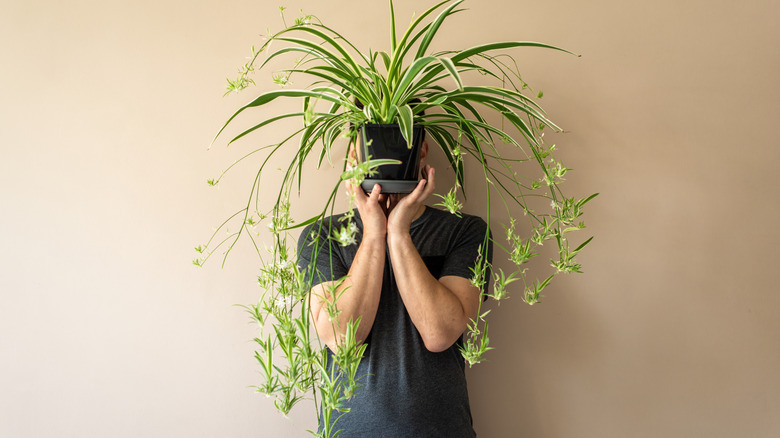
A good part of spider plant plantlet production is a waiting game. Spider plants tend to only begin to produce plantlets after at least a year of growth, and sometimes will take longer. Furthermore, they usually create new plantlets in the fall once the days shorten. So, you may simply need to wait until the time is right. However, ensuring that your spider plant has the right conditions for growth and flower production can help.
Spider plants may not flower if they don't have enough light or are in a particularly chilly area. So, make sure that they are in medium to bright light and in a location with temperatures above 45 degrees Fahrenheit. Snake plants grow well with average humidity, so this houseplant is perfect for your bathroom if you want it to produce plantlets. As spider plants tend to reproduce when they are slightly pot-bound, make sure that you aren't keeping it in a pot that is too big, as this can mean it doesn't send up flowers. Overfertilization is another reason you might not be seeing your plant produce babies, so be sure to only fertilize your spider plant every 3 to 4 months.
By keeping your spider plant happy, you can turn it into a dramatic plant for your maximalist home and create an icon for your dwelling.