

12 Houseplants That Will Delight Any Minimalist
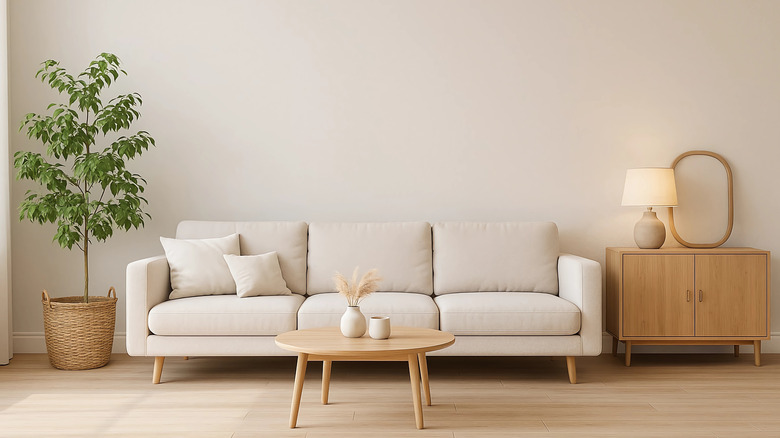
Minimalism is far more than a trend — it is a way of living that allows you to appreciate what you have and focus on what really brings you joy. As it helps you consume less and avoid filling your home with things you don't really need, minimalism will never go out of style, and a minimalist home is curated to last a lifetime. If you're a minimalist, it can sometimes be challenging to know what is useful to bring into your space, especially when it comes to houseplants. You don't want to overwhelm your home with greenery, but you may still want to bring a bit of the natural world inside. Thankfully, there are quite a few houseplants that suit an uncluttered lifestyle, such as the African spear plant and the ZZ plant.
Houseplants have many benefits that align with a simple lifestyle — they promote calmness, focus, and tranquility. The aim is to curate a calming, intentional space, and houseplants fit that goal well. However, to ensure you are still perfecting the minimalist style when adding greenery to your home, it is helpful to pick houseplants that have subdued colors and are simple, such as the cast iron plant or aloe vera. Those jazzy cultivars with variegated leaves, dots, and colorful patterns may not suit a clean, straightforward home. Houseplants that are slow-growing and easy to care for are also great for minimalists. Certain plants grow quickly and can overwhelm a space, which may impact the overall vibe of the room. So, with those things in mind, let's dive into the best houseplants for minimalists.
African spear plant
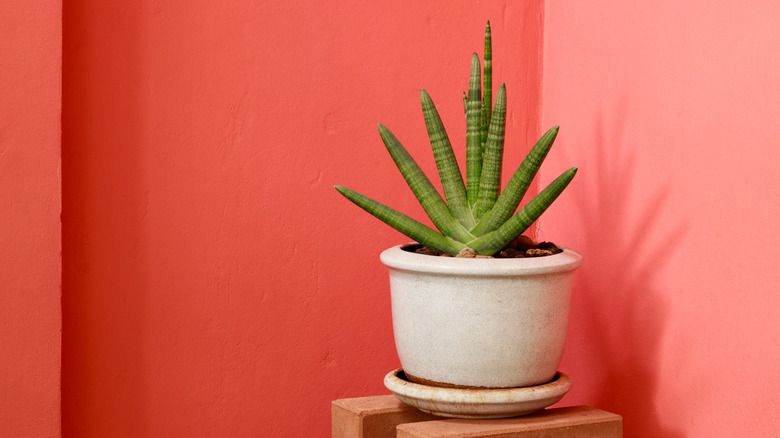
The African spear plant (Dracaena angolensis) is similar to its snake plant cousin, but its markings are a subdued mix of shades of green, making it a perfect minimalist houseplant. It has long, upright spikes with subtle variegated patterns, bringing a structured vibe to a room. Although it can reach up to 7 feet, it is a slow grower and will take its time getting to this height. The African spear plant is a very low-maintenance houseplant addition, only needing watering semi-regularly during the growing season and even less in the colder months.
Rubber plant
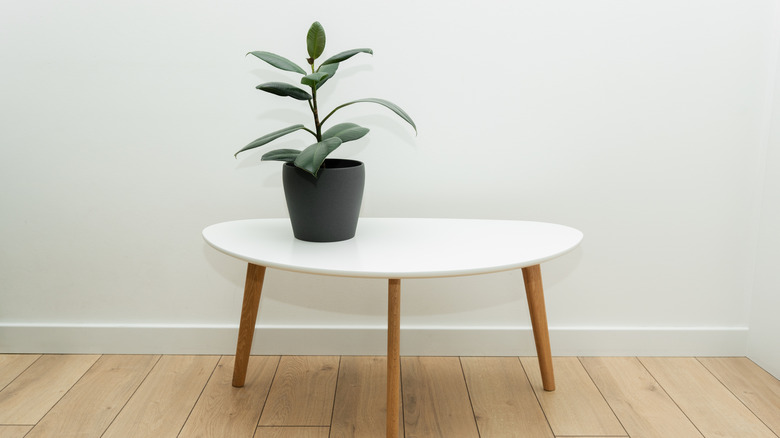
With its large, glossy leaves and tall stature, the rubber plant (Ficus elastica) is a fantastic option for bringing contrast and interest into a neutral, minimalist space. Many minimalists opt for bringing one big plant into a room. As the rubber plant can grow up to 10 feet indoors, it is a great choice for larger spaces. It is a low-maintenance houseplant that does well in shade or low light, although you may wish to prune it to control its size. Water your rubber plant regularly, allowing the soil to dry out between waterings.
Lucky bamboo
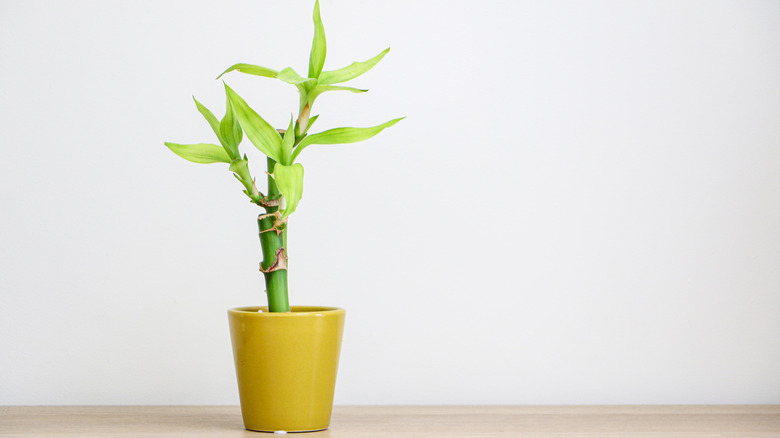
Lucky bamboo (Dracaena sanderiana) is another slow-growing, low-maintenance Dracaena plant, with long, bamboo-like stems displaying relaxing symmetry that can enhance a minimalist space. It grows upright, rarely overwhelming its area, with bright green leaves dotted along the stems. Lucky bamboo needs bright, indirect light to flourish and a moist potting mix. This houseplant can grow in water for healthy plants with less mess, too. If you decide to grow your lucky bamboo in this way, ensure that the water you use is chlorine-free and place pebbles at the bottom for the roots.
ZZ plant
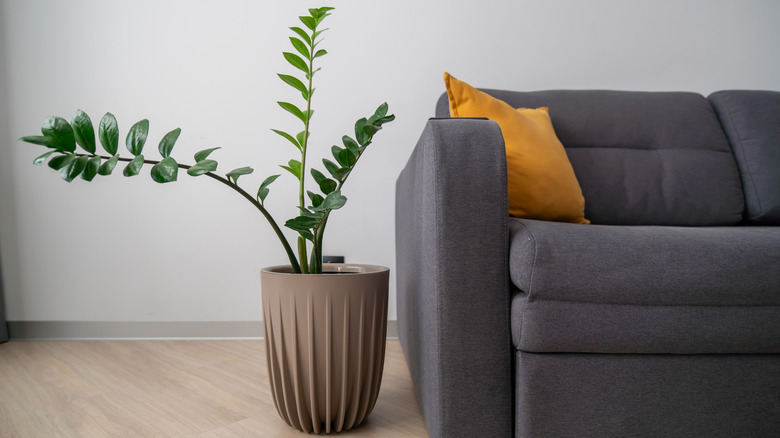
With its small, glossy, symmetrical leaves, the ZZ plant (Zamioculcas zamiifolia) is a great minimalist choice. It grows to around 2 to 4 feet in both height and width, but as a slow grower, it doesn't require regular repotting or pruning. It doesn't need much attention and usually grows well when left to its own devices. Because it stores water in its leaves, you need to water ZZ plants sparingly, making sure the soil has dried out before you do so. This plant prefers bright, indirect light but can tolerate low light conditions.
Spineless yucca
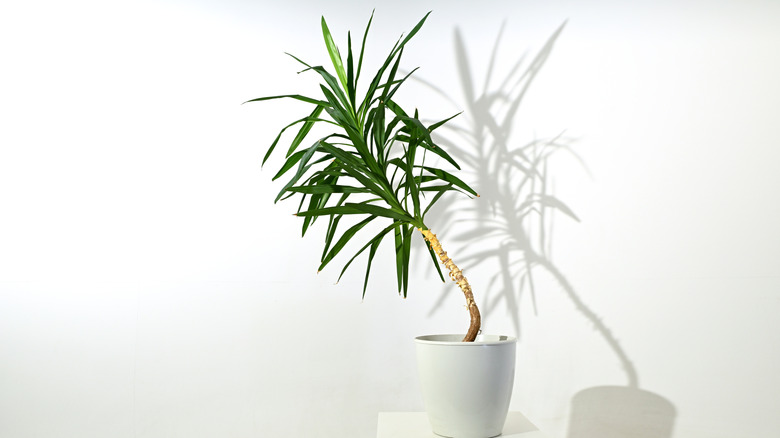
The strong, vertical lines and structural simplicity of the spineless yucca (Yucca elephantipes) make it perfect for a minimalist home. It tends to stay contained in its space, with the foliage sitting neatly on top of its woody trunk. Although it can reach 30 feet tall outdoors, it is slow to grow and can take up to 50 years to reach this size. Furthermore, the size of its container will impact how much it grows. Spineless yuccas are happiest in a sunny spot near a window but prefer a bit of protection from intense summer sun.
Aloe vera
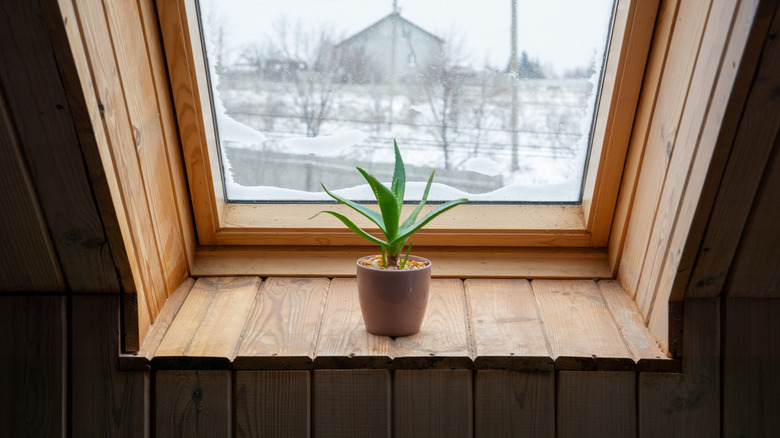
Aloe vera has a tidy, pointed growth habit that adds intrigue to a space without overloading it with greenery. A favorite plant for many minimalists, this succulent doesn't spill or trail wildly and doesn't really need much attention. Furthermore, its gel has been used for centuries to soothe cuts and sunburns, making it not just a beautiful houseplant but a useful one. Aloe vera grows happily in full sun in well-drained soil. Water it only when the soil has completely dried out, and ensure that the container has a decent amount of drainage holes.
Dragon tree
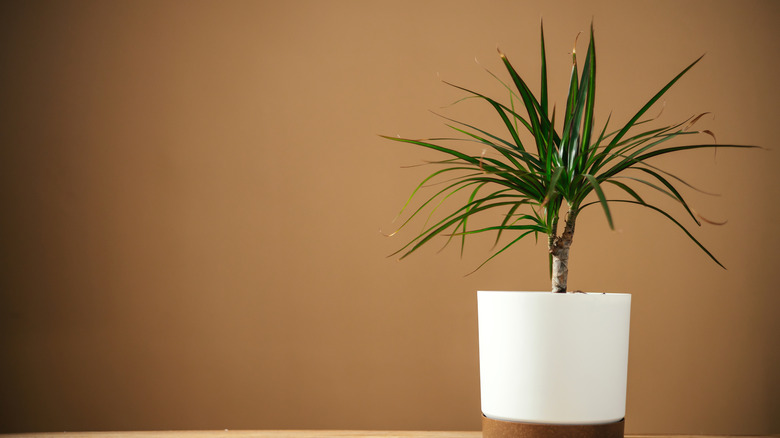
With its thin stems and firework-like foliage that neatly sits at its top, the dragon tree (Dracaena marginata) is a tall, narrow plant that adds height and structure to a room. Its leaves stay compact while adding subtle hits of red and green to your space, making it minimal yet interesting. This slow-growing houseplant can reach over 6 feet tall indoors, but you can prune it to keep it smaller. Dragon trees prefer bright, indirect light but can tolerate low light conditions. Water the plant once the surface of the soil feels dry.
Jade plant
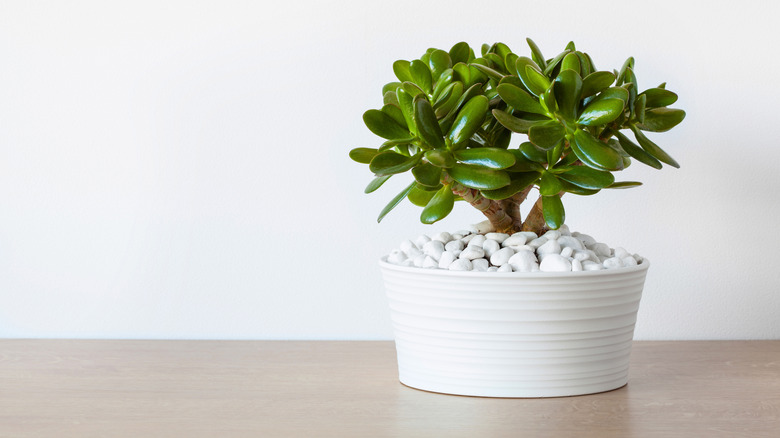
The fleshy, oval leaves of the jade plant (Crassula ovata) often grow in a structured, symmetrical way, with its thick, woody branches creating a tree-like appearance, making it a relaxing and neat houseplant for minimalists. It is slow-growing, easy to keep in a tidy shape, and easy to look after. Jade plants prefer a sunny location and need well-draining soil. Water your jade plant when the soil has dried out. The size of the container can impact its growth, as jade plants tend to stay small when in a smaller pot.
Cast iron plant
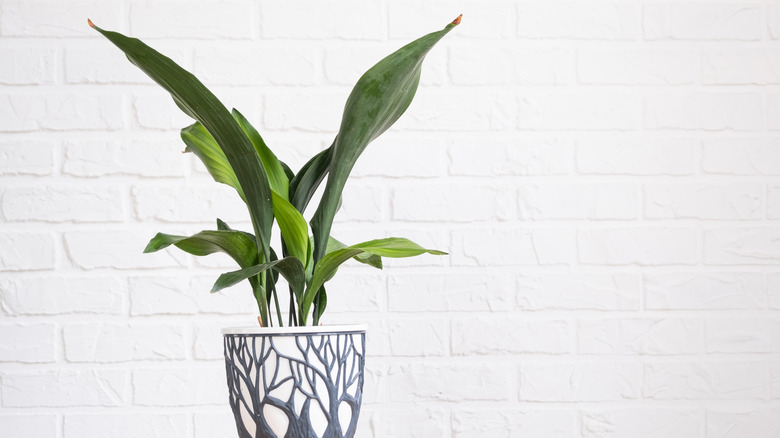
Growing in upright clumps, the cast iron plant (Aspidistra elatior) has clean, simple leaves that do not trail or spread. Its uncomplicated silhouette makes it perfect for minimalists, and as it only grows around 2 feet tall, it doesn't take over a room. Plant your cast iron plant in well-drained soil and place it in a shady location, as full sun can cause the foliage to yellow. Water regularly in every season except for winter, when watering should be reduced. You may want to repot and divide it when it gets too big for its container.
Money tree
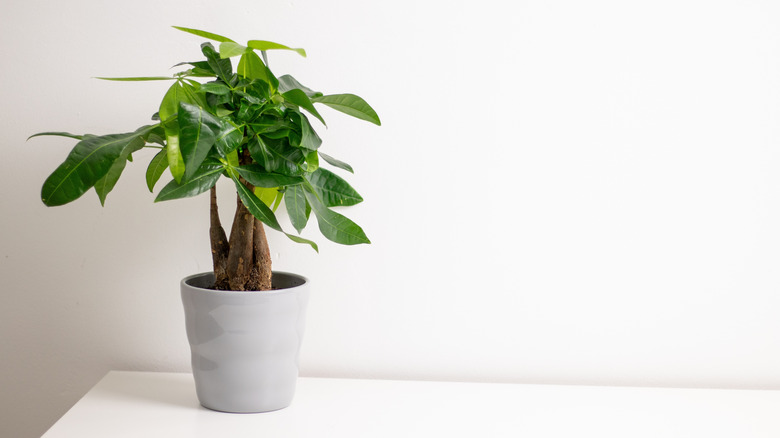
For larger minimalist homes, the money tree (Pachira aquatica) adds sculptural interest to a room without creating a cluttered feel. Often sold with beautiful braided stems, this houseplant can reach a height of 6 to 8 feet. However, its slow and steady growth means that you can keep on top of pruning and maintenance over the years. Its star-like leaves feel tidy and simple in a home, yet still have that natural wonder. Money trees prefer bright, filtered light and moderate moisture, and it's best to let the soil dry out slightly before watering thoroughly.
Moth orchid
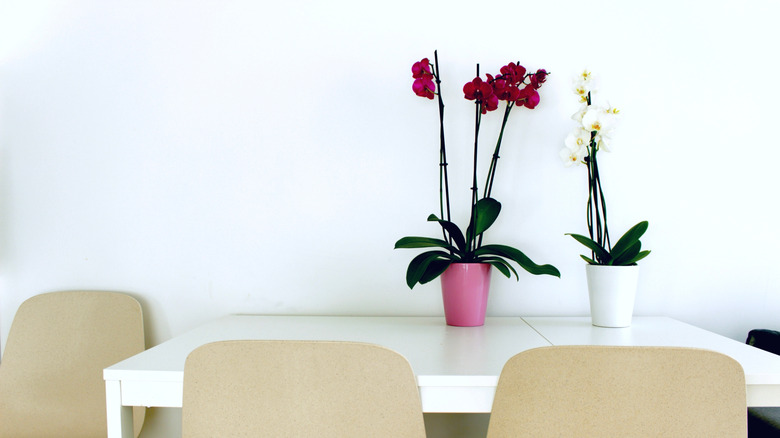
Moth orchids (Phalaenopsis) are graceful houseplants that feel elegant and intentional. They usually have a single, long stem that grows vertically up to 2 feet with one or two leaves at the base. Their beautiful blooms sit on top of the stems and can last for months in the right environment. The simplicity and clean lines make moth orchids perfect for minimalists, and they are fairly easy to care for. They do best in warm, low-light conditions and should be grown in a potting mix that is designed for epiphytic plants.
Parlor palm
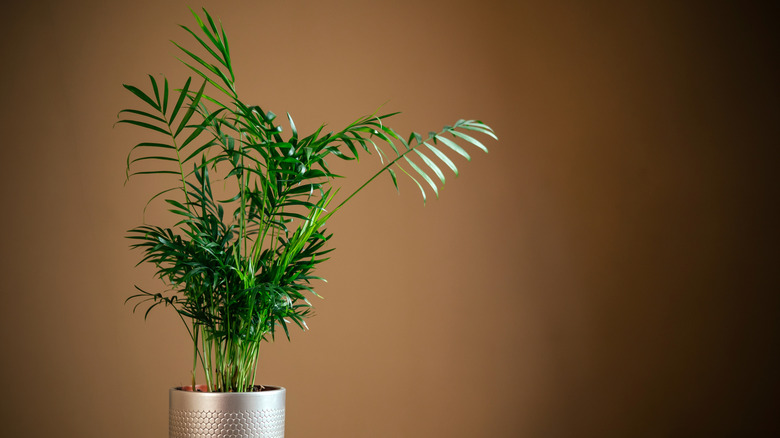
The parlor palm (Chamaedorea elegans) can soften a minimalist space, as its fine leaves create gentle, airy movement. As a slow grower, it won't take over a room, with its simple shape feeling both tidy and timeless. Parlor palms can reach up to 6 feet in height, with an elegant, arching spread of around 3 feet. These houseplants need bright, indirect light. Make sure you let the soil dry out between waterings. You can prune it to remove damaged or dead stems, but ensure you remove the stem completely to maintain a neat appearance.