

It Was Everywhere In The '70s - The Wall Treatment Designers Use To Add Texture
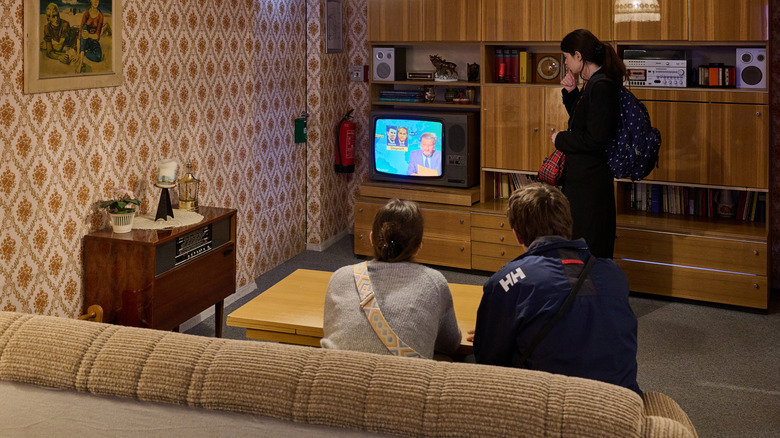
As people age, they grow nostalgic for things from their childhood, and TV shows set in the past bring those feelings to the forefront. If you were a fan of the highly popular Netflix show "Stranger Things," you may have felt like you were transported back to the 1970s while watching. Although the show was officially set in the early 1980s, many of the decorative elements and set designs drew inspiration from the '70s. You may have recognized one of the most popular design trends from the '70s in the show — wood paneling in the living room where character Dustin lived.
If your home today still has this older design feature, you may have spent a lot of time and effort seeking ways to modernize dated wood paneling on a budget. However, a better idea might be waiting for this design trend to make a comeback, which commonly happens every few decades. In fact, you might not have to wait too long.
Wood paneling seems to be having a resurgence as people look to add interesting textures to their walls that create a sense of dimension. Some people are even using wood paneling as a design trend for an accent wall. Madelynn Hudson, creative director of M.H. Interiors, told Vogue, "I think we're seeing a return to architectural detail in general. After a decade of minimal, white-box spaces, people are craving warmth, craftsmanship, and character. Wood paneling provides all of it. It adds an instant sense of permanence and history, even in newer builds." However, modern wood paneling materials are far different from the cheap materials frequently used in the 1970s.
How wood paneling adds texture to a wall in modern design
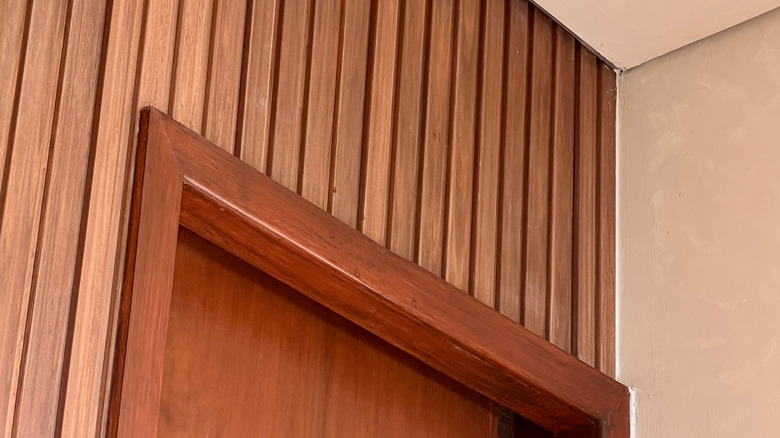
As the aforementioned Vogue piece reported near the end of February 2026, homeowners are increasingly asking about wood paneling. That comes in the form of several options, from preserving existing vintage wood panels or adding new materials with a vintage aesthetic, giving the wood paneling a natural, rustic look. Adding wood panels can deliver a significant level of textured warmth and depth to a room, which is something that a paint color alone simply can't match.
Paneling that includes features found with natural wood, such as knots and grains, is a key aspect of adding texture and visual depth to the walls. The natural grain patterns in the wood paneling almost generate a sense of subtle movement that is difficult to match with other wall coverings.
Some designers are generating texture in walls by adding wall paneling with a slatted design. This style of paneling uses narrow wooden slats attached to a backing material like polyester fiber or medium-density fiberboard. There are small, consistent spaces between each slat; the shadows they project oscillate as sunlight passes over them, creating a sense of depth and movement that changes depending on the time of day.
How modern wood paneling differs from the 1970s designs

Wood paneling was extremely popular in the 1970s because it was a practical and inexpensive way to cover older walls. Many homes from the '70s still had plaster walls, even though drywall had become a popular material to use in homes built after World War II. As they age, plaster walls will show cracks and water damage. Depending on the level of damage, plaster can be expensive to repair. It can be a labor-intensive job that often requires a lot of experience to achieve the highest level of success.
Rather than dealing with the expense and hassle of repairing their plaster walls, people in the '70s often chose to cover them with wood paneling. Much of the paneling made then was cheap, consisting of manufactured wood products instead of natural solid wood. Manufacturers often stained the panels a dark color to try to simulate an expensive type of natural wood, like mahogany.
Most wall paneling used in modern designs differs from the cheap materials by using real wood. Unlike the manufactured products from the '70s, panels made of real wood maintain the natural grain patterns and knots that deliver texture, durability, and a more pleasing design. Solid wood paneling creates nostalgic warmth and natural beauty that no cheap '70s paneling could match. No wonder they're back in style.