

Your Bulky Dining Room Furniture Is Outdated: Here's The Alternative
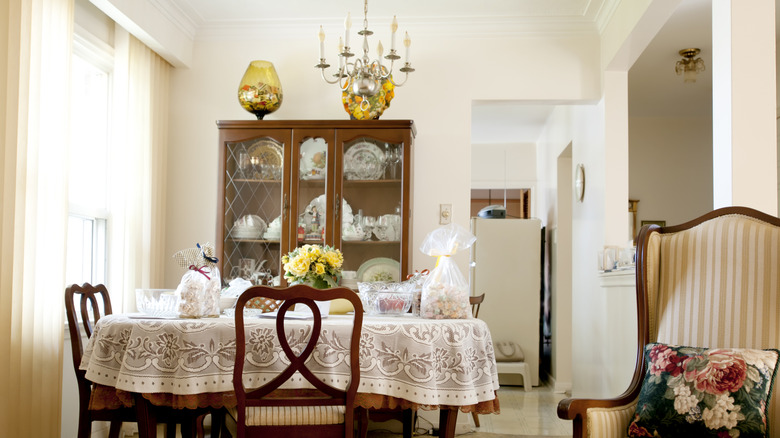
Picture a typical dining room in a typical suburban home, and you'll probably think of a matching set of a table, chairs, a sideboard, and a china cabinet, all in the same finish. There's a pretty good chance that the finish is cherry wood, a choice that brings to mind the '90s. These uninviting, underused, bulky sets date your home to a time when the dining room was more formal than fresh. Instead of a heavy, bulky set that seems to weigh the room down, go for an updated, sleek style that doesn't make the dining room look more like a boardroom than an inviting space to enjoy meals in.
In 2026, designers are encouraging a less formal approach to dining rooms by using interesting color schemes and creating multifunctional rooms, or what decorators call "intentional functionality." In general, current trends inject personality into less-traditional decor, with reflective ceilings, darker woods, oversized dining room art, and a few nods to classic dining room treatments, like wall murals and chandeliers.
Space-saving, comfortable, cozy furniture has replaced oversized, traditional dining room sets in a formal setting. Furniture often takes on more sculptural forms, with dining room tables made from stone or with stone elements taking center stage. Matching tables and chairs are out, but simple, classic chair designs like ladderback and Windsor are coming back in.
Setting the scene for an up-to-date dining room
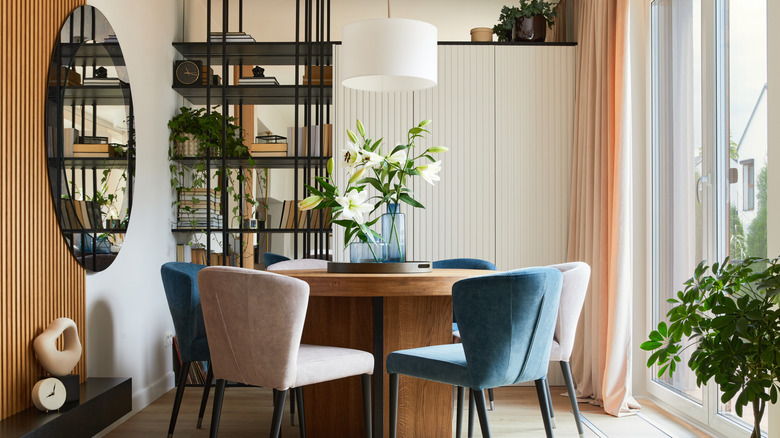
Bulky furniture can easily overpower other pieces in a multifunctional room, making it feel as though it's been squeezed in as an afterthought. Instead, use space-saving dining room furniture that is of the same scale and proportion in relation to the size of the room as the rest of the furnishings. If you need a big table for family gatherings, buy an extendable table that expands when everyone is over for dinner.
Natural and organic materials, sustainability, and rooms that feel lived in are replacing formal rooms. Dining room pieces should feel like they have been collected over time rather than having been bought as a set. That lived-in feeling can be reinforced by replacing pieces with high-gloss finishes with some with patina. Some of these reimagined spaces are being furnished with a combination of old and new styles, like pairing a contemporary table with vintage chairs.
Mixing different textures and finishes is on trend, as is spending a little extra on well-made furnishings that show off high-quality craftsmanship. The overriding principle is to keep the atmosphere light with your choices of materials, forms, and colors. Organic, curved furniture appeals to the desire for a connection to nature that's common in biophilic design. Wicker and natural fibers remain popular.
Hutches are making a comeback, but not the bulky pieces from the past. A sleek, contemporary glass-fronted hutch meant to display your collectibles rather than a matched set of china feels more personal and connected. When you're choosing side pieces, select furnishings that complement rather than match the table. If you choose a dark table, select a light-colored, solid-pattern rug to add under the dining room table to provide a bridge between light and dark colors or differing wood tones in the room.