

How To Prevent Buildup And Grime In Sliding Glass Door Tracks
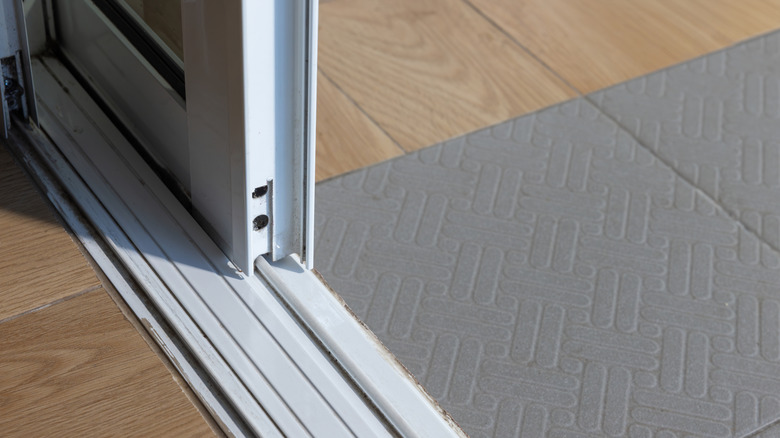
While picking up your cleaning gloves on a weekend may not seem exciting, there may be a spot in your house that needs attention. This is because it's tricky to tackle — the dreaded sliding glass door tracks. The tracks seem tailor-made for dust, grime, and even bugs to sit and quietly spread allergies in your house. Nonetheless, keeping these tracks clean is more than just good hygiene.
The aesthetic return on the practice is undeniable, but keeping tracks free of buildup also maintains good functionality in your doors. Accumulation of dirt can hinder the smooth sliding of the door and allow drafts to enter your house due to improper closing. Clean tracks can also extend the life of your sliding doors. To keep these tracks clean, you'll need to maintain a regular cleaning schedule, keep them free of moisture, and deep-clean them around once a month. These steps can prevent problems like sticking or dragging doors, which arise from the buildup of dirt and grime.
While there are hacks like using a Swiffer to make cleaning the sliding doors easier for the glass portion, cleaning the tracks can be more complicated. This is why you need to schedule a deep-cleaning ritual and get into a routine for regular surface-level cleaning. Ideally, having a track-cleaning session around once a month is effective in keeping gunk out of the sliding door tracks. However, the more your routine cleaning schedule stays on point, the less you would have to rely on the more intense, hard-cleaning sessions.
Maintain a regular light-cleaning schedule and keep moisture away from the tracks
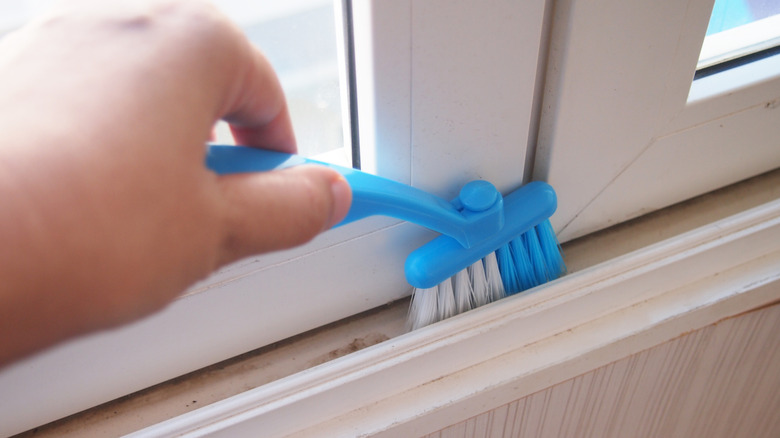
One of the first things you can do to keep your sliding door tracks in tip-top form is to implement a routine cleaning schedule and stick to it. Dusting and vacuuming the tracks at least weekly (or even daily) should be part of your routine. Sweeping the exterior regions before you use your vacuum would help reduce the amount of debris and dust that enters the tracks. With a damp cloth, you can also quickly wipe away any grime you see during the process.
Furthermore, keeping moisture away from the tracks is also crucial for avoiding the buildup of mold. Too much condensation on the inside of the doors or in the tracks is a tell-tale sign of a large difference in humidity between the inside and outside environments, which can precipitate mold growth. There are several preventive steps you can take to address this issue.
First of all, in humid areas like the kitchen or bathroom, use ceiling or exhaust fans whenever possible to circulate air. You can also use a dehumidifier for this purpose, or occasionally open your doors or windows to let in fresh air. Some sliding doors feature weep holes that help prevent moisture from accumulating in the tracks. If you don't have these door types, you'll have to take these extra steps. During your deep-cleaning sessions, which we discuss next, make sure you clean these holes so they do not get clogged with dirt.
Deep-clean the tracks around once a month
If you have a busy household, you should give your sliding door tracks a deep, thorough cleaning every other month or so. You can take the door off the frame to clean the roller and the bottom of the door. If removing the door is too difficult, you can do all of that without de-framing the door, though. To begin the deep cleaning process, manually remove any leaves or debris present in the tracks before you start vacuuming. Then, attach a crevice tool to your vacuum and let it run over the tracks. This will make sure all the dust gets sucked out, and only the sticky grime remains for you to work on.
Next, take a cleaning solution, like warm water with vinegar or soap, or any other cleaning product specifically recommended by the manufacturers, and spray it all over the tracks. Once you're done, start scrubbing the track with a brush until the dirt is completely removed. You can also try adding baking soda to the vinegar solution to remove any stubborn grime that the procedure doesn't remove. You can use hydrogen peroxide to clean and disinfect the tracks, as well.
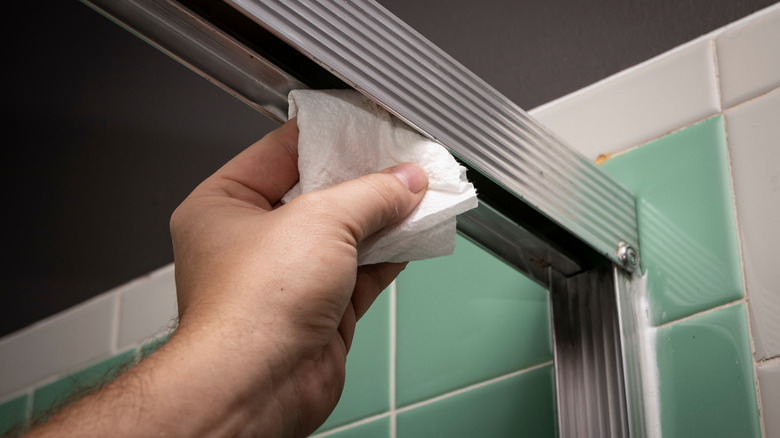
Once the entire track is free of dust and mold, use a damp microfiber cloth to wipe it to remove any excess solution. Lastly, use a fresh microfiber cloth to dry everything up. You can repeat the entire process if you find some dirt still remaining in the tracks. Lastly, apply a silicone-based lubricant on the tracks every few months, so that the doors keep their smoothness intact.