

8 Microgreens You Can Grow Indoors For A Quick & Nutritious Harvest
We may receive a commission on purchases made from links.
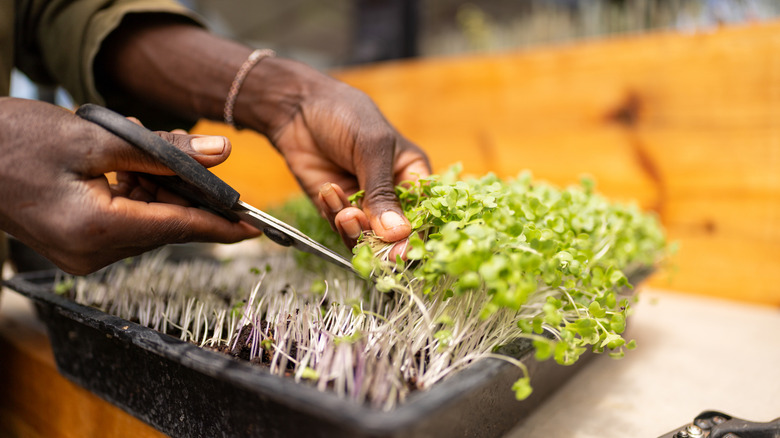
If patience is not your strong suit, growing microgreens might be your thing. They can be harvested in as little as 7 to 21 days, and you can grow them indoors at any time of the year as well. However, that isn't even the most impressive part. What makes these miniature veggies special is that they are often more nutritious than their fully grown counterparts. In some cases, studies have found nutrient levels to be significantly higher.
You can grow all sorts of veggies as microgreens indoors, from arugula to beets and cabbage to peas; the list just goes on. It doesn't even require an outdoor garden or greenhouse setup. All you need is a few pots, some shallow trays, or even empty food tins, and you can grow thriving microgreens right on a sunny windowsill or kitchen shelf.
Just make sure to purchase seeds specifically labeled for growing microgreens. There are many reliable companies to buy your garden seeds from. However, quality seeds are only part of the equation. You need to provide them with the right growing conditions, too. This involves proper sowing, keeping them moist, sometimes providing a short dark period, and supplying adequate natural or artificial light. Don't worry, though, it is surprisingly easy to grow and care for microgreens.
Arugula
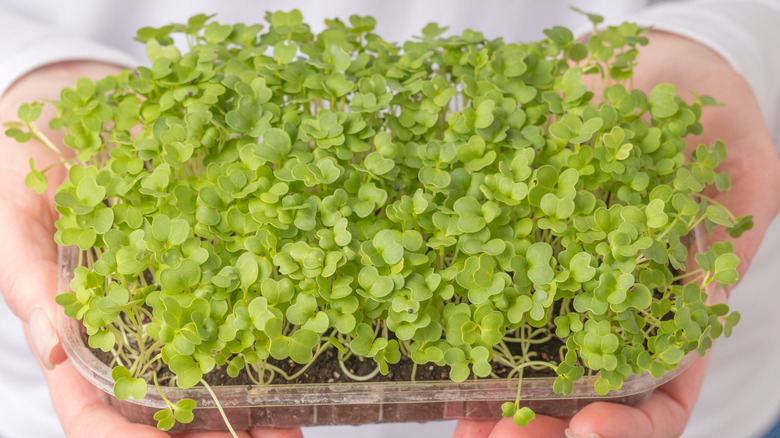
Arugula (Eruca sativa), also known as the rocket plant, is a peppery leafy green from the mustard family. It is the perfect choice for microgreen beginners. It is easy to grow and can be harvested in as little as 6 to 8 days after seeding. Plus, it has a high amount of vitamin C and beta-carotene. Arugula microgreens can be started in 5-by-5-inch trays filled with about 2 inches of soil by spreading 1 to 2 teaspoons of seed. Then wait for the seeds to germinate and harvest when the seedlings are about 2 inches tall.
Beet
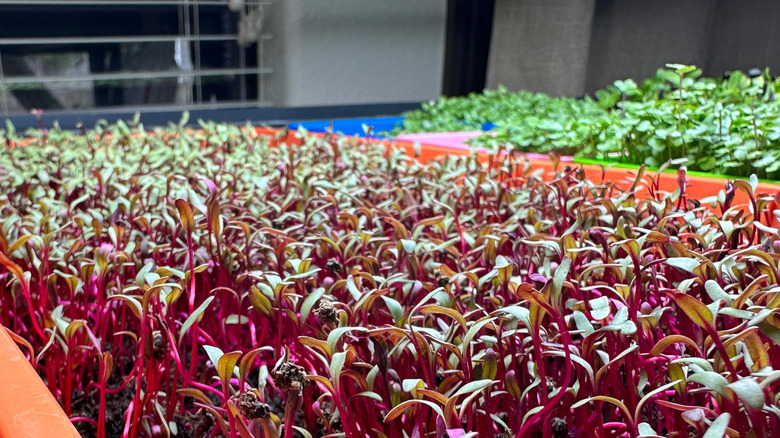
Beets (Beta vulgaris) usually don't get much love, and their microgreens are probably even more overlooked. However, they are rich in organic acids and make a healthy snack. To start microgreen beets indoors, take a container, any tray or pot will do, and fill it up with a seed-starting soil mix. You can grow them in ordinary soil, too, but beets have a very fine root system, and they grow well in a seed-starter mix. Once planted, beet microgreens take around 12 to 15 days to reach about 3 inches in height, at which point they can be harvested.
Cabbage
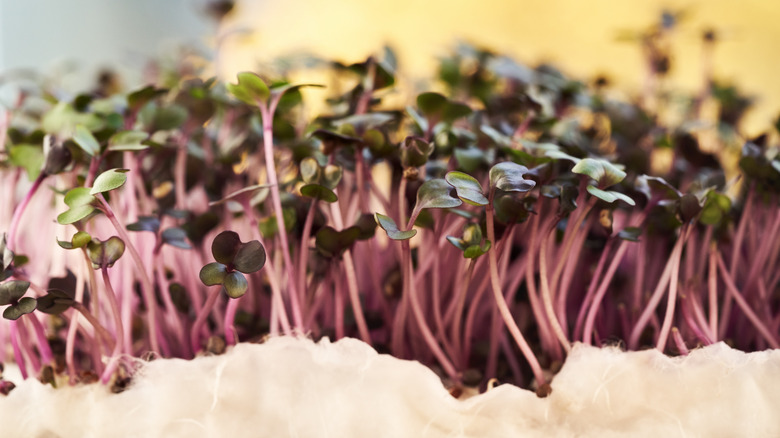
Cabbage (Brassica oleracea var. capitata) is a staple in home gardens. But if you knew just how packed with nutrients it is as a microgreen, you might never go back to eating it fully grown. Red cabbage microgreens, for example, can contain significantly more vitamin C than mature cabbage. You can harvest cabbage microgreens in just about 7 days after seeding. Now you can grow these just like any other microgreen, but one neat trick is to grow them directly under a light. This helps them grow straight up, making them look more palatable and beautiful.
Pea
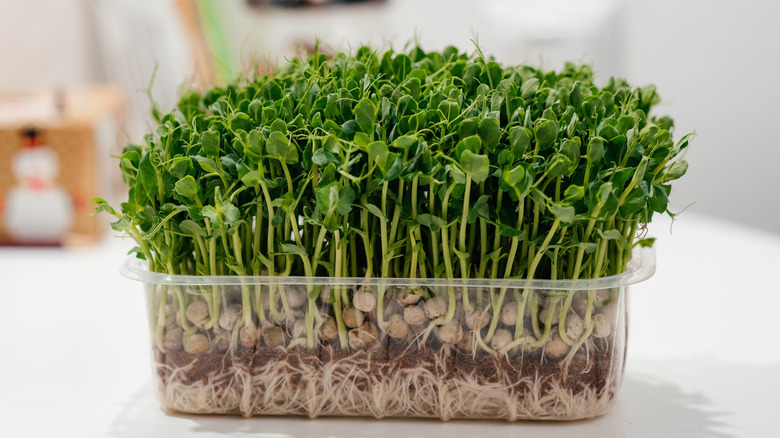
Pea (Pisum sativum) is another vegetable that can be grown as a microgreen indoors for a nutritious harvest. Its microgreens have a high copper and phosphorus content – two of the essential minerals. Keep in mind that pea seeds are relatively large. If you are using a small tray, sow the seeds at a lower density or use a larger container to avoid overcrowding the microgreens. Pea seeds should also be lightly pressed into the soil for better germination. When grown properly, pea microgreens can be harvested in as little as 8 to 10 days.
Carrot
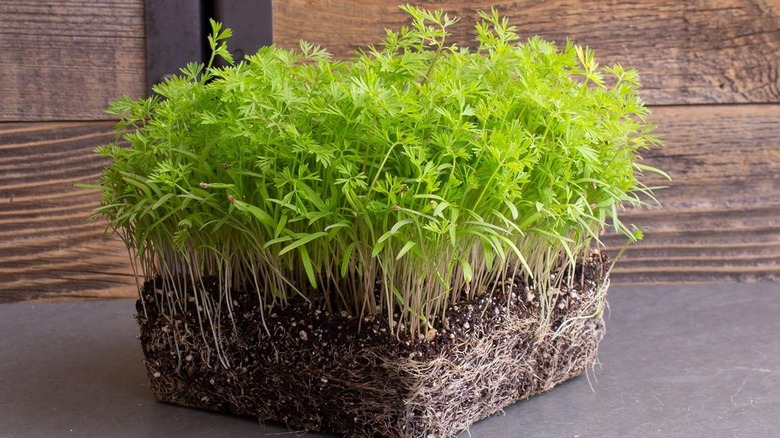
Carrots (Daucus carota subsp. sativus) are root vegetables that grow underground and are a rich source of beta-carotene. Carrot microgreens, however, can be even more nutrient-dense despite their smaller size. Not only do they contain more beta-carotene, but they are also a rich source of flavonoids. Just keep in mind that carrot microgreens are a bit slow to grow, and they can take around 15 to 25 days to be ready for harvest. And this slow growth can sometimes lead to a bitter taste, especially if they are harvested late.
Broccoli
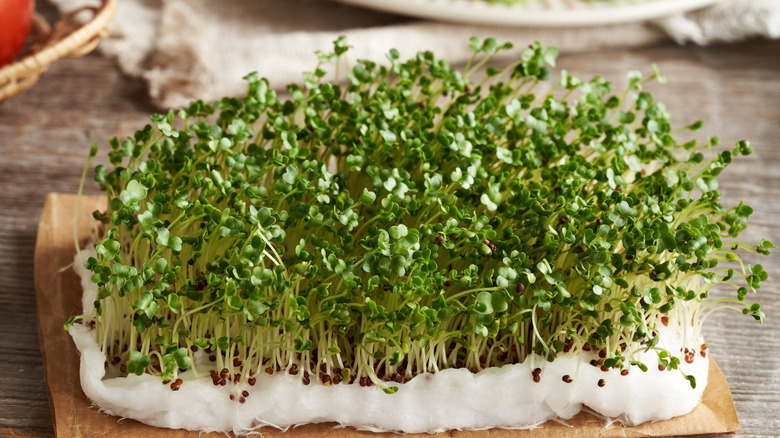
Broccoli (Brassica oleracea L. var. italica) is another vegetable that grows well as a microgreen. Its microgreens contain higher levels of minerals such as zinc, magnesium, and manganese than the mature vegetable. Growing them indoors takes only 8 to 12 days. The process is straightforward, much like growing any other type of microgreen. For the best results, broccoli microgreens can be grown under artificial light. A heat mat placed under the container can also help encourage faster germination. Once the leaves are open and 1 to 3 inches tall, harvest them just by cutting above the growing medium.
Radish
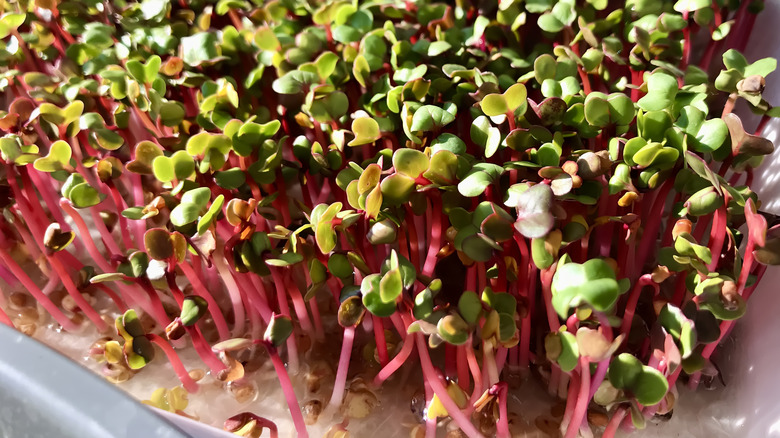
Radishes (Raphanus sativus) have been cultivated for thousands of years. Recently, their microgreens have grown in popularity. And honestly, it makes sense. Radish microgreens contain more soluble fiber and organic acids. They can be started indoors by spreading the seeds over a moist growing medium and covering them for a few days. Once the seeds germinate, place the tray in a bright location such as a windowsill. Just make sure the light is not too harsh. Then let them grow to around 3 inches tall before harvesting. This usually takes around 8 to 12 days.
Kale
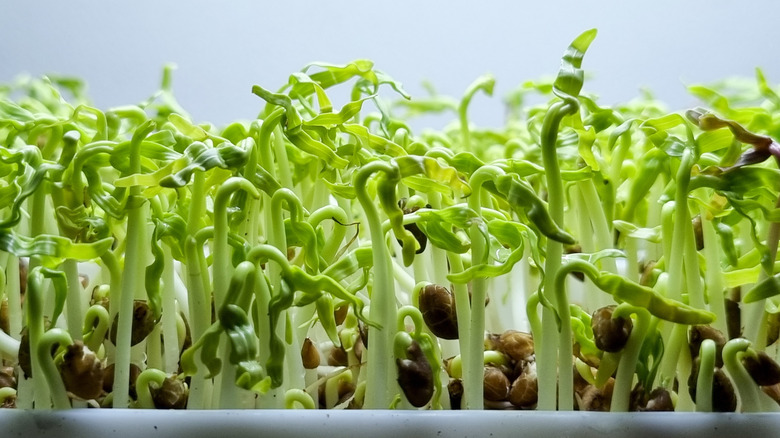
Like many microgreens, kale (Brassica oleracea var. acephala) microgreens are also more nutritious compared to mature veggies. They contain higher levels of minerals and glucosinolates, compounds known for their antioxidant and anti-inflammatory properties. Kale microgreens typically take around 8 to 12 days to reach a ready-to-harvest stage. However, if the temperatures are low, they might take longer. You just need to make sure that you place the growing setup in an area with good airflow, as this will help reduce the chances of mold growth, which is often a big concern when growing microgreens in a moist indoor setup.