

14 Tips For Buying Genuine Leather Furniture Secondhand
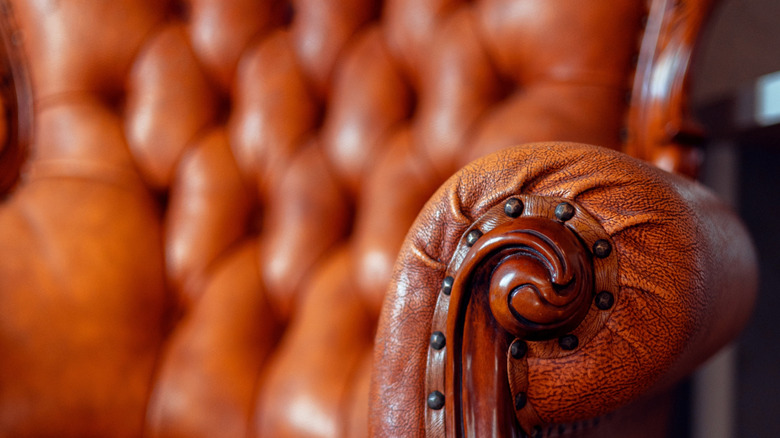
There's nothing like sinking into a sofa covered in real, full-grain leather. The soft material looks both both luxe and inviting. Plus, leather is an especially durable fabric, and with good care and a proper leather cleaning routine, it will last for decades.
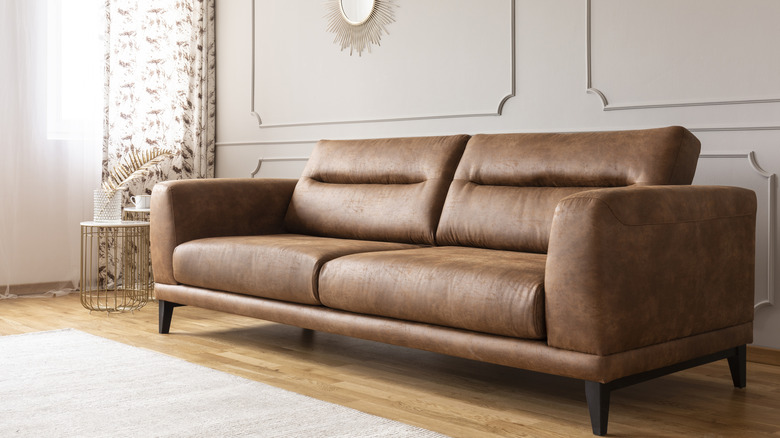
For all its perks, leather has one major drawback. It can get expensive when used in furnishings. To combat this, many savvy shoppers are turning to thrift stores and secondhand online platforms to find their pieces. Knowing the difference between different types of leather on the resale market can help you make smarter purchases. Before you start scouring online listings and thrift stores, check out these 14 tips for buying genuine leather secondhand.
Know the real deal: full-grain leather
Full-grain leather is by far the top-tier option for leather furniture. If you've ever sat in a chair covered in this material, then you'll know why. This type of leather comes straight from the animal after all the hairs have been removed and is then tanned. Very little of the hide is changed, so it's normal to see differences in pigmentation and other scars or marks.
Labels on the furniture or product listings provided by the seller will usually tell you whether it's covered in full-grain leather. This type is very durable, and if cleaned regularly, it will hold up very well for years to come. It is, however, a porous fabric, and it can show stains. You won't usually see water stains on full-grain, as it is naturally water repellent, but water not cleaned up quickly enough will leave a mark. Dirt and natural body oils are also known to stain this fabric, as well. Depending on its age, it might also have developed a patina over time, which will look like an uneven sheen on the fabric. This is a normal aging process.
Understanding top-grain vs split leather
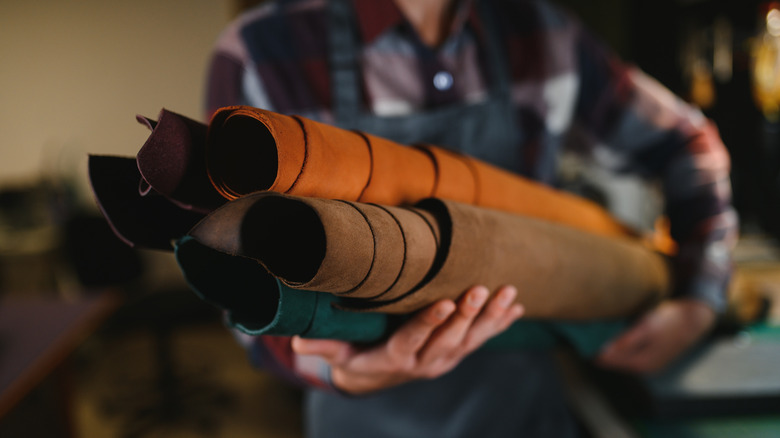
You may have seen listings that promote "top-grain" or "split" leather and wondered about the difference. These two terms are often conflated, but they are not the same. You already know that full-grain leather is the animal hide essentially unchanged, but that hide is thick and can be cut into two or sometimes even more pieces. When it is cut, you get top-grain, which is the top layer with the imperfections and hair, and split leather, or the underside pieces.
Both options are still real leather, but they won't be the same as far as quality goes. Once it is cut, top-grain is then sanded and buffed to remove those scars, marks, and other imperfections on the hide. This process slightly weakens it compared to full-grain, but it is still very durable. Split, which can still be called "genuine" leather, comes from those second or sometimes even third layers of the hide. You won't see any marks or imperfections here because this is the interior layer. This is the weakest of the fabrics mentioned so far, more prone to cracking and peeling. It also tends to be the least expensive of the three.
Breaking down bonded leather
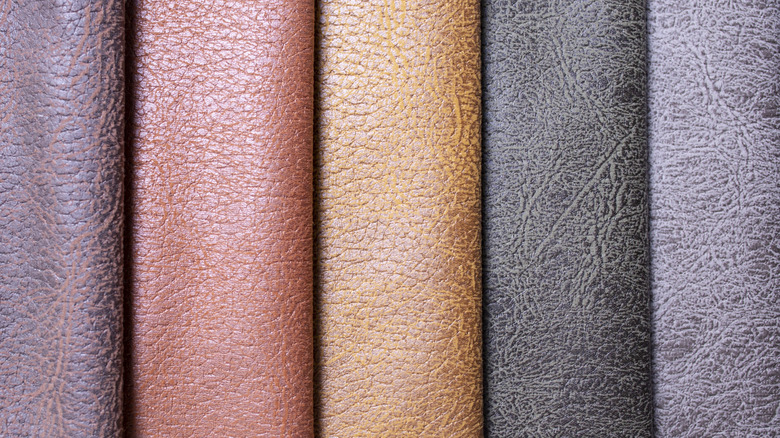
Now we're getting into a fairly new type of leather: bonded. This fabric was created when manufacturers took scraps and pieces of leather and bonded them to other types of fabrics, such as plastic and other synthetic materials. Technically, there is still leather in these products, but only about 10 to 20% of the fabric will actually be leather. This isn't always inherently a bad thing, but if you want full-grain leather, then this is not it.
You'll likely be able to spot bonded leather easily when looking at secondhand pieces. It's more prone not only to cracks, which can still occur with better grains, but also to cracking and flaking. That should be a red flag that the product you're looking at is covered in bonded leather. On the plus side, this product tends to be more uniform in color and texture as it's artificially made to resist UV rays and look polished. However, if you notice extensive damage to a piece that is only a few years old, it's probably bonded and not made of a more durable leather alternative. If it already has a bit of damage, don't expect it to last much longer, as these pieces are not meant to hold up over time.
Understand the difference between nubuck and suede
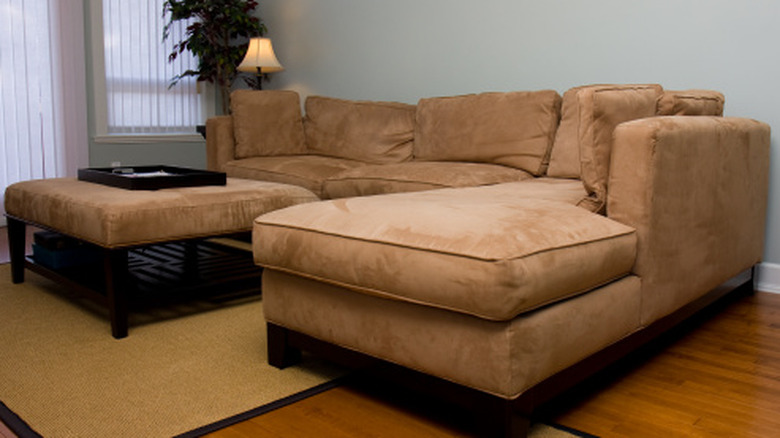
If you're sent a product listing for a secondhand chair, then you may encounter two other leather terms that may confuse you at first glance: nubuck and suede. The two are often conflated, but they're actually variations on top-grain leather. Nubuck leather is created when the exterior side of a top-grain hide has been rubbed with sandpaper or glasspaper in order to raise the nap on it. Suede follows the same process, but it is done to the interior side of that same hide. It can also be made using split leather, but the quality is usually lower and less durable. Nubuck is very soft, as is suede, and maintains those scars and imperfections. By contrast, the suede side looks uniform and lacks those characteristics.
The two leathers share the same tips for care. They should be kept out of direct sunlight to prevent fading, and regular conditioning and dusting should be done. All stains should be addressed immediately. Stained parts of nubuck or suede leather should be lightly sanded and blended into the sections that are not stained. Most water and body oil stains can be removed this way, but the darker they are, the more difficult it will be to remove them.
Research the types of animal leathers
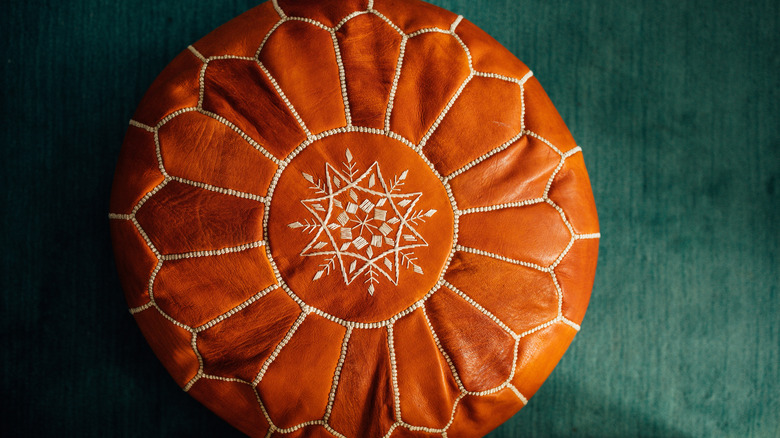
Not all furnishings are made from cow leather, although that is still very common. You might find pieces made from a calf, buffalo, or even goat. When a piece of leather comes from a large animal, such as a cow or buffalo, then it is called a hide. Skins are applied to smaller animals, such as calves and goats.
The most obvious difference between these skins are their sources. They come from different animals. Beyond that, some are tougher than others. Buffalo is known for being durable and more scratch-resistant, a great option for heavily used sofas. They are, however, not as soft as other options. Calfskin comes from a baby, so it's skin is delicate. It's known for its natural marks and patterns, similar to cowhides. Goatskin feels different from the other hides mentioned, and it feels very soft, like suede.
Know your vegan leathers
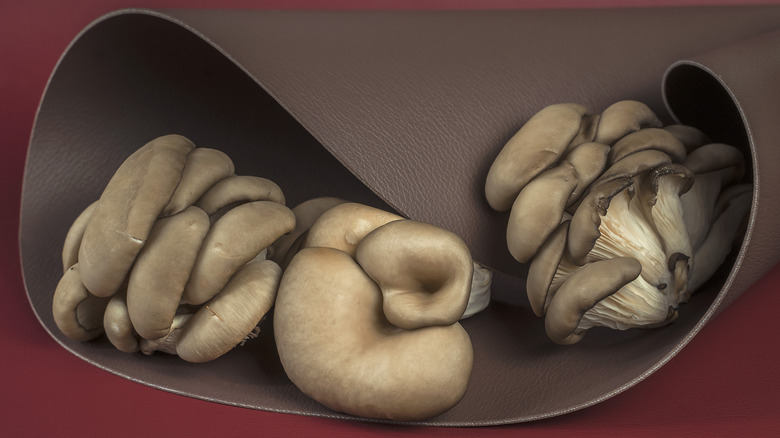
As you browse online listings and vintage shops, you might encounter vegan leather. This is an entirely synthetic fabric, not a genuine leather product, and it can add a sophisticated look without hurting animals. No animals are harmed in the manufacturing process, and no animal byproducts are used. This fabric can be a great option if you love the look and feel of leather, but you don't love how it is made. Just know that there will be some differences that should be factored into how much you ultimately pay for a secondhand vegan leather sofa.
Vegan leather often uses polyurethane (PU) and polyvinyl chloride (PVC) as its main materials. The process starts with coating a fibrous base, usually polyester, in a synthetic or plastic coating. The new fabric is then dyed and given textural accents that mirror the look of real leather. The Association for Contract Textiles notes that the plastic coatings of vegan leather sofas are more likely to peel than natural full-grain and top-grain leathers. If you sit on a vegan sofa at a secondhand store, you'll notice that the fabric isn't very breathable, unlike real leather, and it won't develop the same worn patina as natural leather. On the other hand, a study in the journal Polymers notes that if vegan leather fabrics are kept in a dry and moderate environment, PU and PVC fabrics can hold up well.
Research what restoration is doable for you
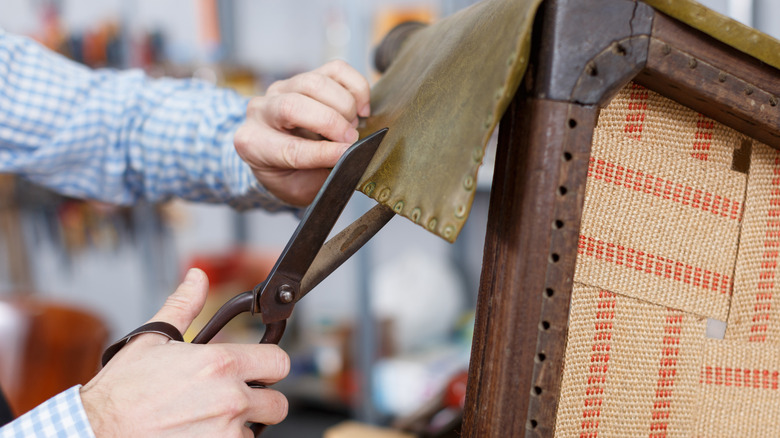
Most secondhand leather furnishings, even full-grain upholstered pieces, will not be in perfect condition. While some pieces may just need a good cleaning, others might have cracks, tears, or holes that need repair. Before you start looking at listings, it's important to know what you're going to be getting yourself into with restoring leather furniture. Some projects, like following the best cleaning method for leather furniture, are easy enough, but large holes will require more expertise, time, and money.
You don't want to invest in a piece only to find that you bit off more than you can chew with its restoration. More expensive repairs to leather furniture may cost upwards of $300 or more, according to HomeYou. But, if you're handy, you might DIY a leather tear or hole repair yourself. Do your research on the cost of a brand-new sofa of the same size and material, and make sure you're not going to exceed that cost in labor and repairs — otherwise it might not be worth buying the damaged piece.
Analyze photos online carefully

The photos you find of a piece of leather furniture can tell you a lot about it. You can get a feeling for how old the piece might be and how good a job the owner did taking care of it. They can also help you determine whether the asking price is fair. If you come across a listing with only one or two photos, it's worth asking the lister for more. Ask for plenty of close-up shots, especially showing any known defects. Pictures of the underneath of a chair or sofa, where the fabric is attached to the frame, are also useful examples of condition and indicators of age.
If not included, request a photo of the tag on the sofa or chair to confirm the quality. The brand can tell you a lot about the quality. See the next slide for more information about brand names. The tag may also tell you the origin of the leather. Buying leather furniture online is tricky because you can't touch it or smell it (which, yes, is a good way to tell if it's real leather!) If possible, arrange to see the piece in person before you buy.
Look for name brands in thrift stores
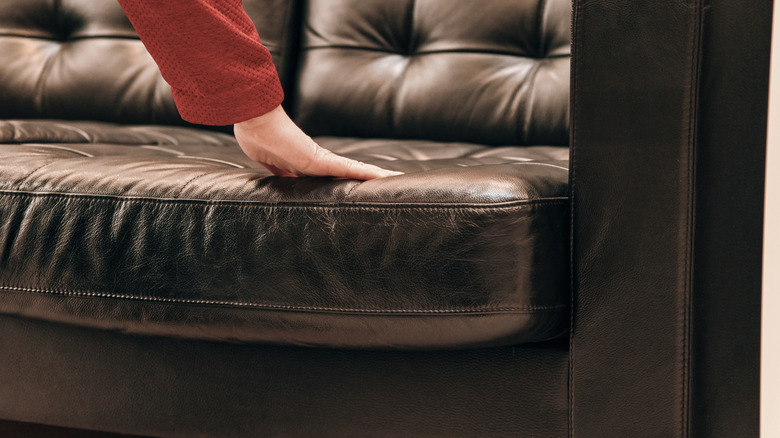
Finding a tag on leather furniture is not just important when looking at online listings, but when shopping secondhand in person. The tag is usually located beneath a lower edge or tucked away under a couch skirt, if there is one. Brand names or manufacturers are often stamped on the underside of the piece. This may be tough to find on sofas, so be ready to ask an employee to help you look beneath the sofa.
If an employee is willing to help, then you two can tip the sofa or chair and look under to see if you can spot a name. High-end brands include Ekornes, Sam Moore, and Hooker. Budget brands that may still be worth going after include Bassett and Broyhill. Vintage styles like long, low mid-century styles and elegant Victorian tufted club chairs may be big money even in poor condition, as they're desirable among collectors of antique furniture.
Keep an eye out for removable cushions
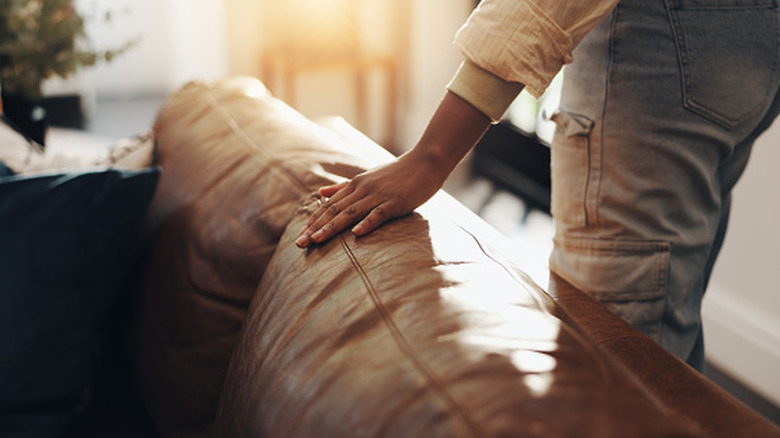
Removable cushions are a sign of better construction in furniture overall, including leather products. Sofa cushions need to be flipped and rotated so that the wear is more evenly distributed. Attached ones make this impossible. You also won't be able to remove the cushion to clean or repair it, which will make owning the whole piece more difficult. Finally, an attached cushion usually means the back is not upholstered, a potential sign of cost-cutting measures taken by the manufacturer. Full- and top-grain leather furniture makers aim for the luxury market, so while it's not impossible, it's unlikely to see attached cushions on their pieces.
It's fairly easy to see whether cushions are removable. If you're in a thrift store, just lift them up and see for yourself. If you're browsing online listings, look for photos showing the cushions either moved to show the piece's frame or ask the seller if the back cushions are attached. Most high-quality leather furniture will have detached cushions.
Know that stains are not inherently a dealbreaker
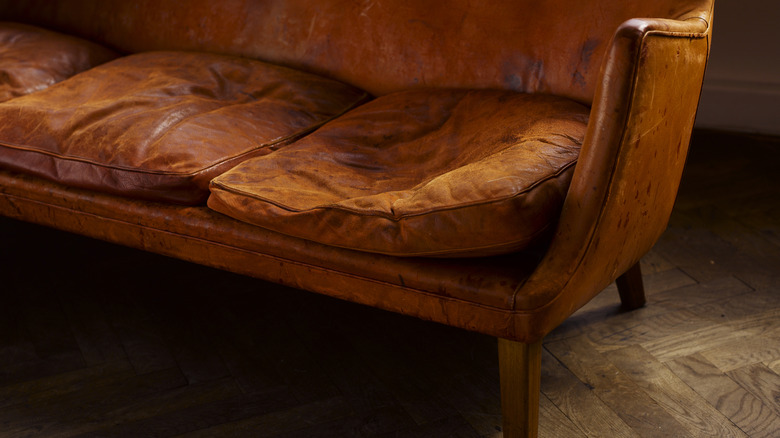
Leather is notoriously durable and easy to clean if you know the right methods, even with stubborn stains. If you notice stains on a sofa in a thrift store or an online listing, don't pass it up just yet. It's worth asking more about the item before making an offer or scrolling past the listing altogether. You might be missing out on a great piece that just needs a little elbow grease. If the item in question is full-grain, then it may be worth the time.
There are several substances that can leave stains on leather furniture. If you do your homework, you can try to identify the stain and treat it by type. Dirt can typically be scrubbed off with a soft dry cloth. Water stains will look discolored, and oil will look dark and somewhat shiny. Cosmetics, ink, wine, and pet stains are also common on secondhand furniture. For listings online, ask the seller about the stain and if they've tried to remove it themselves. One benefit of buying online is that you may be able to purchase furniture directly from the owner, which means you can theoretically get all the answers you may need with very little investigative work.
Inspect for holes, cracks, tears
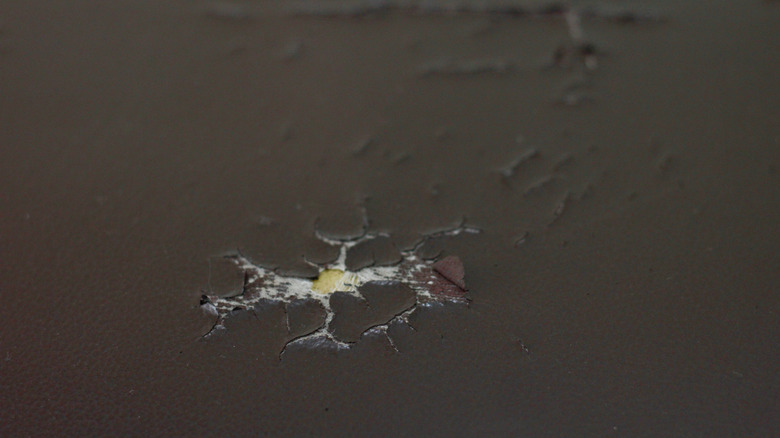
Like stains, all holes, cracks, and tears are not automatic dealbreakers when it comes to leather furniture. Material with light cracks can be patched if you have the tools, space, and patience. As for the frame, there are many guides online that can help you use wood filler if you need to repair the structural part of the piece. Even sofas with larger tears should still be considered if they are offered for a reasonable price.
When looking at the piece in person, do a thorough check, and take notice of any holes, tears, or sections where seams are separating. You may be able to fix a peeling vegan leather couch with paint or mask scratches on real leather with olive oil. For big holes and major cracking, it's almost always best to bring in a pro.
Have a plan to move leather furniture safely
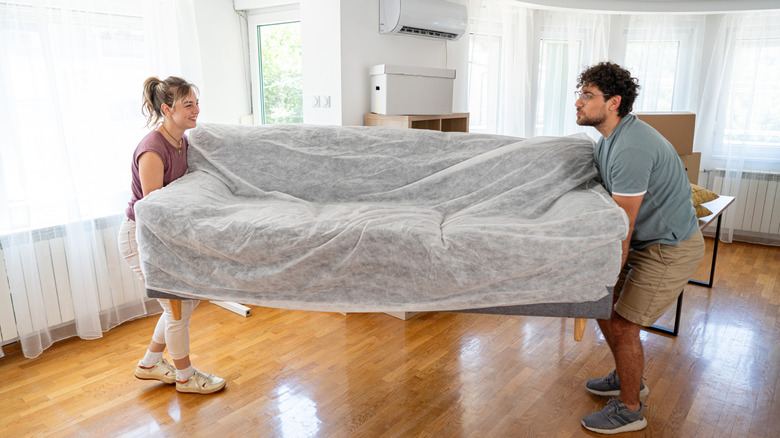
Think you've found the perfect piece? Now it's time to think about how you'll transport your new leather furniture. If the seller or vintage shop doesn't offer delivery, then it will be up to you to get your new buy home in one piece. You'll need a solid plan for picking up the item as well as getting it into your space. Remember, leather can be scratched or damaged during the move, so be ready to protect your new furniture at every step of the process.
To successfully move your find, you'll need a few things. Find a few blankets to cover the piece when you get there. This will help protect it from scuffs and tears. If disassembling is not doable, then measure your vehicle and make sure it'll hold the new piece. Lastly, don't forget to bring at least one other person with you to help you move. Although there are ways to easily move a couch on your own, it's not recommended since you don't want to damage your new furniture. If those are not available, companies like Shipt will handle pick up and delivery for you for a fee.
Clean your furniture once you get it home
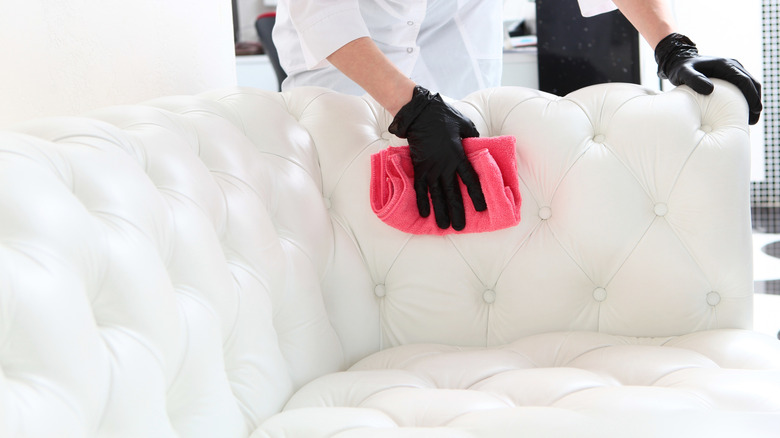
Your secondhand furniture is now finally in your home. But don't rest just yet. Unless the seller confirms the piece was cleaned within the last 6 months, you'll need to clean off and condition your new piece first before you start relaxing. This will give you a chance to brush away any dirt from the previous home or the move. You can also get a good look at the holes, tears, and cracks you plan to repair. Establishing a cleaning routine now will also help you keep it for the lifespan of your furniture.
Two cleanings a year should suffice for most leather furniture. You'll need a duster, a good leather cleaning product, and microfiber and cotton towels. Dust the piece first, being careful not to scratch it. Spray the cleaning solution onto a microfiber towel, and wipe the fabric using a circular motion. Now grab a cotton towel and dry the material using that same circular motion. Once it's clean, you can keep your leather furniture soft and supple with natural ingredients or apply a leather conditioner. Keep in mind that cleaning for nubuck, suede, plastic-coated, bonded, and vegan leathers may be different from cleaning natural leather.