

The Stunning Shasta Daisy Variety That Produces Huge, Plentiful Blooms
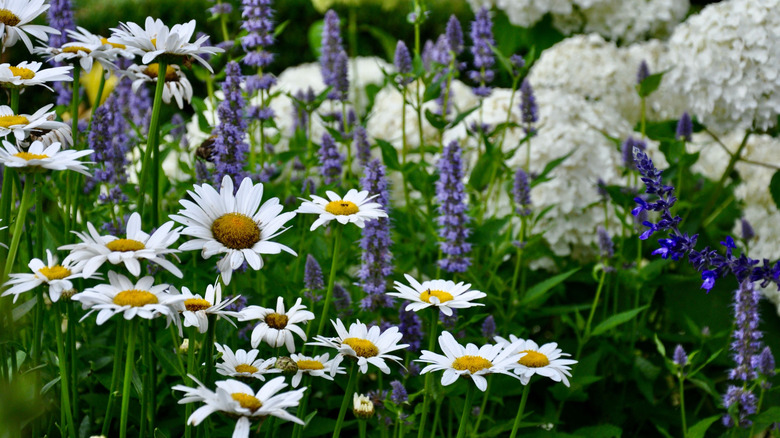
When it comes to flowers, daisies are a popular choice. But the problem with most daisies is that their flowers, though attractive, are relatively small. Many varieties produce blooms only 1 to 2 inches across. That is where the Shasta daisies (Leucanthemum x superbum) stand out. They are well-known for their large blooms that can reach almost 3 inches in size. For even larger flowers, consider growing Shasta daisy 'Mt. Hood' (Leucanthemum x superbum 'Mt. Hood') in your yard. They thrive in USDA Hardiness Zones 4 through 9 and feature frilly white-and-yellow double blooms nearly 4 inches wide that appear in abundance all summer long. However, large blooms and heavy flowering aren't its only appealing traits.
It also grows fast and can live for up to 5 years if the conditions are right. As for its uses, you can grow it alone in flower beds or mix it with other plants. 'Mt. Hood' Shasta daisies also work well as cut flowers and can serve as both thriller and filler plants in container arrangements. These daisies are also rabbit-resistant, meaning you won't have to worry as much about keeping hungry rabbits out of your garden. They are also pollinator-friendly flowers and will attract all sorts of bees and butterflies to your yard.
Caring for 'Mt. Hood' Shasta daisies
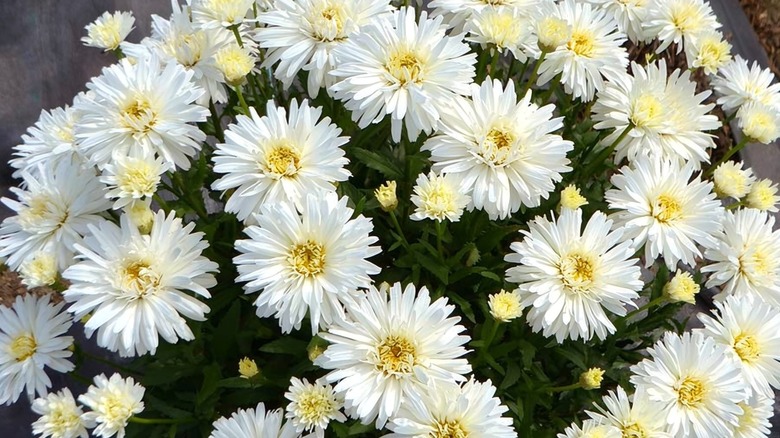
For large, abundant blooms, plant 'Mt. Hood' in an appropriate location. It thrives in full-sun and needs at least six hours of sunlight every day to flower well. So, don't plant it in places that get a lot of shade. Ignoring sunlight needs is one of those mistakes everyone makes when growing perennials in the garden. In addition to sunlight, they prefer well-drained soil with a pH of around 5.5 to 6.8. If you're unsure of your soil's pH, there are plenty of home-based soil-testing kits that can help measure it.
Once the soil and site are ready, plant the daisies about 14 inches apart. Plants typically grow about 16 inches wide and 20 inches tall. Water when needed and let the top 2 inches of soil dry between waterings. They are fairly drought-resistant once established and only have moderate watering needs. Feed the plants with a slow-release but high-phosphorus balanced fertilizer in early spring and then again, in mid-summer to promote flowering.
Besides this, make sure to deadhead the plants when they bloom. 'Mt. Hood' Shasta daisies bloom in overlapping waves throughout the season. Removing the dead or spent blooms not only helps promote continuous flowering but also maintains a neat look. And lastly, keep in mind that these daisies will die to the ground during the winter and then emerge again during the spring. Cut plants back in late fall and avoid disturbing the crown during dormancy.