

Bring Your Frozen Spider Plant Back To Life With These Tips And Advice
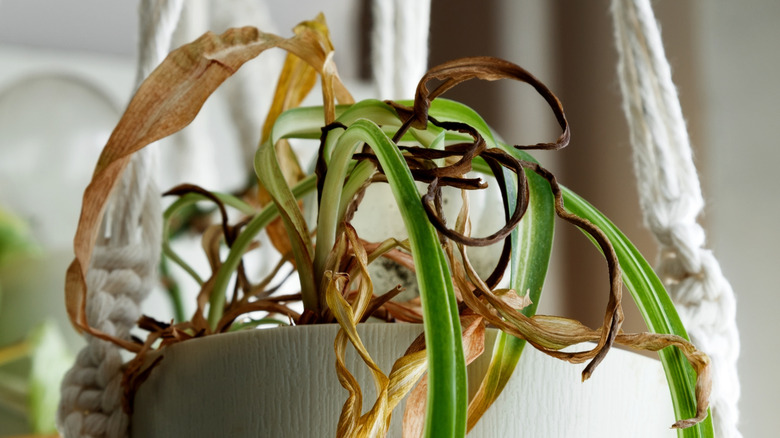
There's no need to despair if you've just come home from a short trip away and realized that you left your spider plant outside during a cold snap. Although your plant might look a little worse for wear after being exposed to freezing temperatures, you might just be able to revive it and, with patience, bring it back to life. Spider plants (Chlorophytum comosum) are particularly resilient plants and highly tolerant to neglect. So, as long as you can see even a small sign of life, your plant will recover in time. This resilience is just one of the reasons why a spider plant makes the perfect indoor houseplant.
If in addition to some green leaves your plant also has plantlets with green growth, it's fairly easy to revive your plant by cleaning it up. But what if all you can see are dead brown leaves? Well, your spider plant might actually surprise you with a comeback if the roots haven't been affected. Spider plants have a fleshy, tuberous root system with rhizomes that are designed to store water. That's why your plant will still thrive even if you've neglected to water it for a couple of weeks, making it one of the easiest houseplants anyone can keep alive. This means that even if the top of the plant appears to be totally dead, if the fleshy roots are still white, you should see some new growth within a few weeks if you move the plant to a warm and protected spot.
Reviving a frozen spider plant
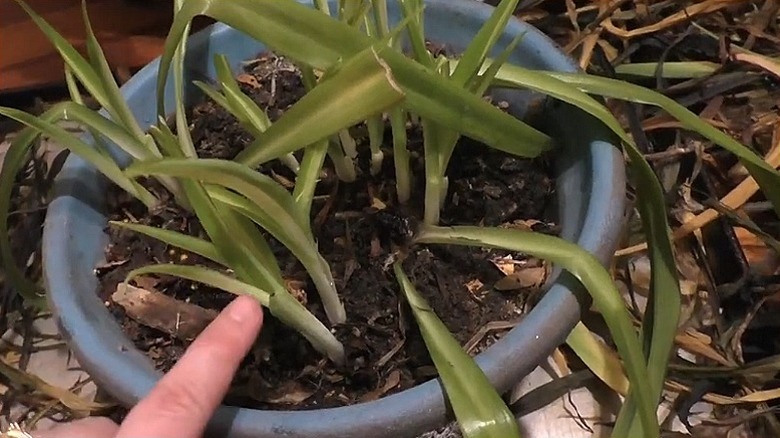
The first thing you want to do with your cold-damaged spider plant is remove all the long stems with plantlets on them. You can usually just pull them off gently, and they should come away quite easily. If any of the plantlets still have signs of life, you might be able to propagate new spider plants by placing them in water or some potting mix to see if they'll produce roots.
Next, you want to remove every single dead and dried leaf. Once again, you should be able to gently pull these off at the base, but if they won't come away easily, just snip them off with a clean pair of pruning shears. Once the plant is completely clean and all you can see are a few green leaves, put it in a bright spot away from direct sunlight. Water if the soil is dry, but make sure you let the excess drain away. You might also want to give it a light feed using a slow-release fertilizer to help initiate new growth. After a few weeks, your plant should happily bounce back and reward you with new leaves.