

The Best Way To Ensure You Get Babies From Your Spider Plant
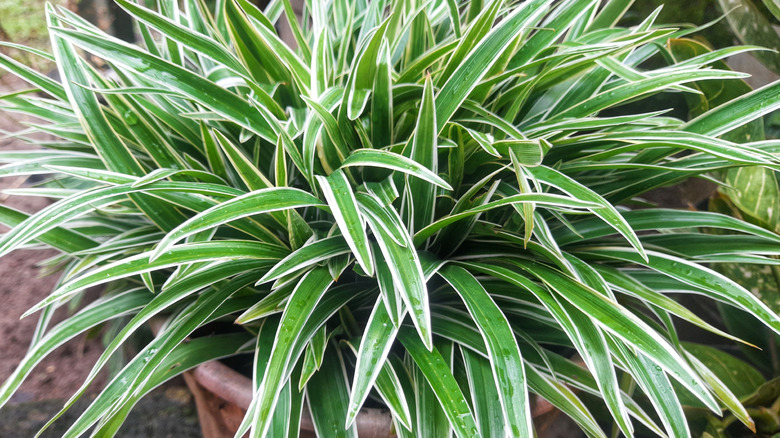
If you've had a lovely spider plant (Chlorophytum comosum) for a while, you already know that it's one of the easiest houseplants that you can grow. Its fleshy roots mean that it will forgive you if you forget to water it every week, and it rarely needs any intense care to just thrive and continue to grow. It's also a particularly easy plant to propagate because it produces those tiny babies known as plantlets on long stems known as stolons. These can easily be placed in water or potting mix and will produce roots fairly quickly. But what about if your spider plant isn't producing many or even any babies? There are actually a few tips that you can follow to ensure that your plant grows those plantlets in abundance.
As long as your spider plant is mature enough (around 1 to 2 years old), and it gets enough light and humidity, it should be happy to grow those long stems with the babies on the end. However, you do want to ensure that you don't repot too often or give it an overabundance of fertilizer, as this could reduce or limit plantlet formation, and may well be holding your spider plant back. In other words, your plant really does like a little neglect and will reward you with babies in return. The reason for this is that when your plant is exposed to just a bit of stress, its immediate reaction will be to try to reproduce. You'll find this is just how much of the plant kingdom works.
Tips for encouraging your spider plant to produce plantlets
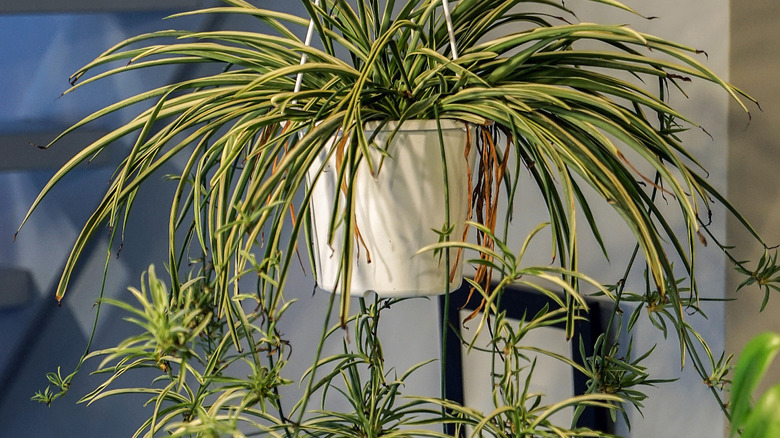
In order for your spider plant to produce those long stems with plantlets on them, it needs fairly bright, indirect light. Although these plants can handle some of the darker areas of your home, without enough light, they won't grow plantlets. So, place your plant in front of a nice, bright window, but make sure it doesn't receive direct sunlight, as this can burn the leaves.
You'll also find that spider plants like to be a little rootbound. This will encourage them to grow babies because they're not so focused on root growth. So, follow the guide on how to repot a spider plant – only do it when absolutely necessary and only into a pot that's one size larger.
Another important aspect to understand about the spider plant's formation of plantlets is that these are actually light-dependent. This means that if your plant is exposed to short days and long nights for at least three weeks, it should start to send out stolons, bloom, and create plantlets. To be more precise, exposing your plant to bright light for less than 12 hours a day should result in lots of new babies. Then, you'll just want to know how to propagate spider plants the right way with some essential tips.