

Is Marble Actually An Eco-Friendly Flooring? What To Know Before Installing
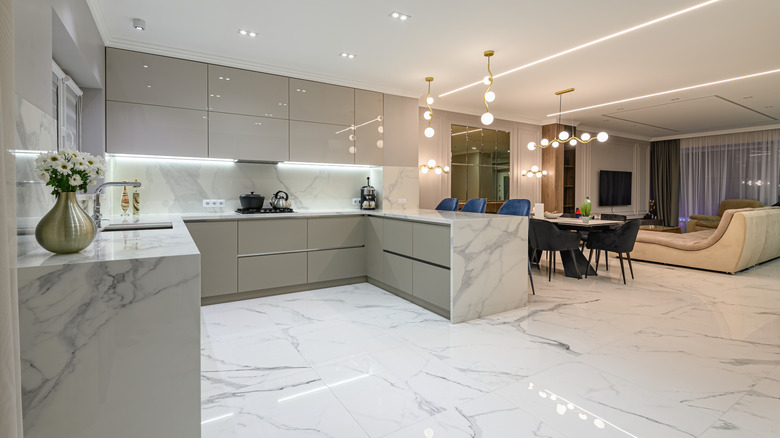
More and more homeowners are looking for sustainable solutions for their homes. They want permeable materials for driveways, energy-efficient home appliances, as well as building materials and products that do not leave a damaging impact on the environment. Even for something like flooring, where durability and aesthetics weigh in before sustainability, aware homeowners are looking for eco-friendly options. Thus, before installing marble floors, homeowners might wonder where it stands on the eco-friendly scale.
There are both pros and cons to marble flooring, but the good news is that marble is quite eco-friendly, especially considering its high durability means fewer replacements. Furthermore, you can also recycle old marble.
The fact that marble itself is non-toxic also certainly helps. Marble is formed as a result of a completely natural geological process that takes thousands of years to complete, so it does not contain any synthetic additives. Unlike other human-made materials that are used in flooring, such as ceramic tiles or engineered stone, fewer chemicals and pollutants are involved in its manufacturing.
Marble is durable and does not emit harmful VOCs
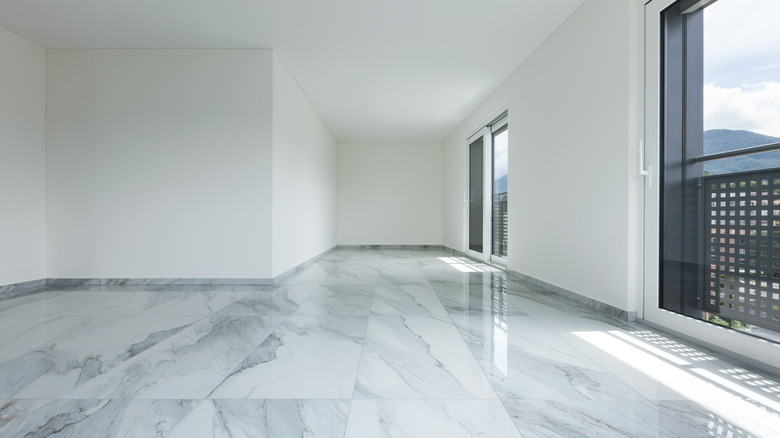
Being completely natural, marble does not expose you to the threat of Volatile Organic Compounds (VOCs) either. This is in stark contrast to engineered or hardwood flooring that can emit these deadly compounds. Oftentimes, it is the finish applied to engineered hardwood (polyurethane or aluminum oxide) that can off-gas VOCs in the indoor air. Inhalation of copious amounts of these compounds in indoor settings can lead to ailments such as dizziness, drowsiness, headaches, and nausea. VOCs can also cause damage to the nervous system and even cause cancer in some cases.
Another crucial element that leads to excellent sustainability of marble flooring is the durability of marble. Marble owes its resilience to its interlocked, crystalline structure that results when intense heat and pressure act on limestone. Despite being low on the Mohs hardness scale, when properly sealed and maintained, marble is quite capable of withstanding wear and tear for decades. Its lifespan extends if you choose a denser type of marble, thus increasing its longevity in homes and reducing carbon footprint.
In fact, you only need to look around at historical monuments to grasp how durable marble can be. Even before artificial sealants were invented, marble was known for its long-lasting strength and resistance to degradation. It is true that the extraction and production of marble can be energy-intensive and wasteful, with heavy shipping required to move it from other parts of the world. But unlike other short-term marble projects, marble flooring can still be considered sustainable because of its longer lifespan.
Marble can improve your energy efficiency (and get recycled)
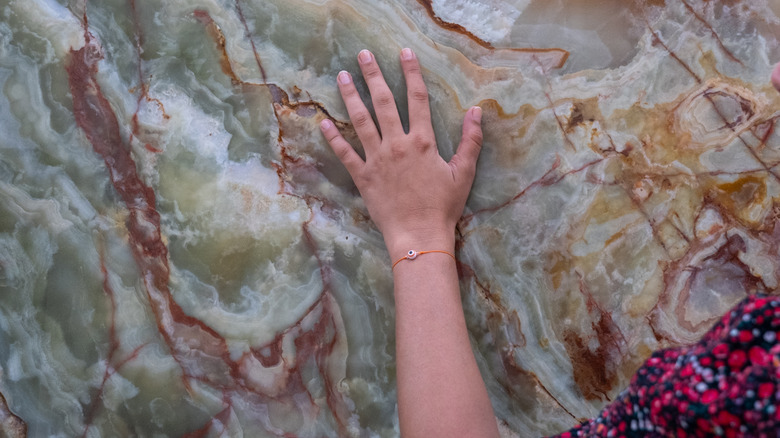
Marble can also help regulate temperature and improve the energy efficiency of your house. Thanks to its high thermal conductivity, marble absorbs heat from its surroundings without itself becoming hot, unlike other flooring materials, such as laminate. This is why a marble floor feels cool to touch during the day. While you would appreciate these features a lot more in hotter climates, marble is also slow to release any heat back to the atmosphere during cool evenings. This makes the stone a natural temperature regulator, which can reduce your power consumption, such as for air conditioning.
Lastly, marble is also sustainable since it can be recycled and reused. This essentially means that once you're ready to remodel your house or move locations, you can ask a marble company to reuse the marble. Marble can be reshaped into smaller slabs or decor. While marble is highly eco-friendly and durable, you should keep in mind that, at times, marble flooring can hurt your home's resale value as well. This is because its porous nature can make it high-maintenance and susceptible to stains.