

Turn Simple Fence Pickets Into A Beautiful Raised Garden Bed For Less Than $50
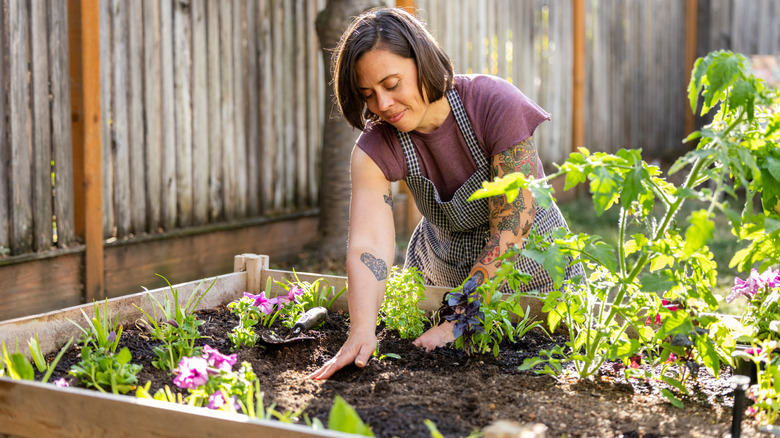
There are many good reasons to build raised garden beds. They are certainly one of the outdoor features that makes a gardener's life easier with less digging and bending. You can also create ideal soil conditions and control pests better. There are lots of different designs for raised beds, but some can be quite expensive. However, by using simple cedar fence pickets, 2-by-2 inch lumber, and a few screws, you can create beautiful raised beds for less than $50 each.
You could do it even more cheaply by using pressure-treated pine, but although the chemicals now used are safer than they were, there are still some concerns about them leaching into the soil, groundwater, and any vegetables you might grow. Cedar is naturally resistant to rot and insect attack without any treatment, so it's a great choice for raised beds.
Six-foot dog ear cedar fence pickets can be found for under $4 each at some hardware stores. Nine pickets will make a planter slightly less than 6 feet by 3 feet wide and 16 ½ inches tall. You'll also need a single 8-foot length of 2-by-2 or 2-by-4 lumber. Cedar this size can be hard to find, so you may have to resort to pressure-treated pine (plain pine would rot too quickly outdoors). An 8-foot length should be around $5. Add some galvanized screws (which are rust-resistant) and you should still be well under $50. Apart from materials, you'll need a speed square, a circular saw or jigsaw, and a cordless drill/driver.
Putting the cedar fence picket raised garden beds together
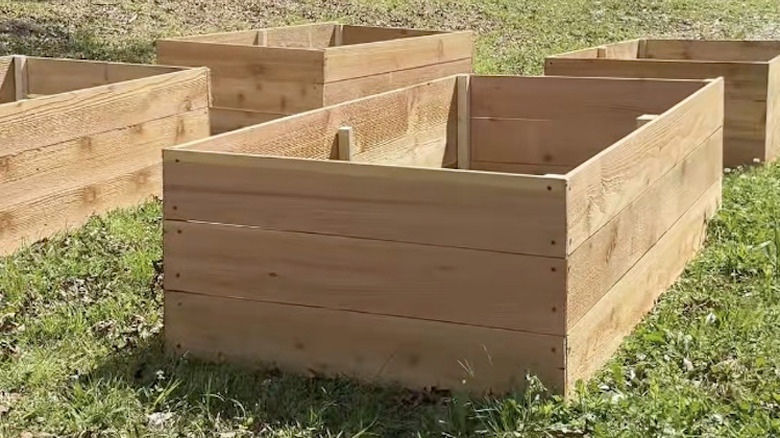
Building the raised bed planter is one of those woodworking projects even beginners can do. Mark a line just below the 'dog ear' using the speed square and cut them off of all nine pickets. Cut three of the pickets in half. Trim the 2-by-2 or 2-by-4-inch pieces of lumber into six 16-inch lengths for supports.
Take one of the long pickets, and drive two screws through it to attach a support at 90 degrees on each end and one in the middle. Then attach two more pickets to create one of the long sides. Repeat the process for the other side, then attach the half-pickets at each end to create a box. Work slowly, making sure everything is lined up and square. If you do get something slightly crooked, it's easy enough to unscrew it and have another go.
Experts usually recommend 18 to 20 inches of loose soil for healthy plant growth, so it may be beneficial to loosen the soil with a shovel before filling and planting your raised bed. If you can't do that, there are still many flowers plus vegetables like cabbage, onions, and lettuce that are happy in shallower soil. If your raised beds are on a solid surface, you could add another picket fence layer on top for a few bucks more, making the raised garden beds 22-inches deep.