

Cabbage Water Is The Eco-Friendly Way To Test Your Soil's pH Levels
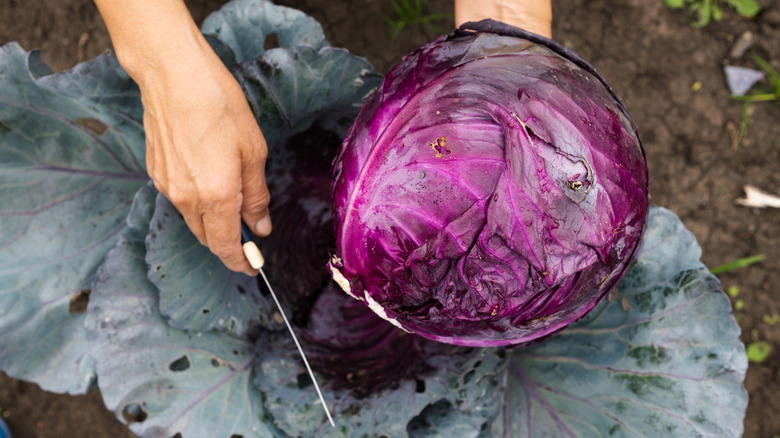
One of the best ways to prep your soil for successful planting in the garden is to understand its pH level. Measuring the pH level of soil tells you whether it's neutral, acidic, or alkaline. The pH scale uses a numeric measurement of between 0 and 14. Numbers between 0 and 7 are considered acidic, while 7 to 14 are considered alkaline. The neutral measurement is 7.
If you want to test the soil pH in your garden, you could purchase testing strips or use meters that provide measurements. However, you may wonder whether home-based soil testing kits are accurate enough, or you might prefer a more natural option. If so, we have just the hack for you. By boiling red cabbage and adding a bit of your garden soil to the leftover water, you can use the resulting color to determine whether you have acidic, neutral, or alkaline soil.
Although there are many varieties of ornamental cabbage you can plant in your garden, this test requires red cabbage, which has anthocyanin in it. When it's boiled in neutral, distilled water, the anthocyanin remains blue. However, when you add an acidic material to the liquid with the anthocyanin, it'll take on a red hue. If you expose it to an alkaline material, it'll show more of a green color. This is an eco-friendly and affordable way to test your soil's pH level. You don't have to purchase equipment or generate single-use paper strips that you have to throw away.
How to perform the red cabbage pH test at your house
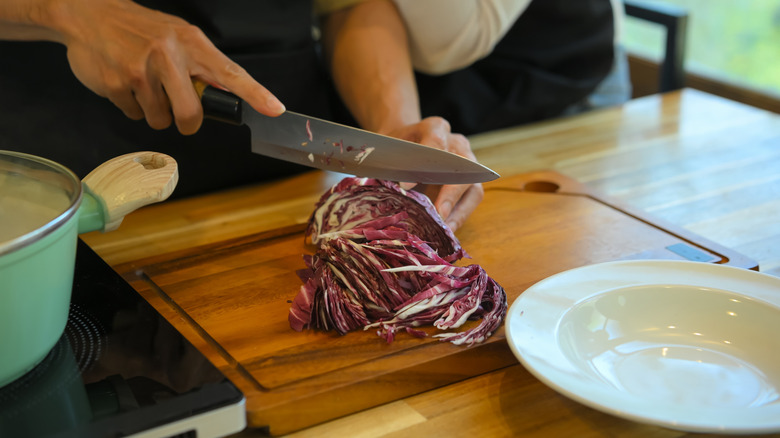
To begin, remove some of the outer leaves of the head of red cabbage and chop them into small pieces before boiling them in water for a few minutes. You should use distilled water to eliminate the possibility of your tap water being slightly acidic or alkaline. Distilled water has a pH measurement of 7, as long as it isn't old. If the distilled water experiences exposure to air, it may become slightly acidic.
To maximize the amount of blue liquid you receive, bring the pot to a boil, reduce the heat, and then let the cabbage simmer for about 15 minutes. Strain the boiled cabbage away from the water, saving the cabbage to eat if desired. Pour the liquid into a clear measuring cup or glass to allow it to cool. It should be a deep blue color. Be careful when pouring it, as the blue coloring could stain fabrics or other items, acting as a natural dye. Clean any spills immediately.
Once it's cool, you can add a small trowel of soil to the blue water and swirl it or mix it with a clean spoon. After a few hours, check the color. Pink or red liquid indicates acidic soil, while blue or purple shows neutral soil. If the liquid turns green, the soil has an alkaline pH measurement. After checking the color of the liquid, you can safely pour it on your plants as an eco-friendly watering option.
What to do after learning the pH measurement of your soil
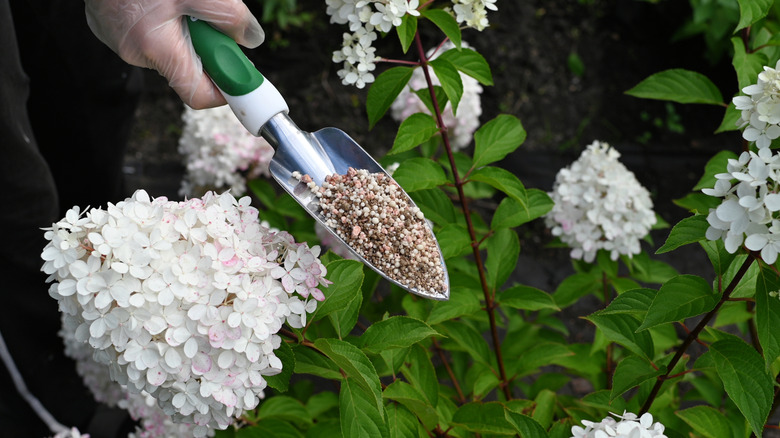
Although you can change the pH level of your garden soil, you should try to do it before you add plants to the garden. Some substances you add could damage the roots of existing plants. Make any changes carefully, as adding too much can swing the soil's pH level too far in the other direction, especially if you have sandy soil.
If the red cabbage test shows that your soil is too acidic with reddish water, you'll need to increase the pH. Adding ground agricultural limestone is an option, but you may want to consult a soil testing expert to determine how much to add. Then retest the soil to determine its new pH measurement. The easier option might be to stick with plants that excel in acidic soil, such as blueberries, hydrangeas, and rhododendrons.
If the soil is too alkaline, you'll need to lower its pH measurement. Adding organic materials, including peat moss, should help. Some people choose to add elemental sulfur. Again, you may want to ask for help from professionals for deciding how much to add. Otherwise, select plants that grow better in alkaline soil, such as lilac bushes, asparagus, or cauliflower.