

The Clever Daffodil Hack That Makes Your Cut Flower Arrangements Last Longer
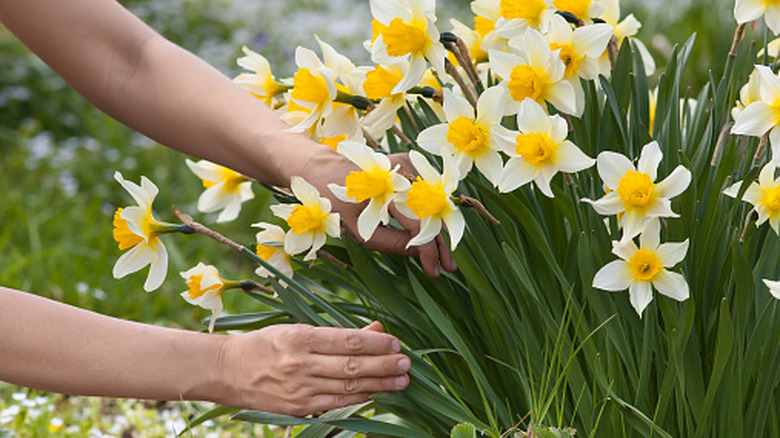
For many enthusiastic gardeners, the emergence of daffodil leaves from the ground immediately creates a feeling of excitement and expectation because it's an indication that spring is not that far away. In many gardens, daffodils are often the first flowers to bloom as soon as the weather starts to warm up a little. They're perfect to use as cut flowers because a vase overflowing with these blooms can instantly brighten up any space in your home. Of course, daffodils also pair beautifully with a whole range of other spring flowers. To make your cut flower arrangement last longer, remember this clever daffodil hack: conditioning. There's a very good reason as to why it's important.
If you follow all the essential tips for keeping picked daffodils alive in a vase, you'll know that the stems start to ooze sap as soon as they're severed. It happens whether you cut the stems of the blooms in your garden or you pull them, as some growers advise. The sap contains calcium oxalate, polysaccharides, alkaloids, and other compounds. These toxic compounds can shorten the lifespan of other cut flowers you might add to your bouquet, such as tulips. The sap leaches into the water and comes into contact with other stems. This can interfere with water uptake, causing some flowers to wilt faster. Certain pollinating insects, along with deer and rabbits, avoid daffodil flowers because of their toxicity. In fact, some people plant daffodils to keep squirrels out of the garden.
How to condition your daffodils before adding them to your cut flower arrangements
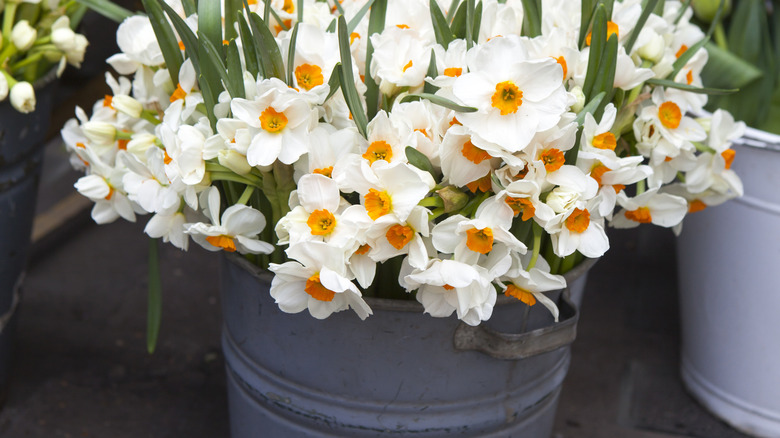
When harvesting daffodils from your garden, you can try pulling the stems up and away from the plant rather than cutting them. You may find that they release a little less sap than stems cut with sharp snips or pruning shears. No matter which method you decide to use, you need to plunge the cut ends your freshly gathered garden flowers into a bucket of cool, clear water right away. Leave the daffodils in the bucket for at least 24 hours. During this time, the sap will leach out of the stems and a callus will form over the cut end.
It may seem like a long wait, but there's a payoff. After conditioning your cut daffodils, you can safely add them to that pretty spring centerpiece or entryway bouquet you've been planning since the weather started to warm a little. Just make sure you don't recut the stems of your daffodils to better fit them into an arrangement. You'll remove the callus and possibly cause more sap to leach out of the injured plant tissue.
If you follow this process to the letter, your floral arrangements will stay fresh and look great for at least a week — even if you purchased your daffodils from a store or farm stand rather than harvesting them from your own garden. Here's a bonus tip: You can use cotton balls to make your cut flowers last longer by flipping your hollow-stemmed blooms (like daffodils) upside down, filling the stems with water, and plugging the ends with a cotton ball.