

The Eco-Friendly Fertilizer That Boosts Tomato Plant Health
We may receive a commission on purchases made from links.
Producing luscious tomatoes every season is one of the most rewarding aspects of vegetable growing for home gardeners. Whether this is the first time you're growing them or you're trying a few different varieties you haven't grown before, you want to provide them with the best fertilizer that will ultimately boost their health. Of course, it's a plus if whatever you use is also eco-friendly and helps to keep your soil nice and healthy, too. After all, when you look after the soil you're growing in, you're setting yourself up for successful harvests for years to come. One fertilizer product you don't want to overlook is kelp meal, and for some very good reasons, including its responsible production to maintain healthy ecosystems, and the provision of vital minerals that tomato plants absolutely love. On top of that, it can also boost the health and productivity of your garden soil.
Kelp meal is derived from seaweed, which you may know is now grown commercially in kelp farms. Not only do these farms produce the seaweed that you might enjoy in your sushi, but they can also provide the nutrients for a meal that's commonly used in home gardens. While large parts of the natural kelp forests have been destroyed through climate change and over-harvesting, kelp farms ensure the continuation of these vital systems by providing much-needed fish habitats and limiting coastal erosion. This certainly shows that kelp meal is an eco-friendly product, and the good news is that it will also provide some excellent health benefits to your tomato plants, as long as you know exactly how often you should fertilize them.
How kelp meal benefits your tomato plants
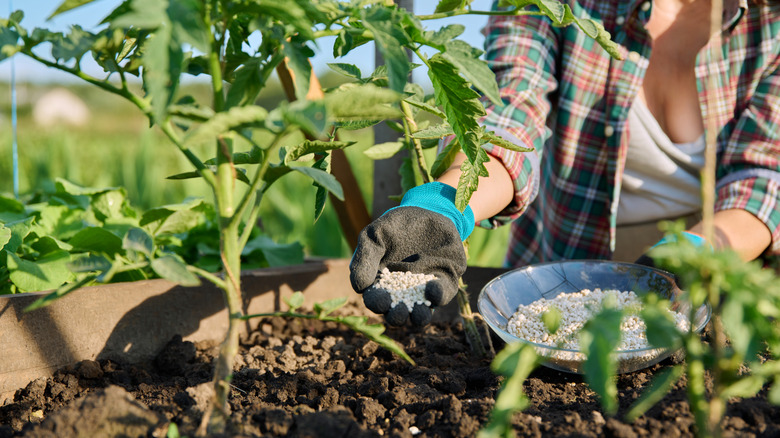
Although kelp meal, like this all-natural one from Down to Earth, is not a complete fertilizer and you'll need to supplement it with other things like compost or bone meal for adequate amounts of nitrogen, it can provide a reasonable amount of potassium and also a range of trace minerals, like calcium, iron, magnesium, and sulfur. It also contains small amounts of nitrogen and phosphorus.
Kelp meal is one of a range of fertilizers that boost potassium in garden soil. Using a fertilizer that contains ample amounts of potassium is especially important once the plants start to flower because it helps with good fruit production. That's when applying kelp meal can be very beneficial. To ensure your plants are getting what they need, also add some fish emulsion, bone meal, and green sand at this stage. This should give you a total roundup of nutrients that will provide you with a bumper harvest.
However, that's not the only way your tomato plants will benefit from the use of kelp meal. It is also useful to apply just after you've planted your tomatoes in the garden because it can prevent transplant shock and stimulate good root development. This means that if you apply a little kelp meal during this time, you're giving your young plants the best chance of growing into large, healthy specimens. As a final bonus, kelp meal contains high amounts of a growth hormone known as cytokinin. Ultimately, this helps keep your plants nice and healthy by improving photosynthesis and promoting excellent cell division.