

How To Turn An Old Tree Stump Into A Natural Habitat For Bees
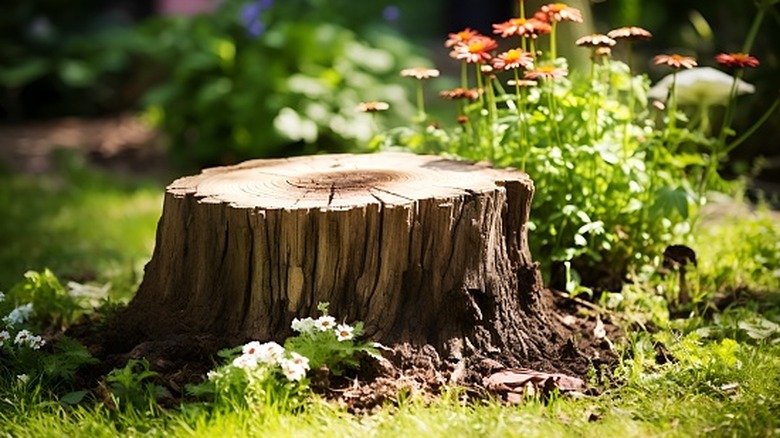
More and more gardeners are realizing the importance of creating habitat for pollinators and adding a bee house or hive to their garden to give these buzzing pollinators a place to call home. There are many benefits of having a bee house in your yard, but if you have an old tree stump in your yard, you may not need to buy a premade one. Many species of bees build hives or nests inside trees or underground. So, if you have an old tree stump in your yard, you have a perfect opportunity to recreate a bee's preferred nesting site.
But first, you need to know a bit more about the bees you're hoping to help. Colony-forming bees that live in hives (like honey bees) can be high-maintenance, and these bees can pose a threat by swarming — but some varieties will reward your proper and knowledgeable care with delicious honey. Solitary bees (like leafcutter bees) each need their own space. If you're just looking for an easy DIY way to attract more pollinators to your garden, you may be better off turning your old stump into a nest for solitary bees.
Since solitary bees don't build large hives stuffed with honey, they have no need to aggressively defend their nests from potential honey thieves. This means they generally have less venom and are less likely to sting you. So, they're easier to coexist with in a garden. Whether you've just cut down a dead tree or the stump has been sitting there for years, you can spend a couple of hours this weekend turning it into a bee paradise to bring more of these helpful pollinators into your yard this summer.
How to turn an old tree stump into a nest for solitary bees
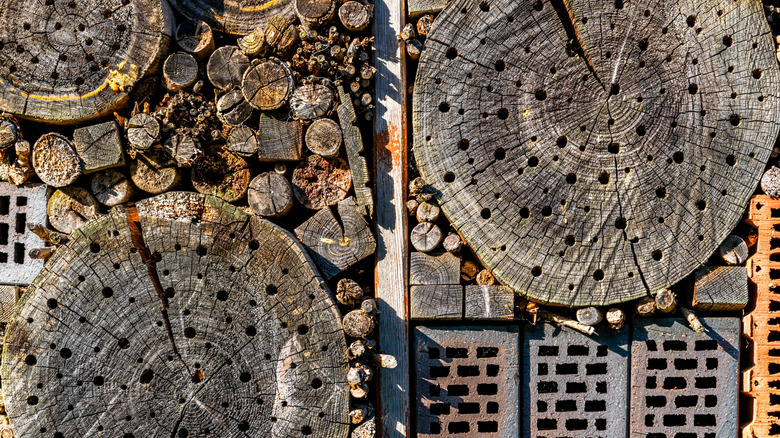
The easiest way to build a solitary bee nest is to simply leave the dead tree stump in your yard so that wood-boring bees can find it. If you prefer to attract the more tame bumblebees, plant something they will like nearby, like salvia or bee balm. If you want something that looks a little more decorative while also protecting and housing solitary bees in your garden, you can spend an afternoon converting your old stump into a bee house. To do that, use a chainsaw to saw the stump into a few slices. The slices should be thick enough that your drill bit won't go all the way through to the other side when you drill into it later.
Next, use a couple of different drill bits, ranging in size from ⁵⁄₁₆ to ⅜ of an inch. Drill holes of various sizes across the surface of each slice. Your holes should be about as deep as the length of your drill bit, or at least 5 inches. Sand down the holes with a sheet of sandpaper to get rid of splinters and jagged bits. You can arrange these pieces in a box or mount them directly to where you want them to hang on their own.
Whatever you decide, place your new bee nest at least 3 feet above the ground, five feet in all directions from where you will be gardening or relaxing in your yard. Although most solitary bees do not sting, almost any angry bee with a stinger will attack if it feels its home is threatened. Situate your bee house carefully by choosing a stump in a place where it will be sheltered from rain and wind. Some good options include a tree with a good canopy to shelter the nest or a fence located beneath a tree or other covering.