

Here's Why You Never See Metal Clotheslines In Yards Anymore
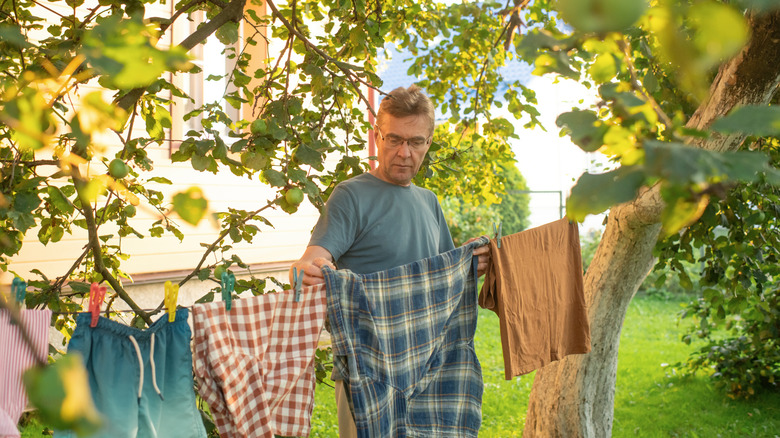
Prior to the existence of smart dryers and washing machines, dirty laundry was often hand-washed with washing boards, boiling pots, and a bit of elbow grease. Drying freshly laundered clothes was more time-consuming as they were often hung to dry on clotheslines. Drying times were heavily reliant on a gentle breeze and an abundance of sunshine. Since then, gas or electric washers and dryers have become the standard for cleaning linens and clothes in the United States. These days, it's hard to find a home without these essential appliances, but even harder to find one with a metal clothesline ready for use in the backyard.
With the advent of modern technology, smart appliances and gadgets are common household items. Smart home devices, such as security cameras, thermostats, vacuum cleaners, and carbon monoxide and fire detectors that can be controlled through an app, are making many older, conventional machines practically irrelevant. An "out with the old and in with the new" mindset is prevalent among homeowners who want app-compatible devices for convenience. In the case of drying clothing items and linens, quick and consistent dry times are preferred for efficiency and privacy, compared to the old-school way of hanging clothes outside to dry on a wire clothesline.
No longer needed and replaced with other versatile solutions
Without the need for them, most existing metal clotheslines are simply removed from yards to make way for other things like furniture or gardens. Clunky and outdated, the metal drying contraption occupies space that could be used for other yard things. The standalone outdoor drying rack can also be seen as an eyesore, as a permanent fixture embedded in a yard. Since it is hard, if not impossible, to move out of the way when not in use, it can be beneficial to have them removed completely.
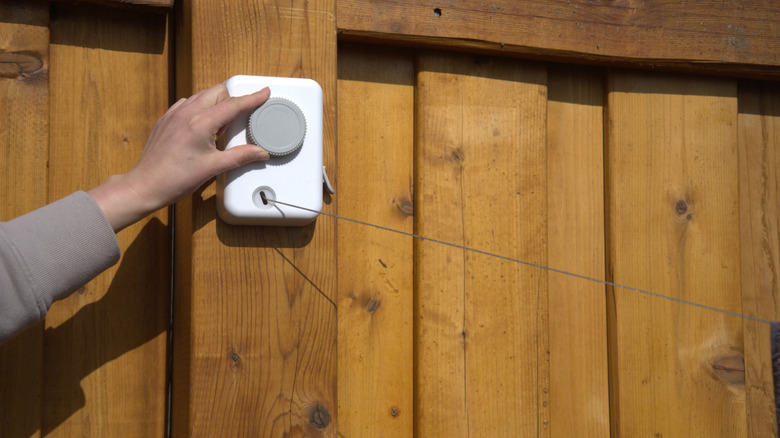
Many factors contributed to the near extinction of the once-common drying tool, including bans on their use in American suburban communities for their association with poverty and the metal lines' tendency to rust. Instead of finding metal clotheslines in yards, you're more likely to find clotheslines made from powder-coated steel wire, nylon, or UV-resistant plastic draped across a yard from inconspicuous hooks. Clotheslines made from these materials are less prone to rust than their predecessors and can be less damaging to the clothing or linens hung over them to dry. Many of these types of clotheslines are also removable or retractable and can be taken down on a whim or during months when hanging clothes out to dry is not feasible. Likewise, drying racks are also seen as viable replacements for metal clotheslines. Movable, collapsible, and great for indoor use, stylish and space-saving drying racks are ideal drying solutions for smaller spaces or apartments that do not come equipped with a dryer, further adding to the irrelevance of wire clotheslines.
What do you do if you find a metal clothesline?
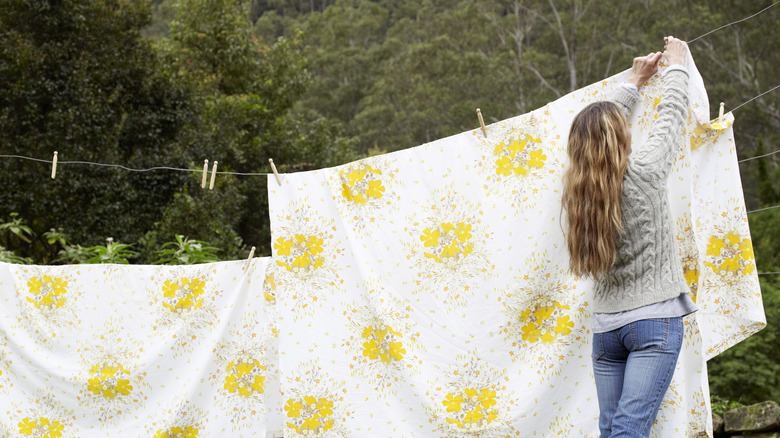
While not completely eradicated from yards or stores, if you spot or have a metal clothesline as part of your backyard adornments, you can use it for its intended purpose or repurpose it for other things. If you intend to bring back the use of metal clotheslines in yards, make sure to check the integrity and condition of the line before hanging your items on it. If there is rust on the metal line, it can transfer onto your linens, creating stubborn rust stains on your laundry. Likewise, rusty lines have been known to snap.
For those who appreciate their dryer too much, metal clotheslines can be repurposed in other ways. As they typically lie in the middle of a yard, you can use the line to hang planters from, which could be beneficial to plants that thrive on an abundance of sunlight. Alternatively, you can fashion the metal device into a canopy of sorts, draping a linen on top of the lines, and placing a cute bench underneath it. You can also hang various yard decor off of it, making it a decorative focal point in your yard. You can also hang bird feeders from it, creating a sanctuary for aviary friends to congregate and feast.