

The Seating Trend From The '60s That's Making A Comeback In 2026
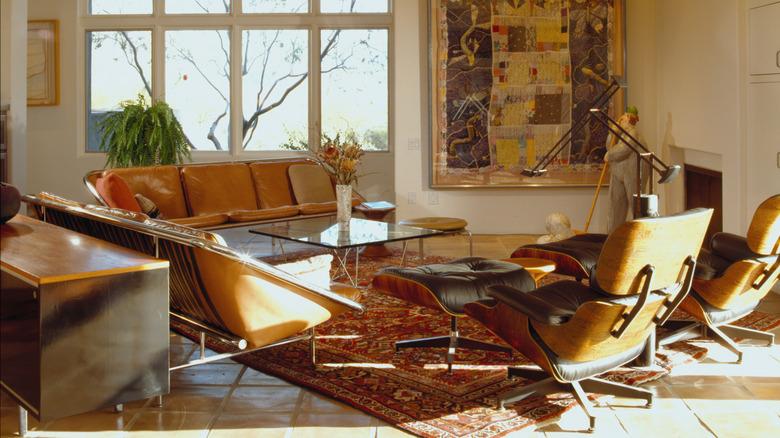
As design fads from yore come back into style, we're taking a look at one home decor trend that every boomer remembers. The trend we're talking about is curved seating, and like all good trends, this retro look from the '60s is back with a vengeance. Interior designer Carlos Nyce tells The Spruce that, "Today's interiors share the 1960s belief that design should uplift daily life." And what could be more uplifting than soft, curved seating that invites us to sit down and take it easy for a while?
If you're looking to achieve an organic modern aesthetic in your home, the softness of curved furniture is a perfect place to start. Hard, straight lines are no longer the only look of choice, with curved seating lending itself to the ever-popular hygge decor and softer side of the Scandinavian design trend. As Lauren Saab, founder of Saab Studios, also told The Spruce, "It makes a space feel welcoming and conversational. The shapes invite one to sit down, linger, and converse."
How to incorporate curved seating into your home
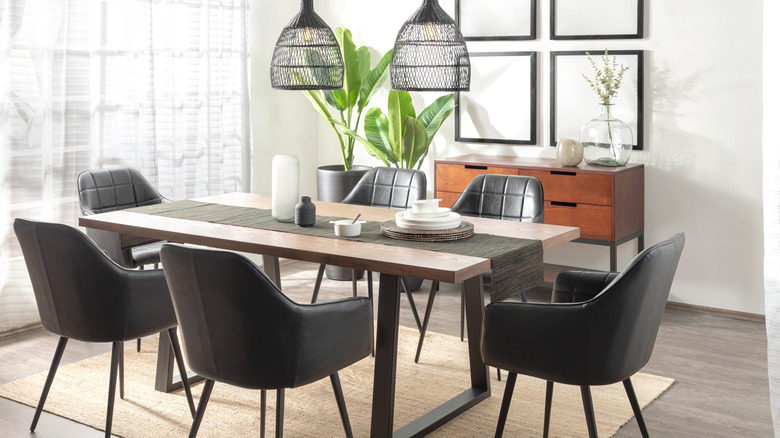
If you're looking for tips on creating a relaxed living space that provides a cocoon from the relentlessness of busy modern life, you can't go wrong with introducing softer, curved seating into the home. Philip Thomas Vanderford of Studio Thomas James told Elle Decor that, "Clients today are asking for sofas that feel intentional, grounded, and enduring rather than anything overly styled or performative." This is an area where curved seating can come into its own.
Josh Branigan, Home Interiors Expert at Cuckooland recommended to Homes & Gardens that, "Gentler forms help soften the overall structure of a space. A curved velvet sofa in deep sage or warm terracotta can act as both comfortable seating and a sculptural focal point." The curved seating trend is about taking that one piece of furniture and using it to add an intentional direction to your room. We'd suggest combining it with soft and neutral tones, along with natural wood that allows the curves to shine and reflect those you'll find in the natural world.
Of course, buying new furniture isn't cheap, so why not follow these expert tips for thrifting home decor and try to find vintage or antique pieces instead? Although the trend for curved furniture hit its peak originally in the 1960s, you'll find pieces echoing this shape and style dating from later periods: the 1970s all the way through the 2000s. This means you could find it easier to get your hands on a gem at a good price.