

Turn A Shed Deer Antler Into A Versatile Tabletop Storage Solution
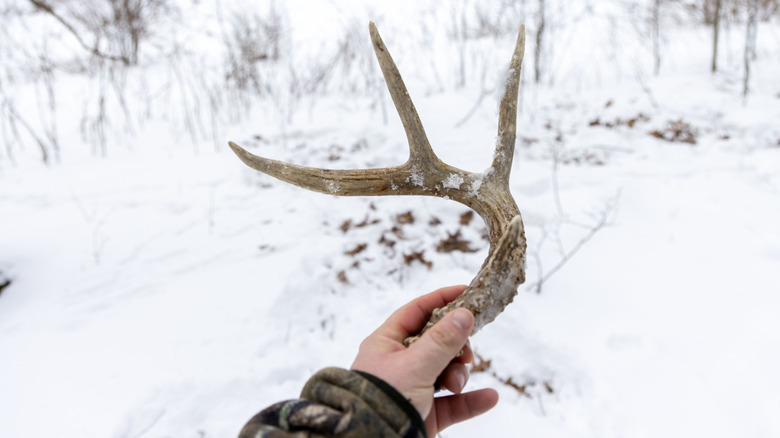
Your dog tells you it's time to play fetch, so out to the yard you go. But instead of a stick, you come up with a deer antler. If you can keep it away from your furry friend, bring it home to make into a hanger with whimsical woodland cabin feels. YouTuber @tagemoutdoors405 demonstrated how to display a beautiful antler in a practical way. Mounted vertically on a wooden base, an antler can hang jewelry, keys, ornaments, and other small things that drape or loop.
Wood pieces and serving vessels are good choices for bases because of their rustic look and the fact that you can drill into them easily (if necessary). Note that the larger your antler is, the heavier its base will need to be to keep it upright. A bowl, a cutting board, or a cross cut of a log all have potential.
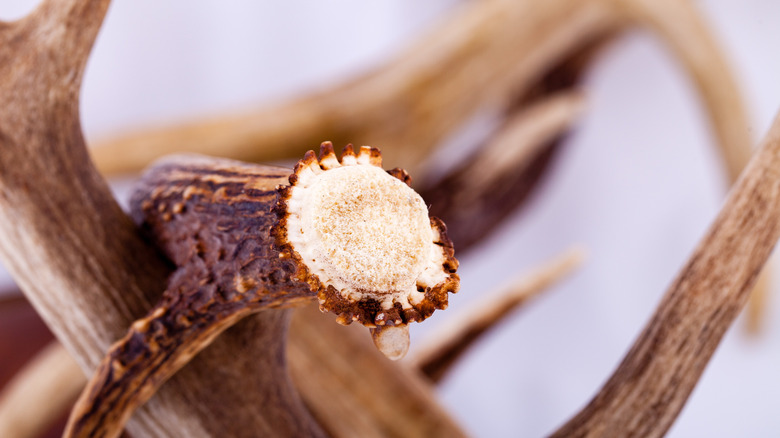
Once you've sourced a wooden base and an antler, grab epoxy, a sander and/or a power saw, eye protection, and a mask. If you found the antler outdoors, also grab dish soap and a soft brush for cleaning. Depending on the length or shape of the antler, you may also need a drill with a spade-blade bit that's the diameter of the thickest part of the antler. That will let you carve out a mounting hole in the wooden base. If the antler has a projection below its burr (the nubby ring around the base of each antler), you may be able to avoid cutting or sanding off the antler's base. This way, you can preserve the eye-catching burr by embedding the projection below it into the wood.
Finding and preparing your shed antler
It's a stroke of luck to find shed antlers in your yard, though regulations in many states determine whether or not you can keep antler drops, especially on public land. Do some antler-related homework, and keep your eyes on the ground during late winter and early spring; deer tend to shed their antlers during this period. You'll definitely have better luck online, even if it isn't as rewarding. Many pet care sites sell inexpensive antler pieces as dog chews, and knifemakers who use antlers as handles often have cast-off sections of antler that you might be able to purchase.
You'll probably want to clean a found antler before working with it. Fill a sink with warm, soapy water, and soak the antler for a few minutes. Lightly scrub away dirt with the brush, and rinse it. To mount the antler securely in the wood base, you may be able to sand the antler's base and attach it with epoxy. This will likely work best with smaller antlers or pieces. However, drilling out a depression in the base to hold the antler may be your best option. Unless it has a pronounced projection at its base, prepare the end of the antler by sanding off the burr or cutting it off with a power saw while wearing protective eyewear and a mask.
Mounting the antler securely
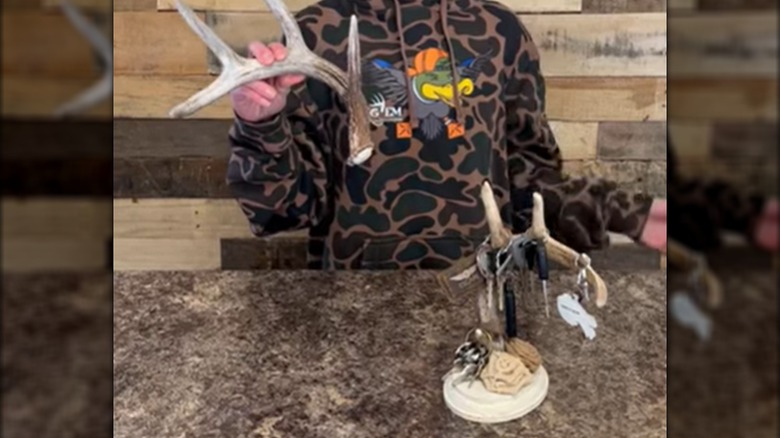
Situating the antler just right on the wooden base is a major consideration, since the antler's shape and weight will make balance tricky. You may need to make the mounting hole close to the edge of the wood base, with the bulk of antler curving over it. You may also be able to center the antler on the wood by cutting the antler's burr off at the right angle.
Drilling a pilot hole is especially important if you're making the mounting hole near the edge of the wood piece. This small step can go a long way in keeping the wood from splitting while you're drilling the larger hole. Do it right by checking out these 15 easy tips for drilling pilot holes. Drill into the pilot hole with the spade-tipped bit, either drilling all the way through the base or just carving out a divot large enough for an inch or so of the antler's end to fit inside tightly. (This is the route to take if you have an antler with its burr intact.)
After you've prepared the right-sized hole in the wood base, you can get a real feel for how well the assembled rack will stand. Slide the antler's end into the hole and check its balance. You can always cut a new angle into the end of the antler to improve weight distribution. When you're content with how the antler will stand, add epoxy glue to the hole, and slide in the end of the antler. It's wise to let the resin cure for up to 24 hours before using the rack.