

What To Do If You Think You Have Chiggers In Your Yard

We may receive a commission on purchases made from links.
When looking for easy ways to make your backyard more relaxing for balmy summer nights, most people focus on big-ticket items, like buying comfortable patio furniture or installing a pond. However, taking steps to reduce the number of insects that bite and buzz can also deliver significant benefits for far less money. Mosquitoes, ticks, wasps, and ants would all make a list of the most annoying backyard insects. Chiggers may deserve a spot on the list, too.
These tiny mites, which are almost invisible to the naked eye, can bite your skin and cause significant itching and redness. If you see skin irritation that resembles blisters, pimples, or hives where your clothing is tightest against your skin, you probably have chiggers in your lawn. They most often bite the waist (at the top of your pants) or the lower leg at the top of socks. Bites may show up on your dogs and cats, too, where their fur is thinner.
Seeing clues that you have chiggers before they start biting you is the best situation. You can treat them before they become a big problem. Start by checking your yard for places these tiny insects like to live. Long grass, ground that's consistently damp, overgrown bushes with heavy shade, areas covered with dead leaves, and your bird feeders might be attracting chiggers. However, when you're dealing with a pest that's basically microscopic, it can be difficult to know for certain if you have an infestation without taking a few more steps.
Looking for chiggers? Don't squint — try these techniques
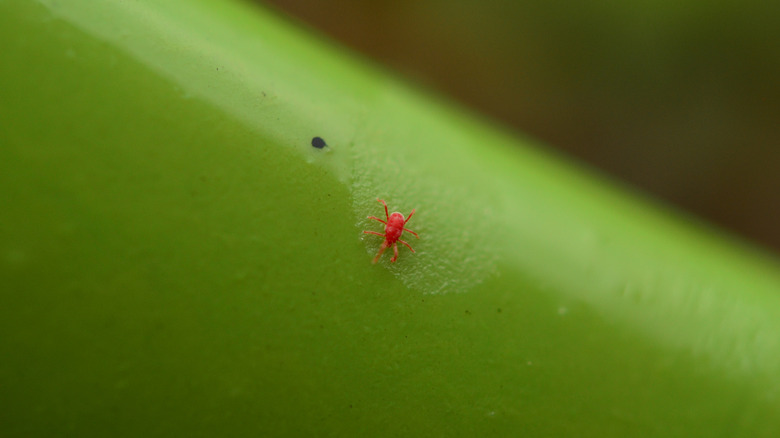
You'd need some sort of magnifying device to see a chigger sitting on a blade of grass, as they measure about ¹⁄₆₀ inch in diameter when adults. You could wander around your yard with a magnifying glass and tweezers trying to spot and catch these pests. However, there's a better way: the black cardboard test makes things much easier.
Paint a piece of cardboard black (or use black cardboard) and set it upright in an area of your yard you think may have chiggers, such as somewhere you haven't mowed recently. Wait 10 minutes or so, and you should see the mites crawling toward the top of the cardboard. Chiggers naturally want to climb to high points, like the end of a tall blade of grass, before attaching to a human or pet. The upright cardboard simulates the higher ground. If you have chiggers, tiny orange, red, or yellow dots should stand out against the black cardboard as they climb upward.
Another option is to wrap some duct tape around your ankles — sticky side facing out — and walk through areas you suspect have chiggers. Afterwards, examine the tape with a magnifying glass to see if any chiggers adhered to it. These tiny insects have six legs when they're young, which is also when they're most prone to biting people. They eventually develop eight legs.
Effective options for eliminating chiggers from your backyard

If your test results point to an infestation, you need effective ways to get rid of chiggers in your yard. Start by removing or cleaning up areas they like to congregate. By eliminating their favorite habitats, chiggers won't be able to reproduce on your property. Mow or clear overgrown areas, especially if they're damp. Short grass increases soil temperature and causes moisture to evaporate, making the area less hospitable to chiggers.
If there are overgrown bushes near where you found or suspect chiggers, trim them back to increase sunlight exposure and reduce humidity. This makes the insects less likely to congregate in these areas. Clean up fallen leaves, which retain moisture. You can also try applying natural treatments, such as Bonide Sulfur Plant Fungicide, apple cider vinegar, or diatomaceous earth, to the soil in these areas to see whether they're effective.
Removing this pest's habitat is a long-term solution. For faster results, you'll need to turn to commercial insecticides. Sprayed-on products that you attach to the end of a garden hose, like Spectracide Triazicide Insect Killer Concentrate, tend to be more effective than granular applications. Always follow the manufacturer's directions and take precautions to protect children and pets from the chemical solution. For the most effective treatment, which often comes with a guarantee of success, hire a pest control professional. The pros have treatments that target chiggers and other backyard pests.