

9 Best Herbs You Should Be Planting In May
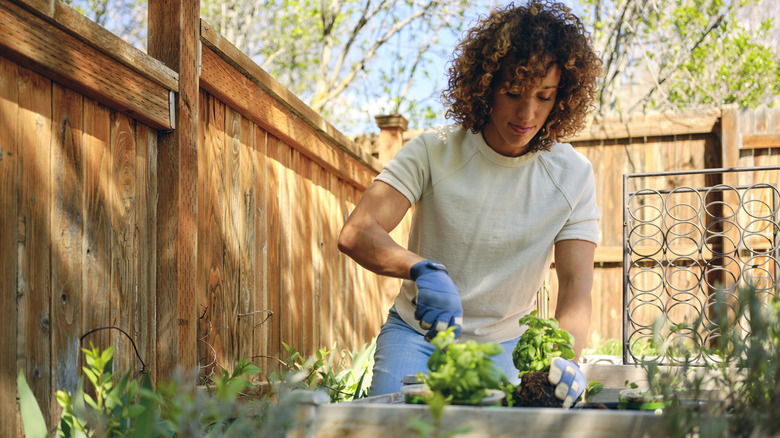
May is one of the best months to be out in the yard. Whether you're setting your garden up for success with spring tasks, creating a comfortable space for pollinators, or nailing down your warm-weather lawn care routine, this warm but still comfortable time is the peak for many gardening tasks. With that being said, however, not all plants thrive when they're planted in the spring. Spring-blooming bulbs, for example, should go in the ground during the fall to allow for a period of cold stratification, and there are plenty of vegetables you can plant in September for a fall harvest. Knowing when you should plant certain species gives you a greater chance of success down the line, even when it comes to easy-growing herbs.
There are plenty of herbs that are best planted during this late spring period, especially if you're in an area that no longer has to worry about frosts. Thyme, dill, sage, and lavender are just a few picks, but if you're motivated to, you could easily set up an entire herb garden during this season. While this advice is general, it's important to take your area's weather and USDA growing zone into account. In mountainous regions and places across the northern U.S., it's still very possible to experience frosts into May, whereas the weather could already be reading like summer in spots closer to the equator. Always ensure that you're following care instructions that are specific to your Zone — ideal planting times in Milwaukee will be very different from those in New Orleans, and ignoring these could land you with herbs that die off before they get the chance to establish.
Thyme
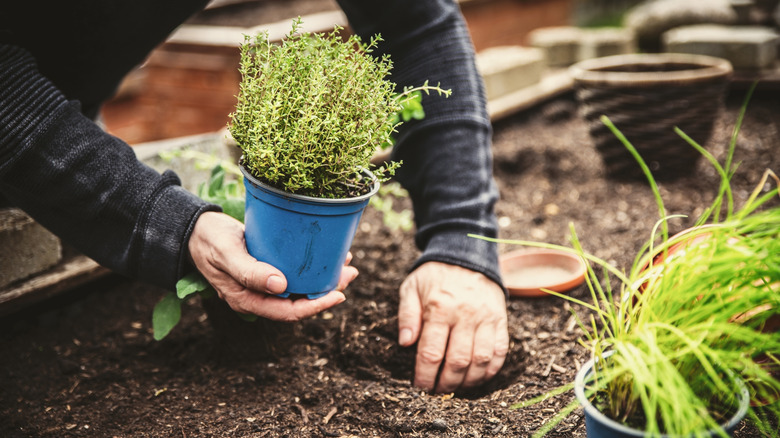
Thyme (Thymus vulgaris) is one of the most popular herbs, both to grow and in culinary applications. With small, flavorful leaves that effortlessly pair with a wide array of dishes, it can be a useful addition to plenty of gardens. Because it's a hardy perennial in Zones 5 through 9, you'll also get to enjoy this herb year after year. Plant it when the ground is around 70 degrees Fahrenheit, a few weeks before the last frost in spring, and make sure it has plenty of sun and well-draining soil. In chillier areas, this is around May.
Dill
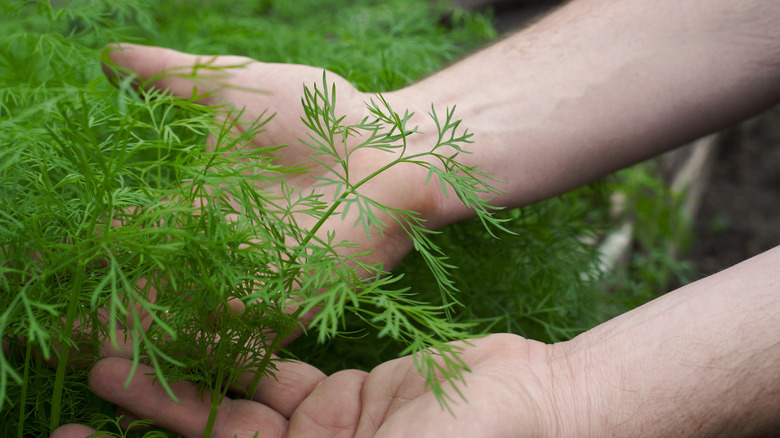
Dill (Anethum graveolens), with its thin, feathery leaves, is great for adding some texture and flavor to your herb garden. It's grown as an annual, and if you're so inclined, is easy to sprout from seed. For the best results when planting, sow seeds after your last frost date — May is the perfect window. It doesn't do well when transplanted, so it's also important to make sure you're planting your dill in the area where you want it to stay. Plants will also drop seeds before fading, so if you want it to come back next year, leave the area alone.
Lavender
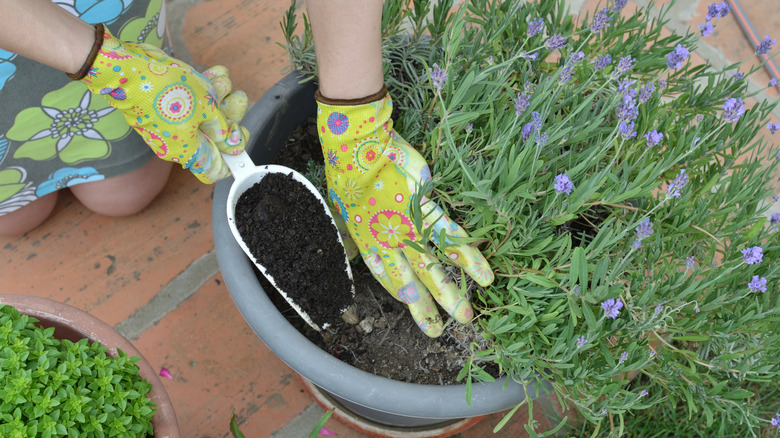
Lavender (Lavandula angustifolia) is relaxing, beautiful, and easy to care for. What's not to love? As a perennial plant, it thrives in Zones 5 through 10. It can be planted in fall, but if you want to enjoy some beautiful blooms this summer, plant it in spring after there's no worry of additional frosts. It's best to opt for young plants as growing from seed is very difficult, but that means you'll be able to enjoy its lovely fragrance in your garden immediately. Make sure it has bright sun and plenty of drainage to guarantee bountiful harvests each year.
Sage
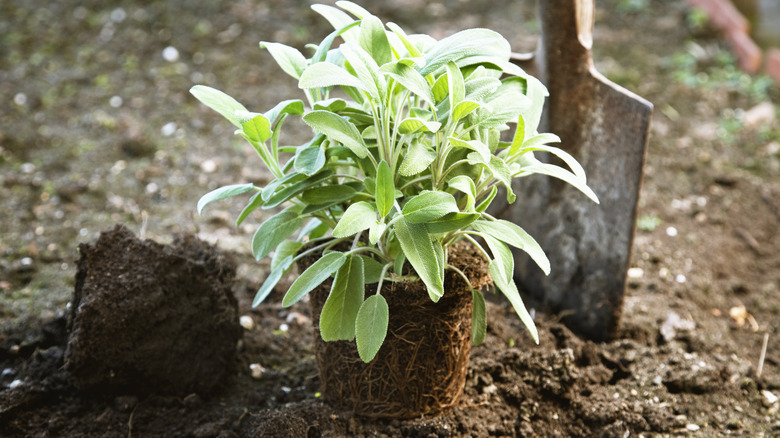
Sage (Salvia officinalis) is a hardy perennial everywhere from Zones 4 through 10. Because it can thrive in such a large area, ideal planting times will of course vary, but if you still have a few lingering frosts in May, sow seeds a week or two before the last one. While these plants will last for years with the proper care, it's best to swap them out occasionally for the best harvest possible. Like many other herbs, sage needs full sun and well-draining soil, so consider planting it near picks with similar care needs like rosemary and lavender.
Basil
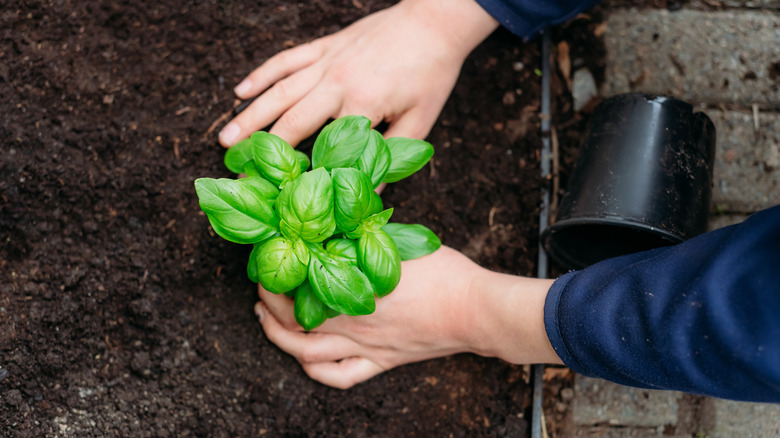
If you live in a more humid or rainy area, basil (Ocimum basilicum) will be your best friend. Unlike quite a few of the other herbs on this list, this annual thrives in wetter conditions. When it's properly cared for, you'll see tons of quick growth, giving you plenty of leaves to use in your culinary endeavors. Basil also loves heat, so as long as the temperature in your area doesn't dip below 50 degrees Fahrenheit at night during this month, May is a great time for planting, whether that means sowing seeds or transferring young plants into beds.
Mint
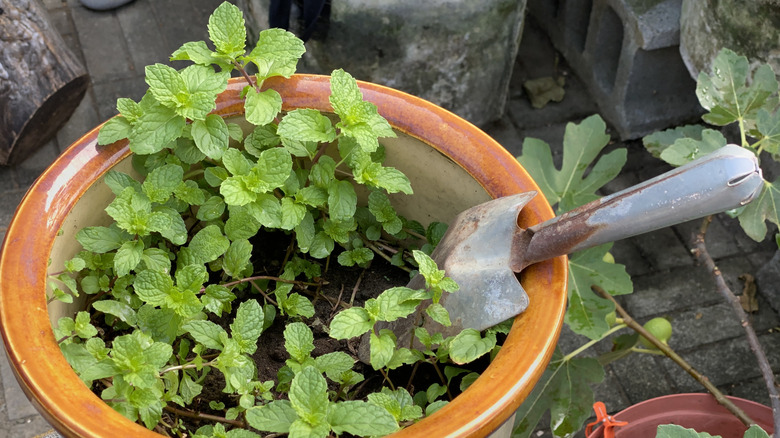
If you want a refreshing, fast-growing addition to your garden, mint (Mentha spp.) is worth considering. Varieties of this perennial (including spearmint and peppermint) can thrive in Zones 3 through 9, but it's not a huge fan of chilly weather. As such, you should plant it once the weather warms up and the threat of frost has passed — often in May. While this plant is easy to grow, great care should be taken so it doesn't get out of control. Mint is an aggressive grower, so if you want to prevent it from taking over your yard, it's best to plant in containers.
Oregano
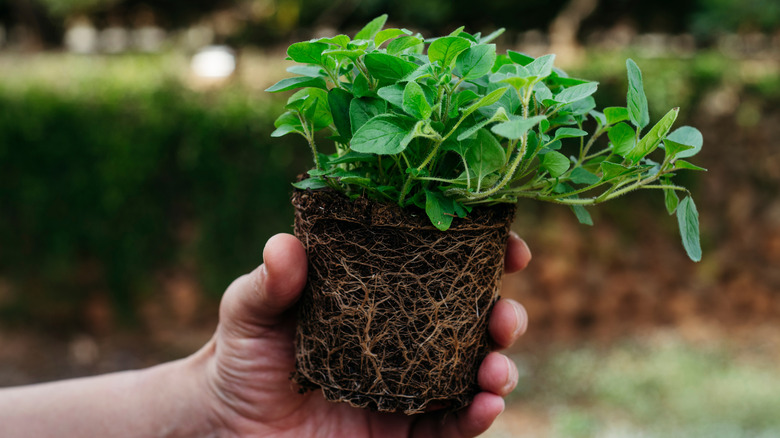
Oregano (Origanum vulgare subsp. hirtum) loves warm weather, and because of this, planting in May is often ideal, though it's possible to plant any time after you're safe from frost. It's a perennial that can thrive in a wide array of weather conditions from Zones 4 through 11, but regardless of where you live, it's important to make sure that this plant gets plenty of sun. Oregano plants also take well to division and pruning, especially after a couple of years, so don't be shy about cutting them back or splitting them up to create new plants.
Catnip
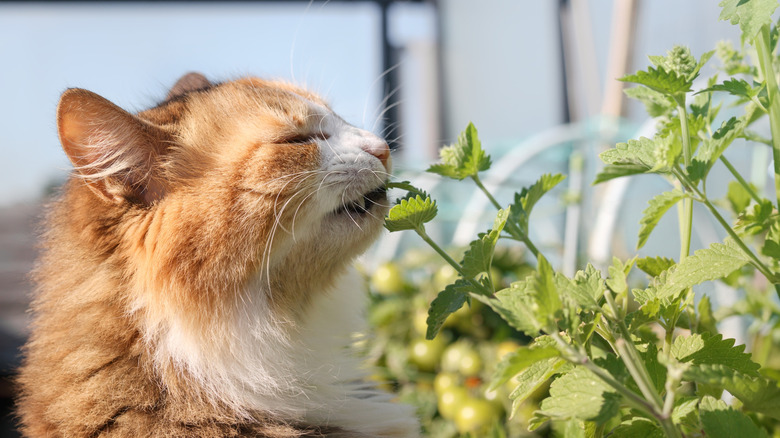
While catnip (Nepeta cataria) is less commonly used in culinary applications than some of the other herbs on this list, your furry friends will love it. This perennial does well in Zones 3 through 7, and because it's best planted after the last frost has passed, this often means it's time to start seeds or transfer seedlings in May in cooler regions. Make sure to give it lots of sun and fairly dry soil for the best growth. When it flowers, you might even catch a few butterflies stopping by the white and light purple blooms.
Rosemary
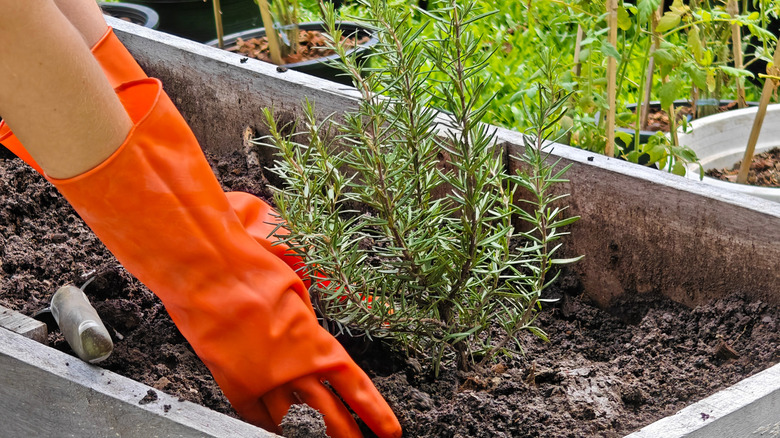
Rosemary (Salvia rosmarinus) is a garden favorite thanks to its delicious flavor and long-lasting nature. Grown as a perennial in Zones 7 though 11, this herb will yield harvests year after year, though it's stylish enough to function as both landscaping and a culinary addition. It's great for hot, dry, areas as it doesn't require a ton of water to thrive, and if you let it bolt, it can even help to attract pollinators. Because it's a warmth-loving herb, wait until the threat of frost has passed in your area to plant — May is usually the ideal time.