

Does Mowing Crabgrass Make It Spread?

Keeping your lawn lush and healthy requires a lot of work, and one mistake can lead to a patchy, unattractive yard. It not only looks unseemly, but it can invite in problematic weeds like crabgrass (Digitaria sanguinalis). Once this weed gets established, it's difficult to remove. During the growing season, one plant can produce 150,000 seeds.
You may have heard that the only way to control the growth is to mow your lawn, but mowing can actually help crabgrass spread. Unless you manage to mow before it reaches maturity, you risk making it worse by spreading around the seeds. It can also stress your plants if you do it too much. Over-mowing your lawn is one surprising way you could be killing your grass without knowing it. This can then leave open spots for crabgrass to further spread via their stolons — plant stems that grow horizontally over the ground and produce more crabgrass and roots. This isn't to say to stop mowing altogether, but take care when doing it, and don't expect it to slow down the weeds.
To control crabgrass, preventing it from developing in your yard is the best method. But it's not nearly as helpful when the weeds are actively in the process of taking over your lawn. To fight crabgrass that's already established, you'll have to work hard. It's not an easy weed to get rid of, but keeping your lawn healthy is a great start.
Ways to stop crabgrass from spreading in your yard
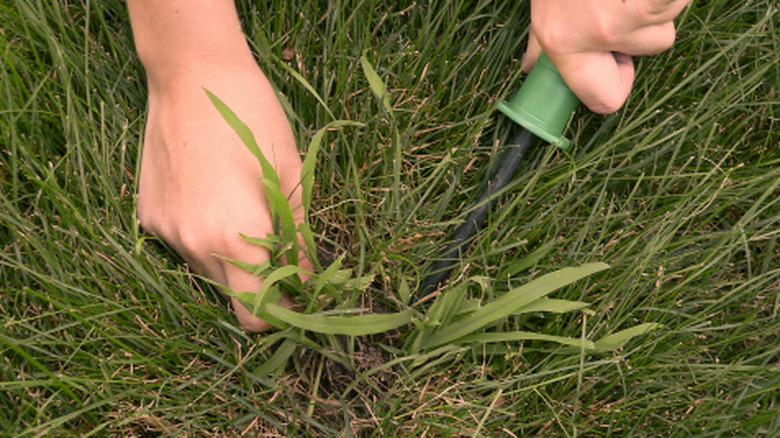
Crabgrass needs lots of sunlight to germinate, so letting your lawn get thick and lush will block some light from reaching the soil, which slows down crabgrass spread. The best height is at least 3 inches tall, and finding the right height is crucial to preventing crabgrass from becoming a problem. Keeping your lawn healthy also lets it grow thicker. This means making sure you water deeply, reseed any bare spots, and fertilize regularly.
Also, if you only have small patches of crabgrass appear, you can dig these out by hand, preferably before they seed, to control the spread somewhat. Crabgrass is an annual, meaning it dies off whenever the temperatures cool down, but it will regrow come spring. As soon as the soil stays about 55 degrees or so, those seeds will start germinating. To keep it at a minimum, make sure your lawn is as healthy and full as you can before this.
If nothing else seems to be working to stop the spread, you can also try a pre-emergent herbicide — one of the easiest ways to remove crabgrass from your lawn. However, you want to save this as a last resort, as herbicides can be harmful to wildlife.