

How To Fill Large Planters To Weigh Them Down For Stability
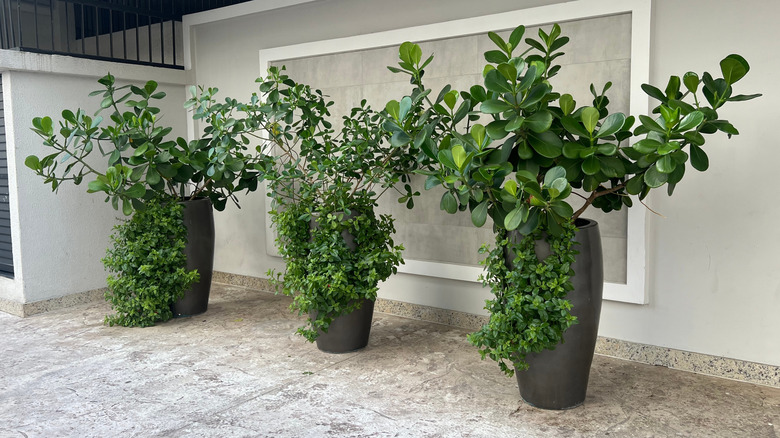
The addition of a couple of gorgeous large planters at either side of your front door can really elevate the overall aesthetic of your entrance, especially if you add some stunning sculptural topiaries, which are the perfect plants to complete a serene, minimalist garden and entry. However, if your containers are made from lightweight materials, you'll need to weigh them down for stability. This means that even if the plants are a little top-heavy, your planters will remain upright, and there'll be less danger of anything knocking them over.
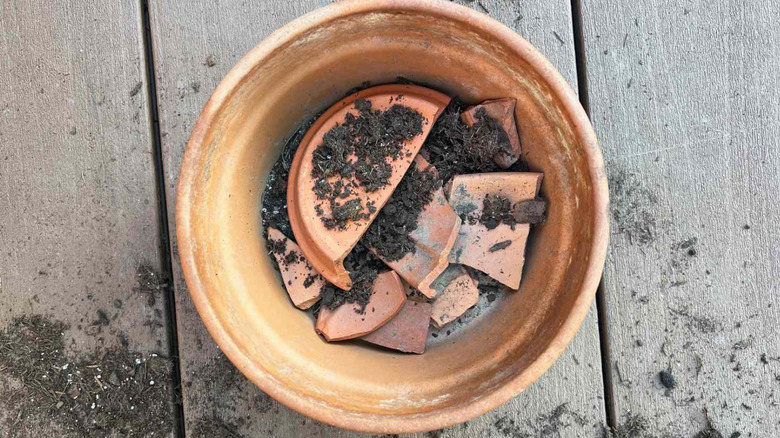
While filling the planter with potting soil is an option, it may not add enough weight and can become expensive. A better option is using pieces of broken pottery or terracotta. This is the perfect way to stop these pieces from ending up in landfill and gives them a useful purpose. However, experts often advise against using broken pots as drainage material, as they can cause issues for your plants. The shards could clog up the drainage holes and create a pooling of water at the base of the pot, which could result in root rot. But don't worry, because there is a simple solution that allows you to reuse these materials while keeping plants healthy.
Using your large planter as a cache pot
A cache pot is a decorative planter that has no drainage holes. Because you can't plant directly in a container without drainage holes, your plant remains in its nursery pot, which is then placed inside the cache pot. This means that you need to take the plant out when you want to water it, allowing it to drain completely before returning it to the cache pot. However, some large outdoor planters can be used like cache pots even though they do include drainage holes. As long as those larger planters have adequate drainage holes that aren't being blocked, any excess water from the nursery pot should drain away easily. Even so, it's worth checking periodically to make sure the roots aren't sitting in water.
When using broken terracotta as part of the setup, position the shards so they keep the nursery pot lifted above any collected moisture. Just take care when handling the shards and wear gloves because the broken edges can be quite sharp. The pieces should form a stable, slightly uneven base rather than a flat layer, creating gaps where water can move down without pooling or coming into contact with the nursery pot itself. This helps maintain airflow and reduces the risk of the plant sitting in stagnant water.
If you don't happen to have any broken terracotta pots lying around, you could check with your local garden center or nursery to see if they have any that they're going to dispose of. You may even get lucky at your local thrift store or online marketplaces. Alternatively, broken bricks or terracotta roof tiles can be used if available.