

Ditch Toxic Spray: The DIY Trap That Can Eliminate Wasps From Your Yard
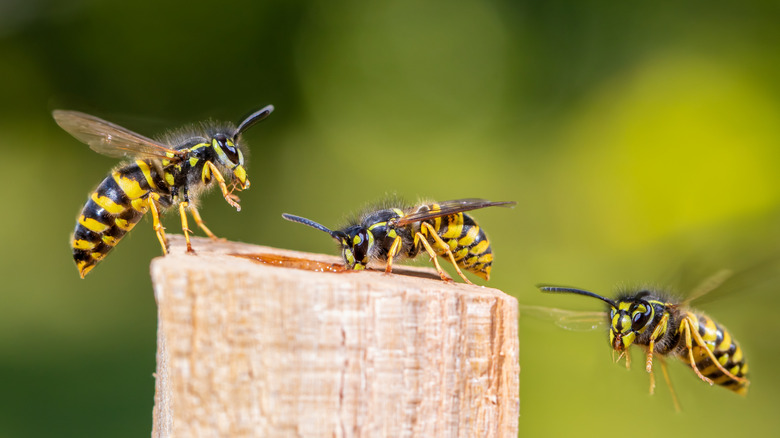
The return of longer days, warmer weather, and sunny skies also means the return of varieties of creepy crawlies and flying insects, including those of the stinging variety. While bumblebees and honeybees are welcome pollinators, their relatives — wasps, yellow jackets, and hornets — are not as desirable. Instead of spraying chemical insecticides and repellents throughout your yard, there's a safe and effective DIY wasp trap that uses Mountain Dew and dish soap to help eliminate wasps and their stinging cousins from your yard.
All you need to craft your wasp trap is a bottle of Mountain Dew, scissors, and a dash of dish soap. A two-liter bottle makes a jumbo version of this trap, but a smaller 20-ounce bottle will also work. Start by pouring out some Mountain Dew, leaving about a quarter of the liquid in the bottle. Add a small amount of dish soap into the remaining soda and swish it around to combine. Then, cut off the top half off the bottle, flip it upside down, and place it into the bottom half with the nozzle facing the liquid, but not dipping into it. Try to leave about an inch of space between the mixture and the bottle's opening. Place your newly constructed trap away from any outdoor living spaces to draw wasps away from you. If you only have the canned form of Mountain Dew on hand, you can still fashion a wasp trap by pouring it into a different empty bottle.
Why the Mountain Dew trap works on wasps
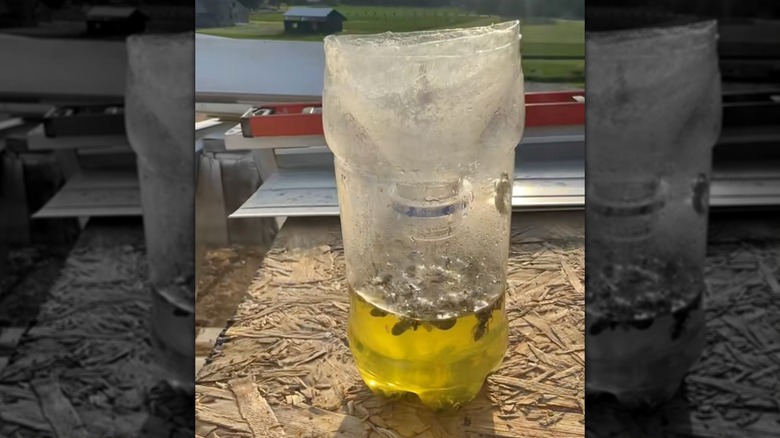
This simple trap works to get rid of wasps by luring them into the bottle with the sugars found in Mountain Dew — a 20-ounce bottle contains a whopping 77 grams of sugar, so it's no wonder it's effective. Once lured into the bottle through its inverted neck, wasps are trapped and eventually drowned or smothered by the liquid mix and other trapped insects. The small amount of liquid dish soap breaks the surface tension of the Mountain Dew, making wasps sink faster so it's harder to escape the trap. Dish soap can even break down insects' exoskeletons, ultimately drowning them. The bottle itself also helps since the funnel's shape makes it difficult for wasps to fly back out, even more so when their wings are coated in sticky soda and soap.
If you don't feel like creating your own wasp trap with a bottle, or if you want something a little sturdier that can hang from a tree or porch, you can simply pour this soda concoction into store-bought hanging wasp traps in lieu of any trap refills they may have come with. Monitor your traps and dispose of them properly once they're full, ensuring all wasps are dead first. Place the full trap into a plastic bag, seal it tightly, and toss it into your waste bin. Be sure not to crush the wasps since their bodies can release a scent that attracts more wasps. Replace traps as needed, and take extra steps to keep these stinging creatures away by planting herbs wasps can't stand around your garden.