

The Common Edging Material To Avoid With Your Asphalt Driveway
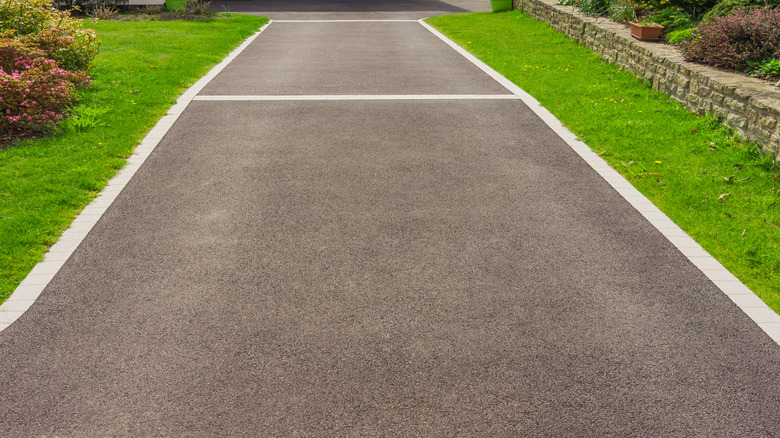
If you're having a new driveway installed, or you need to replace your current one, you might be looking at an eco-friendly alternative to concrete, such as recycled asphalt pavement. Or you may just opt for regular asphalt, which is durable and looks great. You'll also want some type of edging to separate your driveway from the rest of your yard, whether it borders a lawn or garden beds.
Essentially, driveway edging does more than improve looks. It makes garden maintenance easier, helps protect the driveway edges, and assists with drainage. There are plenty of different edging materials you can choose from, including concrete, metal, bricks, or paver stones. But there's one material that's not recommended for asphalt driveways specifically, and that's plastic. The most important reason for this is that plastic edging is likely to be damaged while the asphalt is installed.
Apart from that, despite being cheap to buy up front, plastic edging may cost you more in the long run than most other materials. That's because it's not very durable and only has a lifespan of around five to 15 years. This means you'll need to replace it frequently, or it won't do a good job of protecting the edges of the driveway when it starts to degrade. This can be a major problem, because unprotected asphalt driveway edges are prone to crumbling. Plastic also doesn't handle weather extremes very well.
Why you should avoid using plastic edging along an asphalt driveway
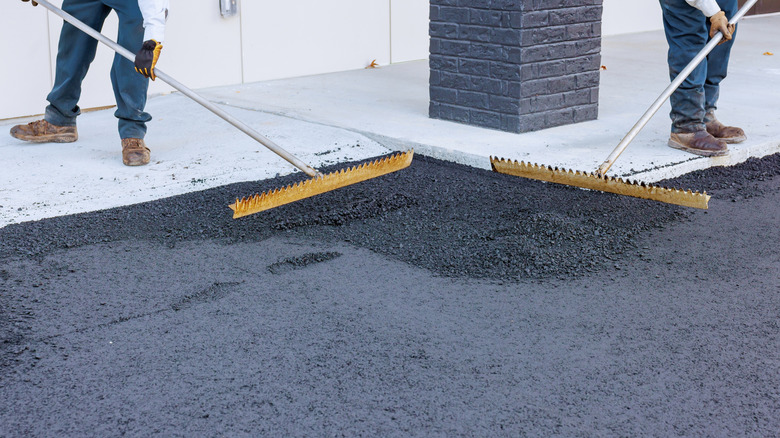
Typically, edging gets installed after the driveway sub-base is ready and before the surface material— like asphalt — is laid down. This is where plastic edging becomes a problem with asphalt driveways. Asphalt is laid at temperatures that can reach 290 degrees Fahrenheit. Plastic edging, which is typically made from high-density polyethylene (HDPE), has a melting temperature of around 250 degrees Fahrenheit. Placing hot asphalt next to or directly in contact with plastic edging is likely to melt the latter, or at best, cause it to warp and bend out of shape.
In addition, plastic edging has a tendency to deteriorate from extreme UV exposure and crack in freezing conditions, because plastic contracts and expands in response to significant temperature swings. Plastic edging often needs stakes to hold it in place, and these can spoil the overall aesthetic of your lovely new asphalt driveway. Without proper anchoring, these stakes can also get pushed out of the ground if there's a big freeze, causing the edging to shift and warp. This can result in an unsightly wavy edge that may actually detach from the asphalt.
If you want a nice, clean driveway edge that will look great for years to come, you're better off spending a bit more up front and investing in either metal or concrete edging. You might even like to upgrade your driveway edge with a rustic material known as Corten steel. This type of durable material will prevent the edges of the asphalt from crumbling and help support the integrity of your entire driveway.